
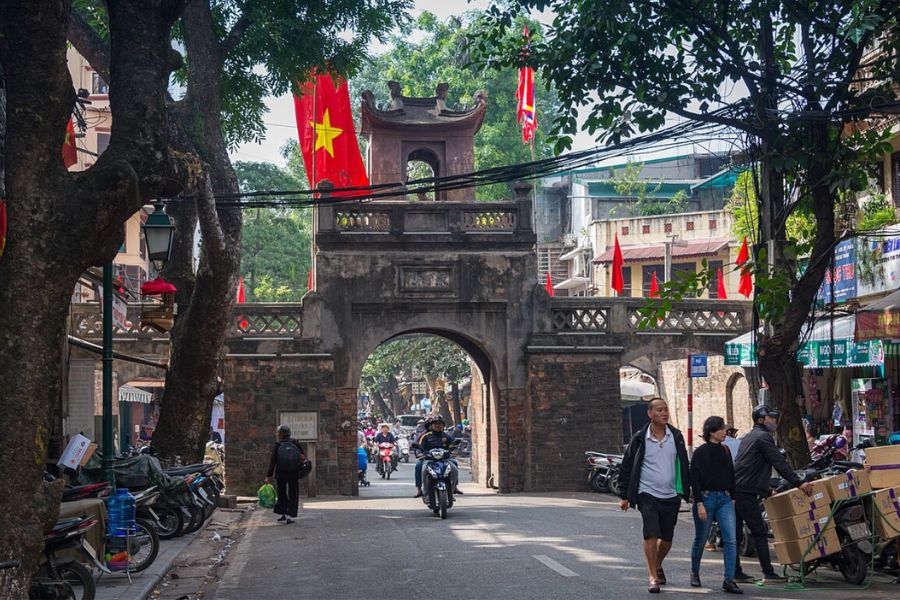

Hanoi rewards curious travelers with ancient temples, French colonial streets, a street food scene unlike anywhere else in Asia, and easy access to Ha Long Bay and Ninh Binh. This guide covers 15 things to do in Hanoi, from must-see landmarks to local experiences worth planning your whole trip around.
Top 15+ Best Things to Do in Hanoi
1. Get Lost in the Old Quarter
The Old Quarter is the reason most people come to Hanoi, and it rarely disappoints. The 36 streets that make up this area date back to the 13th century, when each street was dedicated to a single trade.
Walking through the Old Quarter is an exercise in sensory overload in the best possible way. Ancient tube houses with their narrow facades and deep interiors line streets barely wide enough for two motorbikes to pass. The smell of incense from a temple doorway mixes with grilling meat from a street cart. A seamstress works at a sewing machine on the pavement. A child does homework at a table inside what is also a family shop.
The neighborhood rewards slow exploration. Resist the urge to follow a fixed route. Turn down alleys that look interesting. Step into courtyards. Stop at a coffee shop with a stool on the pavement and watch the street for a while.
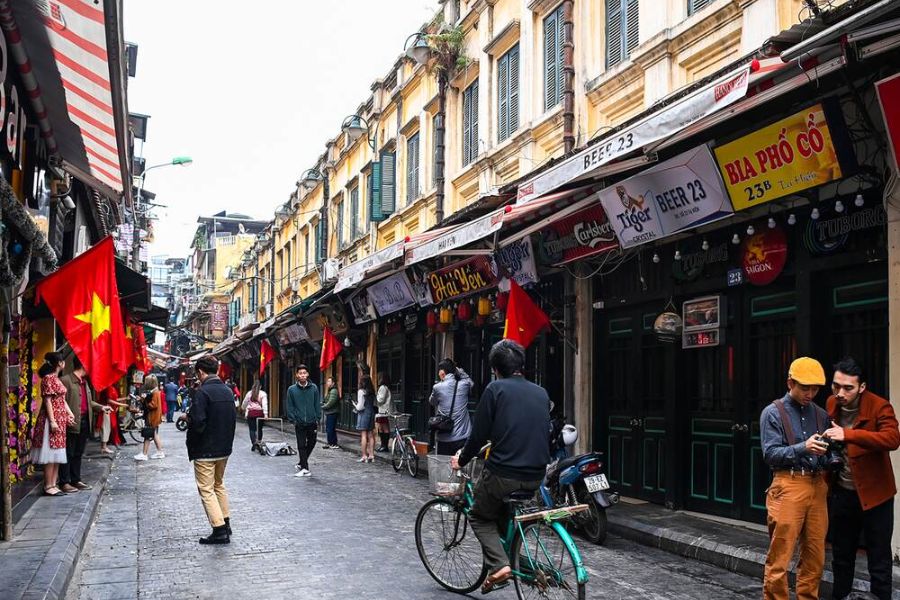
Practical note: On Friday, Saturday, and Sunday evenings, the area around Hoan Kiem Lake becomes a pedestrian zone. Traffic is banned, the streets fill with locals and visitors, and the whole neighborhood takes on a different, more relaxed energy. If your schedule allows, save one evening specifically for this.
2. Walk Around Hoan Kiem Lake at Sunrise or Sunset
Hoan Kiem Lake sits right at the edge of the Old Quarter and serves as the emotional center of Hanoi. The name translates as Lake of the Returned Sword, which comes from one of the country’s most beloved legends. Emperor Le Loi, who defeated Chinese invaders in the 15th century, is said to have been given a magical sword by the Golden Turtle God. After his victory, he returned to the lake and the turtle reclaimed the sword, pulling it beneath the surface. It is the kind of story that stays with you as you walk the lakeside path.
In the early morning, the lake fills with locals. Elderly groups practice Tai Chi on the grass. Men play chess on low stone tables. Couples walk the path before the heat of the day sets in. By evening, the lake takes on a different quality as the city lights begin to reflect on the water and the air cools.
At the center of the lake, connected to the eastern shore by the bright red The Huc Bridge, sits Ngoc Son Temple. The temple is small but photographically striking, and the bridge itself has become one of the defining images of Hanoi.
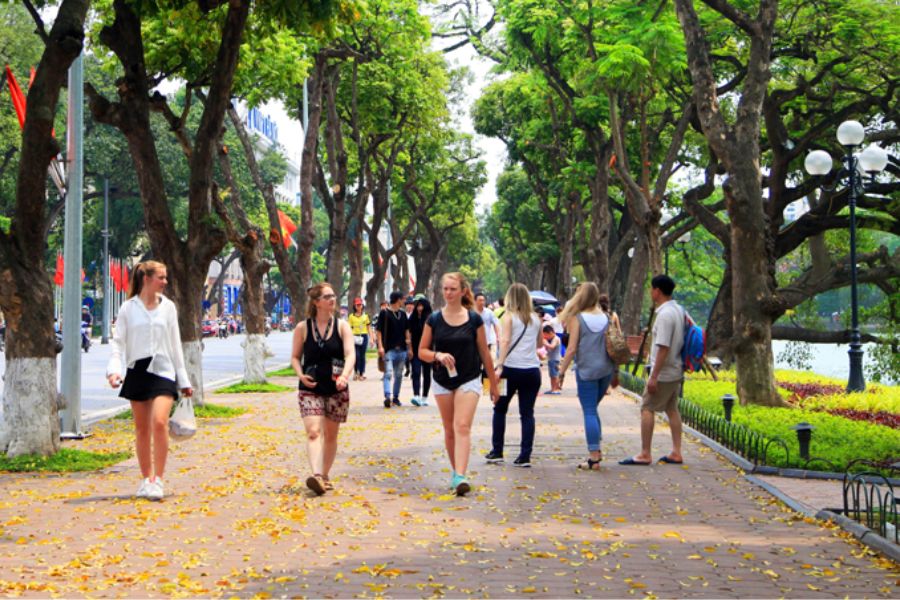
Practical note: The lake is worth visiting at both times of day if you can manage it. Sunrise gives you a quieter, more local experience. Sunset is more atmospheric, especially around the bridge.
3. Visit the Temple of Literature
Built in 1070 during the reign of Emperor Ly Thanh Tong, the Temple of Literature was Vietnam’s first national university. For nearly eight centuries, it was the center of Confucian scholarship and the place where Vietnam’s most accomplished scholars were recognized and celebrated. The 82 stone steles in the third courtyard, each mounted on the back of a stone tortoise, record the names of doctoral graduates from 1442 to 1779. They are among the country’s most important historical artifacts.
The temple complex is organized into five successive courtyards, each with its own character. The outer courtyards have a formal, ceremonial quality. The inner ones are quieter and more contemplative, with lotus ponds, ancient banyan trees, and pavilions where scholars once gathered.
For visitors interested in understanding Vietnamese culture more deeply, this is one of the most rewarding sites in Hanoi. It speaks to a tradition of learning and intellectual life that has shaped the country for nearly a millennium.

Best for: Travelers interested in history, architecture, and Vietnamese cultural values. The place is also excellent for photography, particularly in the early morning before our groups arrive.
>>> Visit our Hanoi City Tour to experience all the highlights of the Old Quarter.
4. Pay Respects at the Ho Chi Minh Mausoleum
Ba Dinh Square is where Ho Chi Minh declared Vietnamese independence on September 2, 1945. The mausoleum that bears his name was completed in 1975, three years after his death. It houses his preserved body, which is viewable by the public in a refrigerated glass case.
Whatever your views on Ho Chi Minh’s political legacy, visiting the mausoleum is a genuinely affecting experience. The atmosphere is one of deep reverence. Vietnamese visitors, many of whom have traveled from other parts of the country specifically for this moment. The changing of the guard ceremony, which takes place every hour, is worth timing your visit around.
Within the same complex, the Ho Chi Minh Museum offers a more detailed account of his life and revolutionary work. Perhaps the most quietly powerful thing to see is the simple wooden stilt house where Ho Chi Minh chose to live after becoming head of state, preferring it to the grand Presidential Palace nearby.
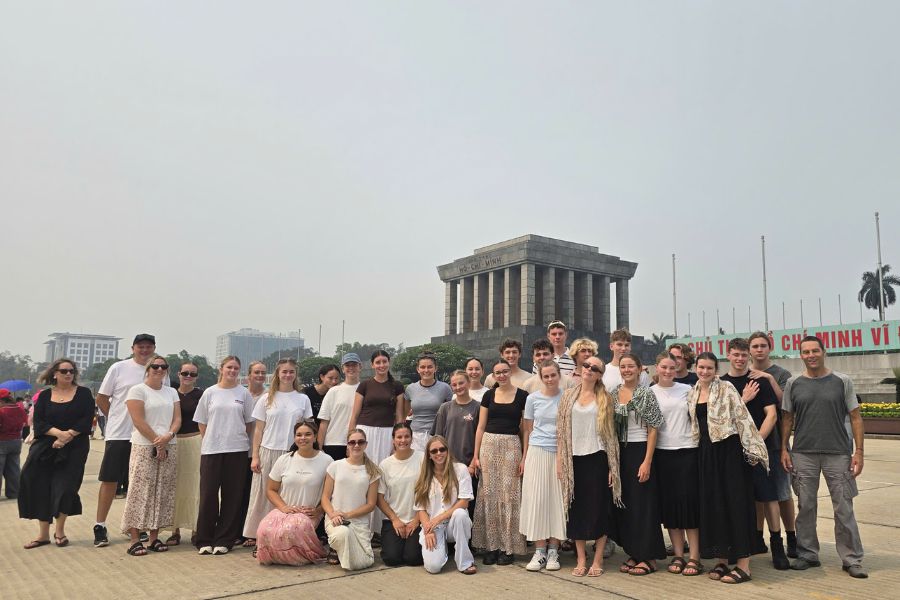
Practical note: Please dress modestly, with covered shoulders and knees, when visiting the site. Photography is not permitted inside the mausoleum. The site is closed on Mondays and Fridays, and typically closes for a period around October and November for maintenance of the preservation systems.
5. Explore Hoa Lo Prison Museum
Hoa Lo Prison is one of those places that holds two entirely different histories within the same walls, and both of them matter.
The French colonial administration built the prison in 1896 to hold Vietnamese political prisoners. At its peak, it held far more than its intended capacity. Vietnamese dissidents, revolutionaries, and independence activitists were imprisoned, tortured, and in many cases executed here. The museum does not shy away from this history, and the artifacts, photographs, and reconstructed cells are confronting in the best sense.
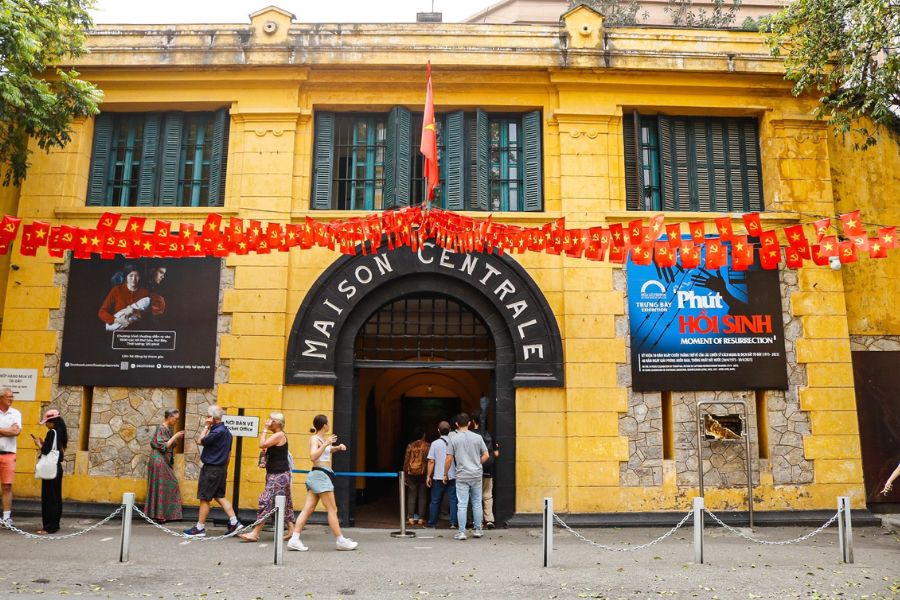
The prison’s second history is American. During the Vietnam War, it was used to hold US prisoners of war, including John McCain, who was held here after being shot down over Hanoi in 1967. American POWs gave the nickname the Hanoi Hilton, and the museum’s treatment of that era reflects the Vietnamese perspective on the conflict.
Visiting Hoa Lo takes around 45 minutes to an hour and leaves most visitors quieter and more thoughtful than when they arrived.
6. Eat Your Way Through Hanoi’s Street Food Scene
Hanoi has one of the most distinctive food cultures in Southeast Asia, and the best way to experience it is not in a restaurant but on the street, from a vendor who has likely been making the same dish for decades.
A few dishes you should not leave Hanoi without trying:
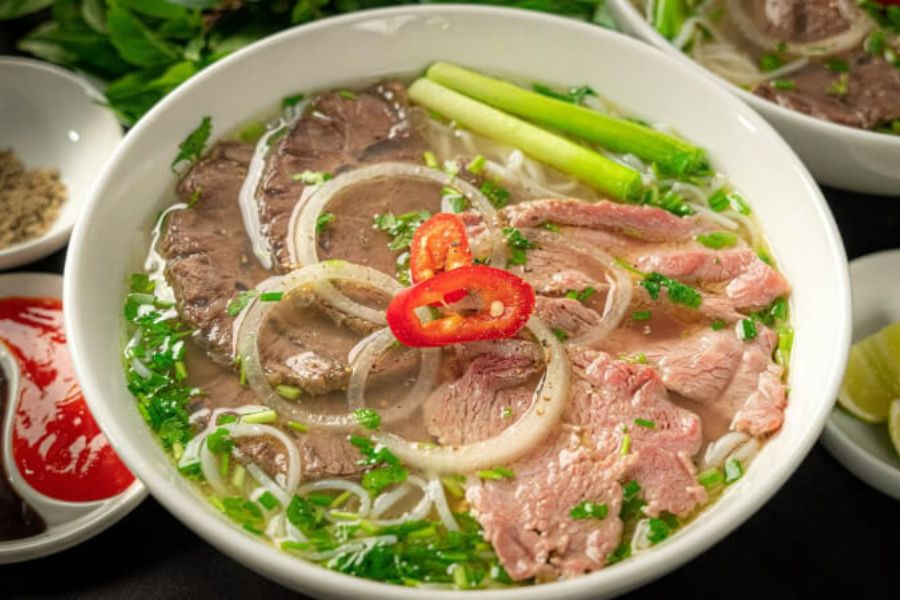
- Phở bò: This is the one most people know. Beef noodle soup with a broth that has been simmering for hours, silky flat rice noodles, thin slices of beef, and a cluster of fresh herbs on the side. Hanoi-style pho is cleaner and more restrained than southern versions. Phở Gia Truyền Bát Đàn, a tiny shopfront on Bat Dan Street that opens at 6am and often sells out before 10am, is widely considered one of the best in the city.
- Bún chả: is what Anthony Bourdain and Barack Obama ate together in Hanoi in 2016, a meal that became one of the most talked-about food moments of that year. It is grilled pork, both patties and sliced belly, served with cold vermicelli noodles and a warm, slightly sweet dipping broth. Bún Chả Hương Liên, the restaurant where that dinner happened, is still very much open and very much full of people.
- Bánh mì: is the most direct legacy of French colonial rule: a crispy baguette loaded with pâté, pickled daikon and carrot, fresh cucumber and chili, and various proteins. The Vietnamese version of a sandwich has been widely imitated across the world, but Hanoi’s street-side versions remain the reference point. Bánh Mì 25 on Hang Bac Street is one of the most consistently recommended spots.
- Bún bò nam bộ: is a noodle salad with southern roots that Hanoi has adopted and made its own. It is lighter than pho, with a sweeter flavor profile, and makes for a very good lunch.
- Xôi: People also call xôi “sticky rice.” This is the classic Hanoi breakfast. The savory version comes topped with combinations of chicken, Chinese sausage, dried shallots, and egg. You will find it sold from baskets and carts in the early morning, wrapped in banana leaf.
7. Drink Egg Coffee at Cafe Giang
Egg coffee, or cà phê trứng, was invented in Hanoi in 1946 by Nguyen Giang, a bartender at the Sofitel Legend Metropole Hotel who was looking for a way to make coffee when fresh milk became scarce during the French war. His solution was to whip egg yolks with sugar and condensed milk into a thick, pale foam and spoon it over a shot of strong robusta coffee.
Café Giang, still run by the Giang family on Hang Gai Street, is the original and the version most people agree is still the best. The upstairs room is small and slightly cramped, with a window that looks out over the alley below. It is exactly the kind of place that makes you want to stay longer than you planned.
Other cafes worth knowing in Hanoi are Cộng Cà Phê, Café Phố Cổ, Bắc Ngon, and Loading T.

8. Watch a Traditional Water Puppet Show
Water puppetry is an art form that originated in the Red River Delta of northern Vietnam over a thousand years ago. It was born in the flooded rice fields, where farmers began using water as a stage and carved wooden figures as performers. Today it is one of Vietnam’s most distinctive cultural exports, and Hanoi is the best place in the country to experience it.
The puppets, which can weigh up to fifteen kilograms, are controlled by performers standing waist-deep in water behind a bamboo screen. The puppeteers use a system of rods, strings, and counterweights hidden beneath the surface to make the figures move with surprising fluidity. Dragons breathe fire, phoenixes spread their wings, and fishermen cast their nets. A live traditional orchestra accompanies the performance, with instruments including the dan bau, a single-stringed zither that produces a sound unlike anything else.
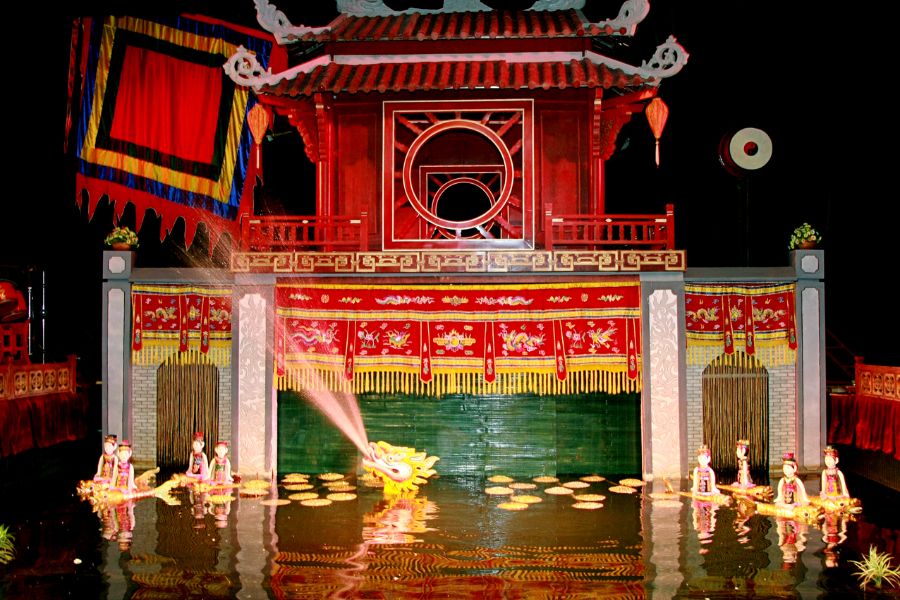
The Thăng Long Water Puppet Theatre, located on the northern shore of Hoan Kiem Lake, runs multiple performances per day. A show lasts approximately 50 minutes. The theater is one of the oldest and most respected venues for this art form in the country.
Practical note: Book tickets at least a day in advance during peak season, which runs from October through April. The theater fills quickly, particularly for all performances.
9. Explore the Vietnam Museum of Ethnology
Vietnam is a country of 54 officially recognized ethnic groups, and the vast majority of visitors see almost none of them during a standard city itinerary. The Vietnam Museum of Ethnology, located in the Cau Giay district about 8 kilometers from the Old Quarter, exists specifically to address that gap.
The indoor galleries are among the best-curated in Southeast Asia. Exhibits cover the clothing, tools, rituals, and daily life of each of Vietnam’s ethnic communities, presented with genuine depth and context. The outdoor section of the museum contains full-scale reconstructed traditional houses from different regions of the country, including a Bahnar communal house from the Central Highlands that rises nearly twenty meters and stilt houses from the northern hill tribes.
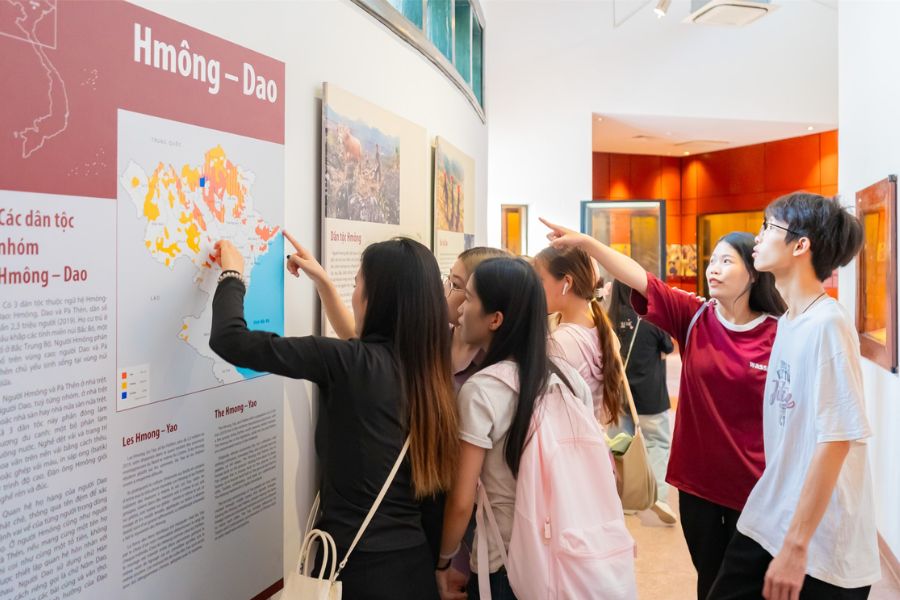
It takes roughly two hours to move through the museum properly. Most visitors come away with a much more nuanced picture of what Vietnam actually is as a country, beyond the cities and the war history.
How to get there: The museum is a short Grab ride away from the Old Quarter. Allow half a day and combine it with lunch in the Cau Giay area before heading back.
10. Watch the Sun Set from a Rooftop Bar
Hanoi looks completely different from above. The French colonial rooflines, the lakes, the tangle of power lines and streets, the pockets of green, and the mist that settles over the city in cooler months: it is a cityscape that rewards elevation.
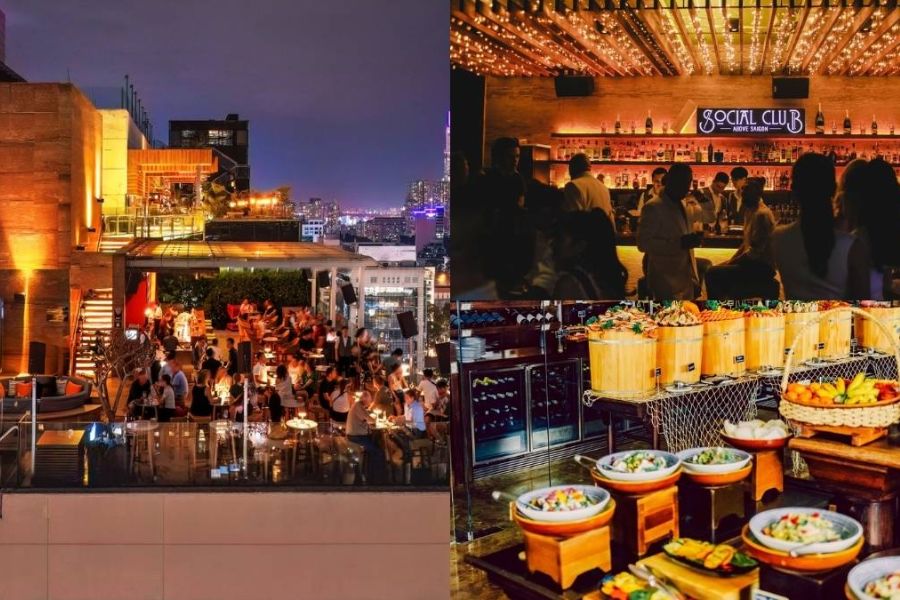
Here are the top 3 rooftop bars in Hanoi:
- Diamond Sky Bar: The bar perched above the Gourmet Corner restaurant near the Old Quarter has some of the best panoramic views in the city. It is particularly atmospheric in the hour before sunset, when the light turns the rooftops gold.
- Terraco Sky Bar: This bar is on top of the La Sinfonía del Rey Hotel and looks directly over Hoan Kiem Lake. During happy hour it offers some of the best-value drinks in the city at this elevation.
- The Hanoi Social Club Rooftop: This place has a more relaxed, international feel. It attracts a mix of expats, travelers, and younger Hanoians, and the food menu is genuinely good.
Practical note: Most rooftop bars in Hanoi have a smart casual dress code. You should arrive at least 30 minutes before sunset to secure a good spot.
11. Visit Train Street
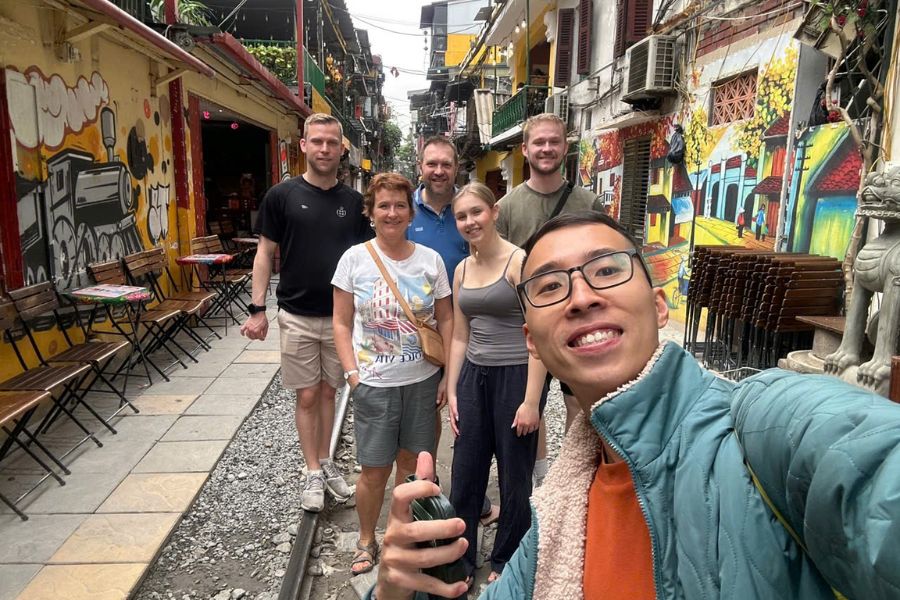
Train Street is one of those Hanoi experiences that sounds too strange to be real until you are standing there watching it happen. The active railway line between Hanoi and Ho Chi Minh City runs directly through a residential street in the Hoan Kiem district, passing within centimeters of cafe tables, house fronts, and potted plants.
Several times a day, the train comes through. Cafes along the track have turned this into a small tourism economy, serving coffee and local snacks to people who come specifically to watch. The atmosphere in the moments before the train arrives and in the immediate aftermath is genuinely electric.
Practical note: The train schedule changes periodically, so it is worth checking locally or asking your hotel for current timings before you go. Mornings tend to be less crowded than afternoons.
12. Take a Cyclo Ride Through the Old Quarter
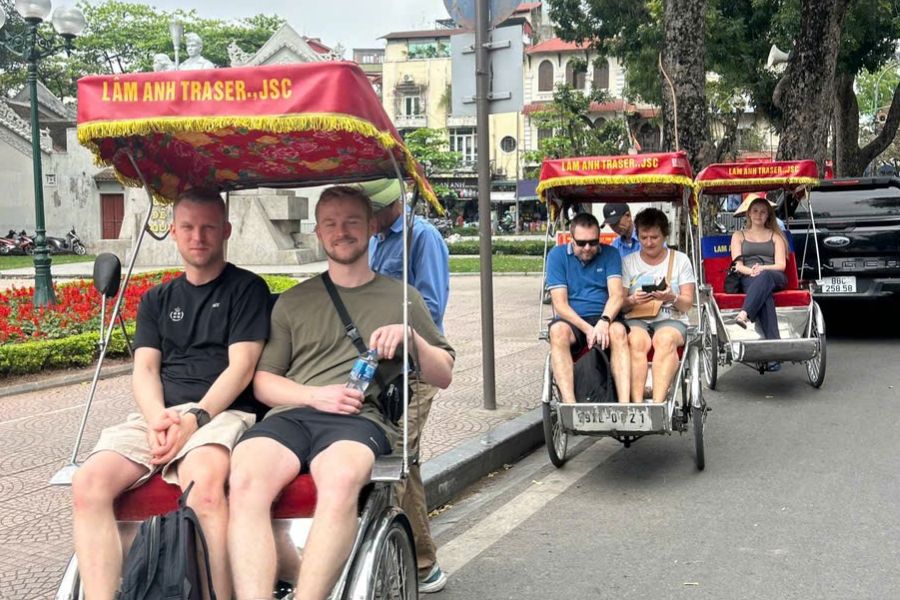
A cyclo is a three-wheeled bicycle rickshaw with the passenger seat in front and the driver pedaling from behind. They were once the primary mode of urban transport in Hanoi and are now mostly used for short tourist rides through the Old Quarter, which is appropriate because they move at exactly the right speed for actually seeing the neighborhood.
A one-hour cyclo tour of the Old Quarter costs around 150,000 to 200,000 VND and takes you through most of the major streets of the district. Agree on the price and the route before you start.
13. Day Trip to Ninh Binh
It is recommended to take a short trip to Hanoi’s nearby area, such as Ninh Binh. The province is approximately 90 kilometers south of Hanoi, or about two hours by road, and it offers one of the most dramatic natural landscapes in northern Vietnam.
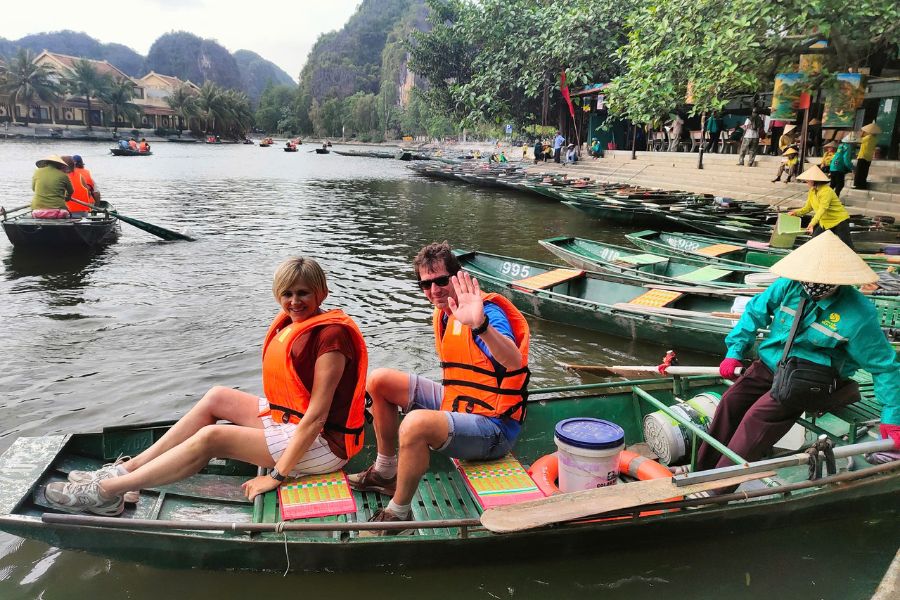
The most popular way to explore the area is by rowboat through the Tam Coc waterway, a three-kilometer stretch of river that passes through three natural cave tunnels carved through the limestone. Local women row the boats with their feet, leaving their hands free, which is a sight in itself.
Also within the Ninh Binh area: Trang An, a UNESCO World Heritage Site with a more extensive boat route through caves and gorges; Hoa Lu, the ancient capital of Vietnam under the Dinh and Le dynasties in the 10th and 11th centuries; and Bich Dong, a pagoda built into the face of a limestone cliff with views across the valley from its upper levels.
A comfortable day trip to Ninh Binh with a private car and English-speaking guide allows you to cover all of these without rushing. Viet Dan Travel arranges this regularly and can tailor the itinerary based on your interests and the time of year.
>>> Visit Trang An – Bai Dinh Pagoda Full Day to plan your day trip from Hanoi to Ninh Binh.
14. Overnight Cruise on Ha Long Bay
Ha Long Bay is one of the most recognized natural landscapes in the world. More than 1,600 limestone islands and islets rise from the emerald waters of the Gulf of Tonkin, sculpted over millions of years into formations that have no equivalent anywhere else on Earth. It was designated a UNESCO World Heritage Site in 1994 and has appeared on virtually every list of the world’s most spectacular natural destinations since.
What most photographs do not convey is the scale and the silence. On the water, particularly in the early morning before other boats are moving, the bay has a quality of stillness that is almost meditative. Mist clings to the peaks. The water is flat and very green. The only sounds are the boat’s engine at low speed and occasionally the cry of a bird.
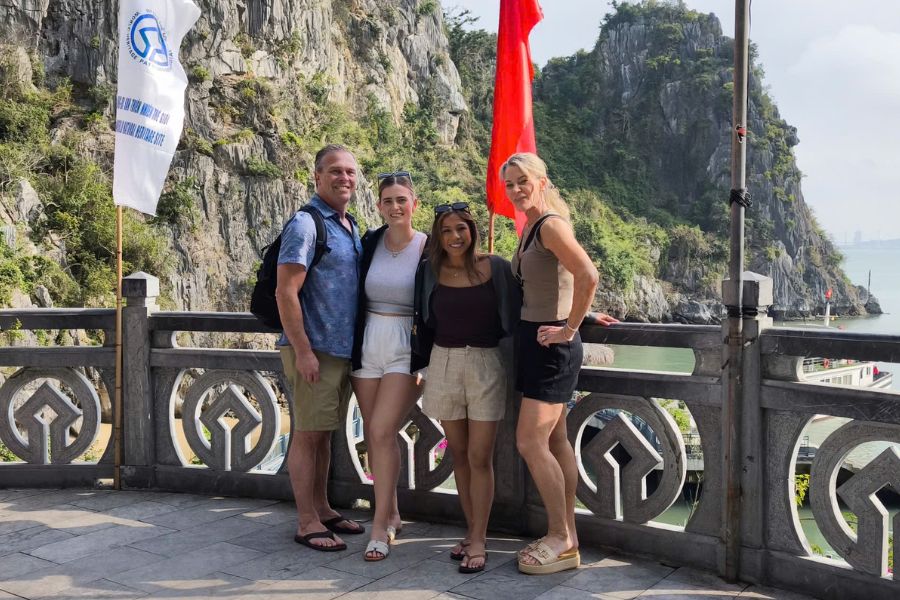
The bay is best experienced on an overnight cruise, which gives you time to kayak through hidden lagoons, swim off the boat deck, visit a floating fishing village, and wake up to sunrise over the water before the day-trippers arrive. A two-day, one-night cruise is the practical minimum. Three days gives you more space to explore and a less rushed experience overall.
Viet Dan Travel works with a carefully selected portfolio of Ha Long Bay cruises across all categories, from well-run mid-range vessels to premium boutique ships and five-star luxury cruises. We can match you to the right option based on your group size, budget, and what kind of experience you are looking for.
>>> You can explore our Halong Bay Joined 6-hour Cruise for a short escape from Hanoi.
15. Explore the Imperial Citadel of Thang Long
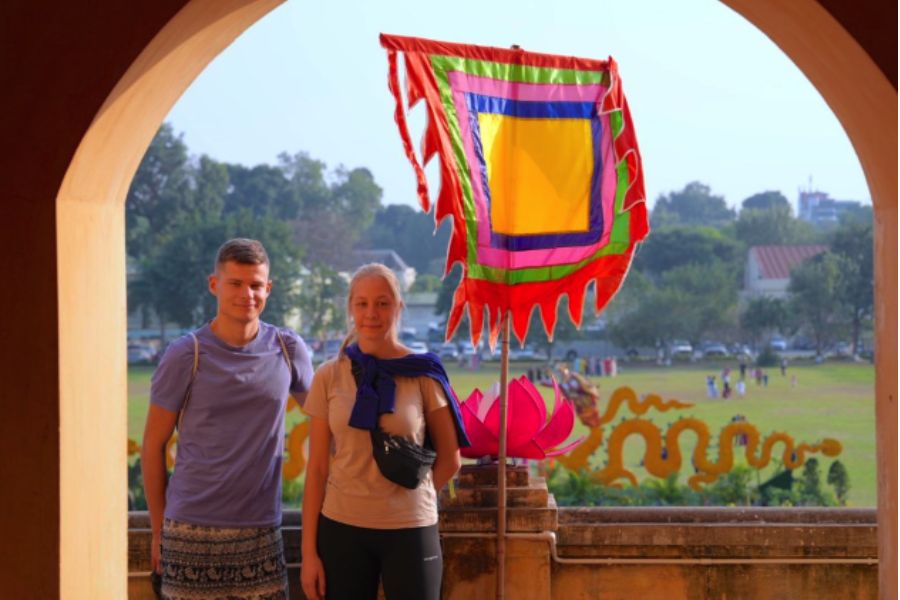
The Imperial Citadel of Thang Long sits in the Ba Dinh district of Hanoi, a short distance from the Ho Chi Minh Mausoleum. It was the political and military center of Vietnamese power for thirteen centuries, from the Ly dynasty in the 11th century through to the early 19th century, when the imperial capital was moved south to Hue. The site was designated a UNESCO World Heritage Site in 2010.
What makes the citadel particularly interesting from an archaeological perspective is the way successive dynasties built on top of each other. Excavations that began in 2002 uncovered artifacts spanning over a thousand years of history in vertical layers, from Ly and Tran dynasty ceramics to Ming dynasty tiles to later Vietnamese imperial objects. Many of these finds are displayed in the on-site museum.
The citadel grounds are quiet and relatively uncrowded compared to other major Hanoi landmarks. Allow at least two hours to walk the site properly, including the underground archaeological display and the exhibition halls.
Practical Tips
Everything you need to know before arriving in Hanoi, such as the best time to visit, how long to stay, how to get around, and a few things that will save you hassle on the ground.
When is the best time to visit Hanoi?
Hanoi is one of the few cities in Southeast Asia with genuinely distinct seasons, which significantly affects what kind of experience you will have.
October through April is the dry season and the most comfortable time to visit. Temperatures in November through February can drop to between 15 and 20 degrees Celsius, which feels cold by Vietnamese standards but is ideal for walking and sightseeing. March and April are warmer and have some of the clearest, most pleasant weather of the year.
May through September is hot and humid, with temperatures regularly reaching 35 to 38 degrees Celsius and afternoon thunderstorms that can be heavy. The city is still very much worth visiting in these months, but the experience is more demanding. Pack lightweight clothing, carry a small umbrella, and plan more indoor activities around the middle of the day.
How many days should you spend in Hanoi?
Three days is enough to cover the essential landmarks, have several good food experiences, and do one day trip, either to Ninh Binh or Ha Long Bay if you take the overnight option.
Five days gives you a much more comfortable pace. You can explore the city more slowly, include the Vietnam Museum of Ethnology and the Imperial Citadel alongside the bigger sites, and do two day trips.
A week or more in the Hanoi area makes sense if you plan to extend into the northern regions, including Sapa and the Ha Giang Loop, which are among the most spectacular landscapes in all of Vietnam.
Getting around the city
Walking is the best option for the Old Quarter. The streets are narrow, traffic is unpredictable, and the neighborhood is compact enough to cover on foot in a morning or afternoon.
Grab, the Southeast Asian ride-hailing app, is the most practical way to get around beyond the Old Quarter. It is significantly cheaper than flagging a taxi on the street and the app meters eliminate any pricing ambiguity. Download it before you arrive.
For day trips, a private car with a driver and guide is by far the most comfortable and efficient option. It gives you control over timing, allows you to stop where you want, and means you are not dependent on minibus schedules or shared transport.
Cyclos are appropriate for a slow, scenic tour of the Old Quarter but not practical for moving around the wider city.
Safety and practical notes
Hanoi is generally safe for tourists. Violent crime is rare. The main things to watch for are bag snatching in crowded areas, particularly from motorbikes, and taxi overcharging. Using Grab rather than street taxis removes most of the transport-related risk.
Crossing the road in the Old Quarter takes some getting used to. The key is to move steadily and predictably. Do not run and do not stop suddenly. Traffic flows around pedestrians who move consistently. Wait for a local to cross if you are uncertain and walk alongside them.
The tap water in Hanoi is not safe to drink. Bottled water is cheap and available everywhere.
Plan Your Hanoi Trip with Viet Dan Travel DMC
Viet Dan Travel DMC is a trusted Vietnam DMC helping travel agents and operators across Asia, the Middle East, and Europe build itineraries that actually work on the ground.
If you are a travel agent or operator putting together a Vietnam program, our team can help you build something your clients will remember. We handle everything from hotel sourcing and cruise bookings to MICE venue selection and visa arrangement.
Hanoi is not a city you fully understand on the first visit. It asks for a little patience, and it gives back a lot. Whether you have three days or a week, the experiences in this guide will get you to the heart of it. Start with the Old Quarter, eat everything, and let the rest unfold from there.
Contact Viet Dan Travel DMC for exclusive rates, custom itineraries, and ground support across Vietnam.

0 Comment