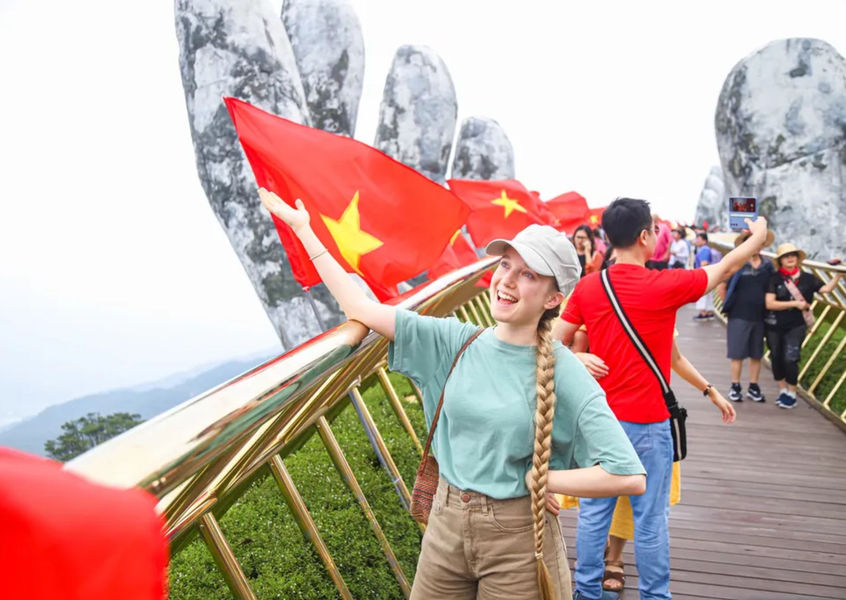

Vietnam will surprise you, in the best possible way but also in ways you won’t see coming. The traffic alone can feel like an assault on your senses on day one. The food will be some of the best you’ve ever eaten. The prices will make you feel like you’ve been overpaying for everything back home. And somewhere between your first bowl of phở and your last sunset over Halong Bay, you’ll understand why so many people come here and never quite get over it.
Whether you’re a first-time visitor or returning for another round, these Vietnam travel tips cover the practical stuff that actually makes a difference on the ground. They are not the obvious things you’d figure out anyway, but the specifics that will save you time, money, and a few headaches along the way.
1. Crossing the road really is as terrifying as it looks
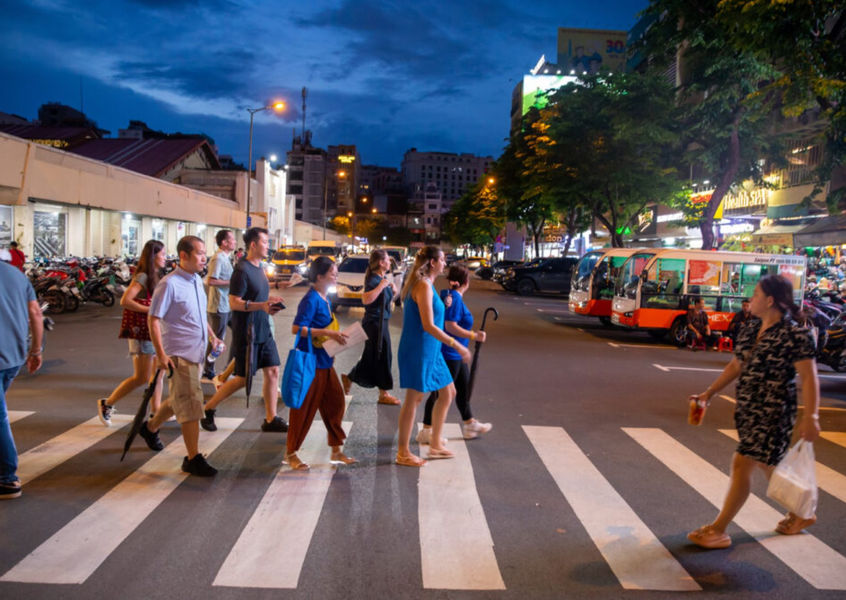
No tip about Vietnam gets asked about more than this one. In cities like Hanoi and Ho Chi Minh City, the traffic doesn’t stop. Red lights are more of a suggestion. Motorbikes come from every direction, including the pavement.
The trick is this: don’t wait for a gap, because it won’t come. Instead, look for a moment where the larger vehicles (trucks, buses) aren’t moving, then step out slowly and keep moving at a steady, predictable pace. The motorbikes will flow around you. They’re very good at it, as long as you don’t panic and stop suddenly or step backwards. Think of yourself as a rock in a stream. Move forward. Don’t sprint.
The further south you go, the slightly calmer the traffic becomes. Ho Chi Minh City is chaotic but has wider roads. Hanoi is a different experience entirely. Give yourself a day or two to find your rhythm.
2. A horn or a flashing headlight doesn’t mean “go ahead”
This catches almost everyone out, particularly if you come from the UK, Europe, or anywhere else where flashing your lights means “after you.”
In Vietnam, a horn or a flash means “I’m coming through, heads up.” It’s not aggression; it’s communication. The roads run on a kind of informal honking language that is entirely normal here. Don’t take it personally, and definitely don’t step out when someone flashes at you.
3. Download Grab before you land
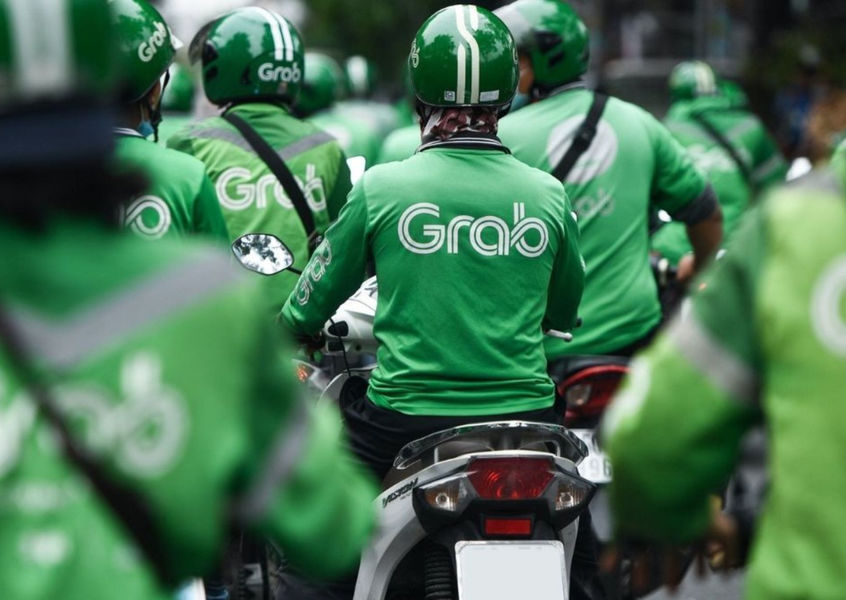
Grab is the Uber of Southeast Asia and it will become your best friend in Vietnam. Available in Hanoi, Ho Chi Minh City, Da Nang, Hoi An, and most other cities, it works the same way: open the app, enter your destination, see the price upfront, confirm.
No negotiating, no getting in a random taxi with a rigged meter, no uncertainty about what the fare should be. A 10-minute ride typically costs 35,000–60,000 VND (roughly $1.50–$2.50 USD). GrabCar for a private car, GrabBike for a motorbike taxi (great for short distances in traffic).
Use it for food delivery too. Grab Food works brilliantly in all major cities.
4. Don’t drink the tap water and be careful with ice
Tap water in Vietnam is not safe to drink, and this applies everywhere in the country, including top hotels. The issue isn’t only bacteria, the water in many areas contains heavy metal levels well above WHO recommendations. Bottled water is cheap (a 1.5-litre bottle costs around 10,000–15,000 VND, less than $1 USD) and available on every corner.
On ice: most cafés and restaurants in cities use commercial ice made from purified water, which is safe. Ice that comes in hollow cylinders with a hole through the middle is factory-produced and fine. Small chips or crushed ice from an unknown source is more of a risk, particularly at very basic street stalls.
If you’re staying in Vietnam for a month or longer, look for the large water barrel dispensers sold at convenience stores. You pay a deposit for the barrel, swap it when empty, and pay only for the water. Much less plastic waste, much cheaper long-term.
5. Always carry cash, especially small notes
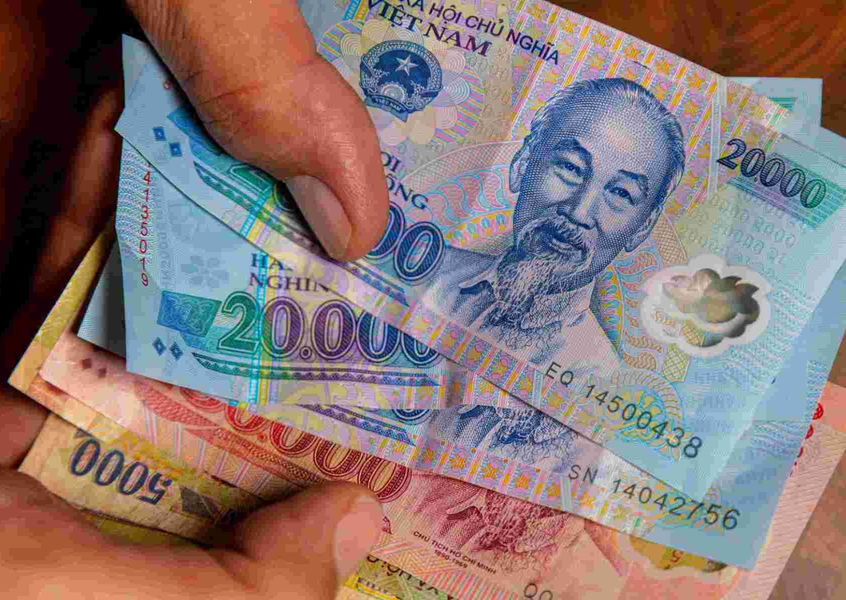
Vietnam is still very much a cash economy outside of major hotels and chain restaurants. Street food stalls, market vendors, local transport, smaller guesthouses, and pagoda entry fees, all cash only. Even places that do accept cards often add a 3–4% transaction fee.
The Vietnamese Dong (VND) can feel confusing at first because of the high numbers. A quick mental shortcut: 100,000 VND is roughly $4 USD. Keep a mix of 20,000, 50,000, and 100,000 VND notes in your wallet for daily use, and save the 200,000 and 500,000 notes for larger purchases.
When withdrawing from ATMs, use machines inside bank branches rather than standalone ones on the street. Skimming exists. Standard withdrawal limits are 2–5 million VND per transaction, and most ATMs charge a fee of 30,000–50,000 VND on top of whatever your bank charges.
6. Haggle at markets
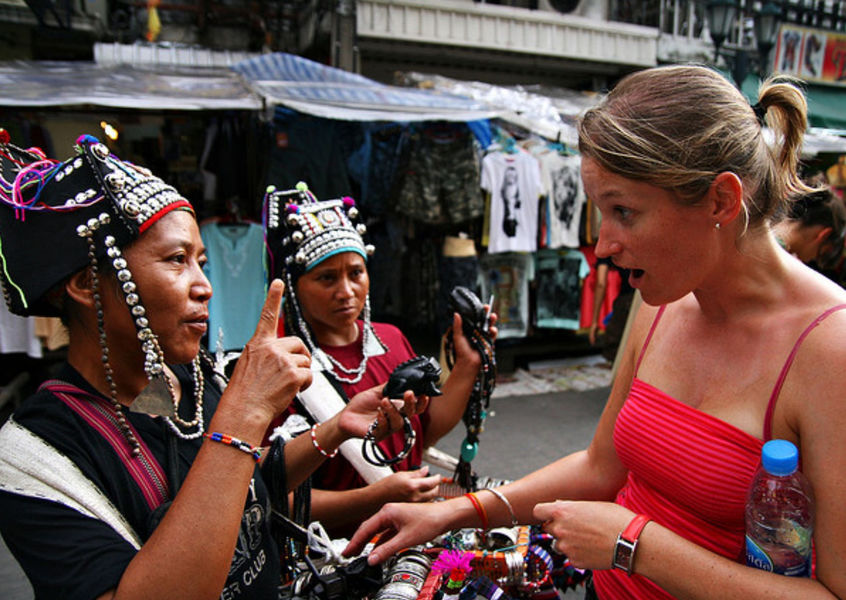
Bargaining is standard practice at local markets across Vietnam such as Ben Thanh Market in Ho Chi Minh City, Dong Xuan Market in Hanoi, the Night Market in Hoi An, and pretty much any open-air vendor. The asking price for a tourist is almost always inflated, sometimes by 50–100%.
Have a figure in mind before you engage. Start below it, stay friendly, and if you’re not getting close to your number, start walking away. That last move almost always brings the price down to what you wanted.
Important context: don’t haggle in restaurants, convenience stores, pharmacies, or shops with price tags on products. And don’t haggle for street food because the prices are already genuinely low and the sellers have small margins. Bargaining over a 20,000 VND bowl of bún chả is not a good look.
7. Don’t flush toilet paper
The plumbing and sewage systems in most of Vietnam cannot handle it, including in hotels and guesthouses that look perfectly modern. There will usually be a bin next to the toilet so you can use it. Yes, it takes a moment to adjust. Yes, it’s the right thing to do.
8. The best apps to have on your phone
Beyond Grab, a few apps will make daily life significantly easier:
- Google Translate: Download the Vietnamese language pack for offline use. The camera translation feature is particularly useful for reading menus and signs without Vietnamese language skills.
- Maps.me or Google Maps offline: Download offline maps before you travel to areas with patchy mobile data, particularly in rural areas of northern Vietnam (Ha Giang, Sapa) or remote island destinations.
- WhatsApp: This is how most local guesthouses, tour operators, and drivers communicate. If you’re booking anything locally, WhatsApp is the channel they’ll expect you to use.
- VNPay or Momo: If you’re staying a while, these local payment apps make small transactions easier. Requires a Vietnamese bank account or SIM card to set up, but worth it for longer stays.
9. Vietnam has three different climates, plan your trip accordingly
One of the most common mistakes first-time visitors make is treating Vietnam as a single-weather destination. The country stretches 1,650 kilometres from north to south, and the climate varies dramatically by region.
- Northern Vietnam (Hanoi, Halong Bay, Sapa, Ninh Binh): October to April is the most comfortable with cooler, drier, less humid. December and January can actually feel cold in Hanoi and genuinely cold in the mountains. Sapa sees frost and occasionally snow in winter. Summers are hot and rainy, with the best rice terrace views in Sapa coming in September (harvest) and May (planting).
- Central Vietnam (Da Nang, Hoi An, Hue): The dry season here runs February to August, the best period for the window for beaches, cycling through Hoi An’s streets, and boat trips. October and November bring heavy rain and flooding, particularly in Hoi An where the Thu Bon River regularly overflows into the Old Town. If you’re going in October–November, go in with realistic expectations.
- Southern Vietnam (Ho Chi Minh City, Mekong Delta, Phu Quoc): Dry from November to April, wet from May to October. Phu Quoc is at its most beautiful December to March, with calm seas and clear skies. The wet season in the south mostly means afternoon downpours rather than all-day rain.
If you’re visiting multiple regions on one trip, it’s worth checking the season for each stop individually rather than the country as a whole.
10. Be prepared for Tết if you’re travelling in late January or February
Tết Nguyên Đán (Vietnamese Lunar New Year) is the country’s most important holiday, and it changes everything.
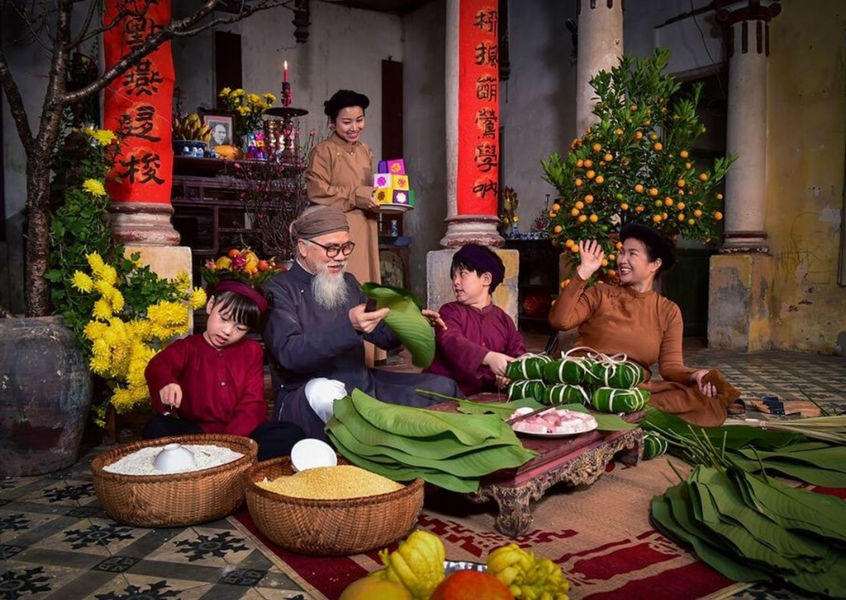
The celebrations themselves are worth experiencing. Streets fill with decorations in red and gold, public spaces host dragon dances and firework shows, and the atmosphere in the days leading up to Tết is genuinely special.
But most restaurants, shops, markets, and some tourist attractions close for 5 to 10 days as Vietnamese people travel home to be with family. Hotels that stay open often operate with minimal staff and increase prices by 10–30%. Transport such as flights, trains, and buses is fully booked weeks in advance.
If your trip falls during Tết, book accommodation and transport at least 6–8 weeks ahead, confirm which hotel services will be running, and stock up on food and water before the holiday begins. It’s entirely possible to travel well during Tết. Just go in prepared rather than assuming everything will be as normal.
11. Don’t overlook the limousine bus for medium distances
Domestic flights are fast and surprisingly cheap in Vietnam. Local domestics such as VietJet, Bamboo Airways, and Vietnam Airlines all connect the main cities frequently. For longer distances like Hanoi to Ho Chi Minh City or Hanoi to Da Nang, flying makes far more sense than spending 14 hours on a sleeper bus.
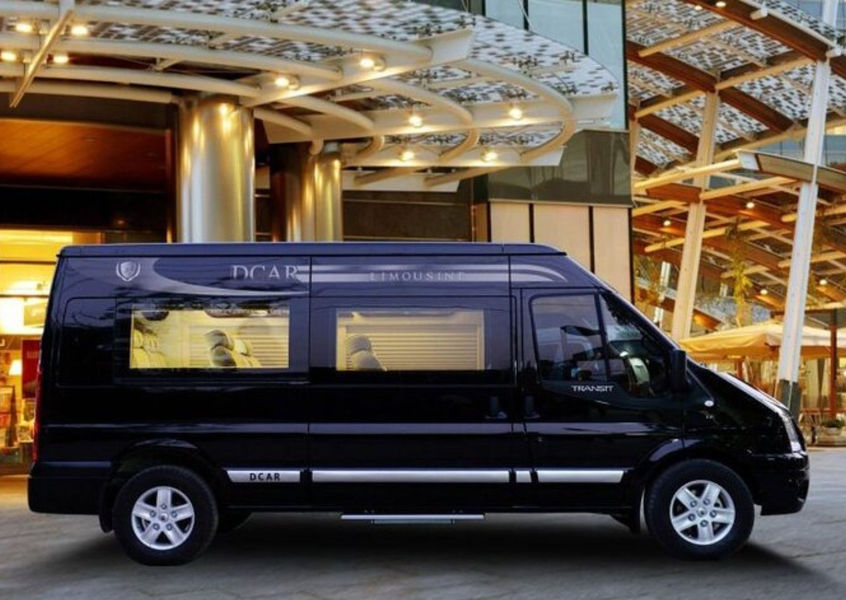
But for medium distances of 3–6 hours from Hue to Hoi An, Da Nang to Hoi An, Hanoi to Ninh Binh, the limousine bus is often the best option and is badly underrated. These are smaller vans or minibuses with large, comfortable reclining seats, door-to-door pickup from your accommodation, and fixed pricing. They’re more comfortable than standard buses and significantly cheaper than a private car.
The overnight sleeper train from Hanoi to Da Nang or Hue is also genuinely pleasant if you book a soft-sleeper cabin or private cabin on one of the newer tourist train carriages (the Lotus Train is well-reviewed for cleanliness and comfort). Although it’s slow, you arrive at your next destination having saved a night’s accommodation cost.
12. Book your accommodation away from the nightlife street
Vietnam’s cities don’t really have noise restrictions or formal closing hours for bars and clubs. If you book a guesthouse near Bui Vien Street in Ho Chi Minh City, Ta Hien Street in Hanoi, or the backpacker areas in Hoi An without realizing how close you are to the action, you will not sleep before 2am.
This isn’t a problem if late nights are part of your plan. But if you’re looking for rest, check the exact street on Google Maps before you book and look at what’s immediately around the property. Reading recent reviews specifically about noise is worth the extra few minutes before you confirm.
13. Read reviews across multiple platforms before booking tours
Vietnam has a well-documented problem with inflated and fake reviews, particularly on single platforms. Some sellers offer discounts in exchange for five-star reviews before the experience is over. Some budget Halong Bay tour operators advertise premium experiences and deliver something very different.
Cross-reference reviews across Google, TripAdvisor, Agoda, and Booking.com before committing to any tour or accommodation. Pay attention to reviews from the last 3–6 months (the experience of a property two years ago may not reflect today). A consistent pattern of specific, detailed positive reviews is more trustworthy than lots of short, generic five-star ratings.
For tours, it’s worth paying for a reputable operator rather than the cheapest option available. The difference between a budget day trip ($40–$60 per person) and a quality overnight cruise ($180–$350 per person) is significant in terms of boat condition, food, and the overall experience.
14. Cover up for temples and keep a scarf in your bag
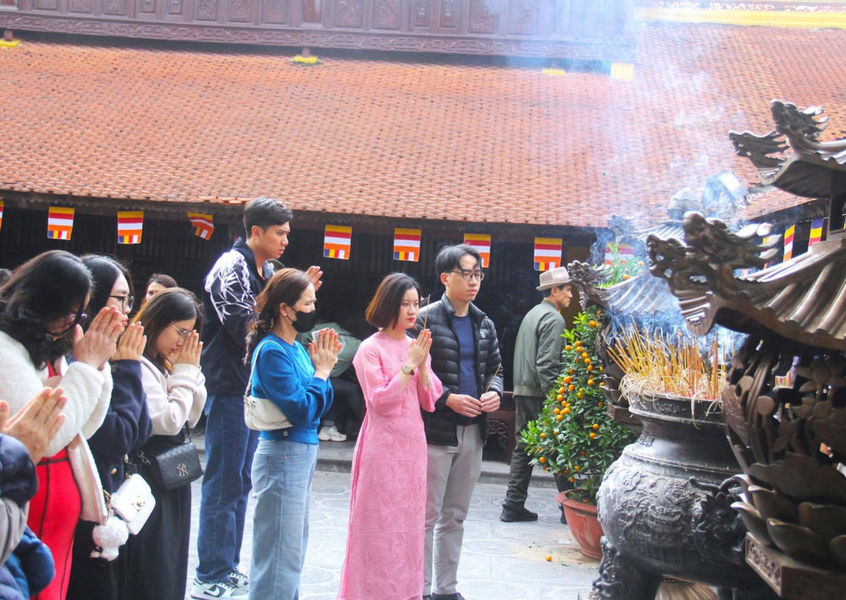
Vietnam has thousands of Buddhist pagodas, Confucian temples, and religious sites, and many of them require visitors to cover shoulders and knees before entering. This applies to both men and women.
The simplest solution is to keep a lightweight scarf or sarong in your bag. It doubles as a beach cover-up, takes no space, and means you’ll never have to turn away from a pagoda because you’re in shorts and a sleeveless top. Many major sites rent or lend cover-ups at the entrance, but having your own is easier.
Remove shoes before entering any temple or pagoda and any private home where you see shoes lined up at the door. Pay attention to what the people around you are doing if you’re unsure.
15. Vietnam is more luxurious than you might expect and cheaper than you’d think
One of the most underrated Vietnam travel tips is this: luxury here is genuinely accessible. If you’ve ever wanted to stay in a resort with a private pool villa, cruise on a junk boat through limestone karsts, or have a tailored outfit made by hand overnight, Vietnam is one of the few places in the world where all of that is possible without a budget that usually makes it possible.
Private overnight cruise cabins on Halong Bay or Lan Ha Bay start from around $180–$350 per person for mid-range operators. Boutique resort stays in Hoi An and Phu Quoc that would cost $500+ per night in the Maldives can be found for $100–$200 here. An entirely custom-tailored outfit from one of Hoi An’s skilled tailors can be done in 24–48 hours for $50–$150 depending on the fabric and complexity.
Use Agoda alongside Booking.com when searching for accommodation. Agoda is much more widely used across Asia and often has better rates and availability for the region.
16. Learn five Vietnamese words
You don’t need to speak Vietnamese to travel well here. English is widely understood in tourist areas, hotels, and restaurants in all major cities. But making the effort to use a few basic phrases earns genuine warmth in return.
- Xin chào (sin chow) — Hello
- Cảm ơn (gam uhn) — Thank you
- Không (khom) — No / No thank you
- Bao nhiêu? (bow nyew) — How much?
- Ngon lắm (ngon lam) — Delicious
Vietnamese is a tonal language, so your pronunciation may not be perfect. It doesn’t matter. The attempt is what people respond to.
17. Street food is safe but you should follow a few simple rules
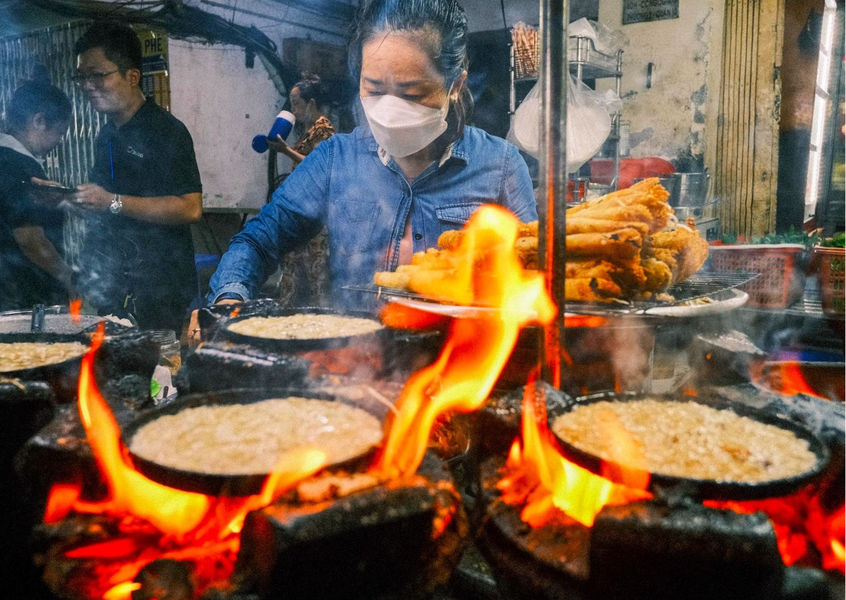
Vietnamese street food is some of the best in the world, and avoiding it entirely out of fear of food poisoning would be a genuine loss. In practice, the vast majority of visitors eat street food throughout their trip without any issues.
The practical rules: choose stalls with high turnover and visible cooking happening in front of you (freshly cooked = lower risk than food sitting out). Look for stalls busy with local customers. They’re eating there every day. Avoid raw vegetables and salads at street stalls unless you know the water used to wash them was filtered. Peel fruit yourself.
Hollow cylindrical ice (factory-made) at established cafés and restaurants is generally safe. Crushed or chipped ice at very basic stalls is more of a gamble.
If you do get an upset stomach, pharmacies (Nhà thuốc) are everywhere and stock oral rehydration salts, activated charcoal, and antidiarrheal medication. Pack a small travel health kit with these basics just in case.
18. Watch out for the most common scams
Vietnam is genuinely very safe, and most visitors never have a serious problem. But a few scams are common enough in tourist areas that it’s worth knowing about them:
- Fake taxis at airports: When you land, only use official metered taxis from the designated taxi stands outside arrivals, or order a GrabCar from inside the terminal. At Noi Bai Airport in Hanoi, authorised companies include Noi Bai Taxi and G7. At Tan Son Nhat in Ho Chi Minh City, look for Vinasun and Mai Linh. People approaching you inside the terminal offering taxi services are almost always unlicensed.
- Motorbike bag snatching: More common in Ho Chi Minh City than Hanoi. Walk with your bag on the shoulder away from the road, and don’t use your phone while walking on busy streets.
- The “closed attraction” scam: Someone tells you the temple or museum you’re heading to is closed today (festival, renovation, government event) and helpfully offers to take you somewhere better, which is usually a shop where they earn commission. Check Google Maps opening hours and confirm independently before changing your plans.
- Rigged cyclo or xe ôm fares: Always agree on a price before you get on. With Grab, this is a non-issue since the fare is shown in the app.
19. Consider your luggage situation if you’re visiting Hoi An
Hoi An’s tailors are genuinely excellent, and the prices for custom-made clothing are a fraction of what you’d pay anywhere else. A tailored dress, suit, or linen shirt made to your exact measurements can be done within 24–48 hours. Fabric quality varies, so it’s worth spending slightly more and using a shop with good reviews.
The problem is packing it all home. More than one visitor has had to mail parcels home from Vietnam because they ran out of space. If you’re planning to shop seriously, whether for tailor-made items, lacquerware, silk, or the handmade goods available at much lower prices than in Western markets, factor this into your packing. Consider bringing a foldable duffel bag, or budget for an extra bag check on the way home.
20. Vietnam is very safe, especially for solo travellers
This deserves saying clearly: Vietnam is one of the safest countries you can visit in Southeast Asia. Violent crime targeting tourists is rare. People generally go about their lives without bothering you. The culture tends toward warmth and friendliness rather than confrontation.
For solo female travellers in particular: Vietnam is widely considered one of the more comfortable destinations in the region. Harassment is uncommon. The standard cautions apply: be aware of your surroundings, trust your instincts, don’t walk alone in unlit areas at night but this is true anywhere in the world.
The culture places importance on social harmony, which means people tend to be conflict-averse and non-confrontational. Even when dealing with a frustrating situation (a wrong order, an overcharge, a miscommunication), staying calm and approaching it with a smile will get you further faster than showing frustration.
Vietnam rewards good planning — particularly if you’re covering multiple regions or visiting during peak season (November to March). The country is long, the seasons vary by region, and transport between destinations works best when booked a few days ahead rather than at the last minute.
If you’re designing a private trip or working with a travel agent who needs ground arrangements in Vietnam, a specialist Vietnam B2B DMC takes the complexity off your plate. Viet Dan Travel DMC is a Vietnam-based destination management company handling private luxury tours, bespoke itineraries, and tailored programs for international visitors across northern, central, and southern Vietnam.
0 Comment