

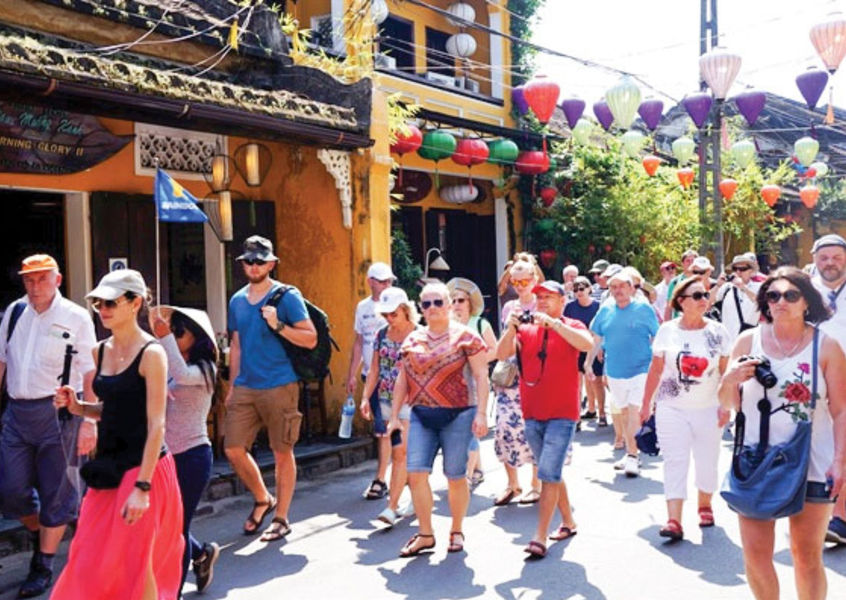
Vietnam’s tourism sector has opened 2026 with its strongest performance on record. Official data from the General Statistics Office (GSO) confirms that 6.76 million international visitors arrived in Vietnam during Q1 2026, a 12.4% year-on-year increase and the highest first-quarter figure in the country’s history. In March alone, nearly 2.1 million international travelers entered Vietnam, sustaining what analysts are now describing as a structural growth trend rather than a post-pandemic rebound.
The Vietnamese government has set a full-year target of 25 million international visitors for 2026, alongside 150 million domestic tourists, a goal that Q1 data suggests is firmly within reach.
1. Why has Vietnam become so popular among inbound travelers?
Several converging factors explain the momentum. Vietnam has successfully positioned itself as a “safe and friendly destination” at a time when travelers are increasingly sensitive to geopolitical risk. International safety indexes rank Vietnam among the safest destinations in Southeast Asia, and the U.S. State Department currently maintains a Level 1 travel advisory for the country.
Beyond safety, Vietnam’s 90-day e-visa available online to citizens of most nationalities. This has removed a key booking friction point, particularly for first-time visitors from India and other high-growth source markets. Expanded direct air connectivity between major Indian cities and Vietnamese gateways (Hanoi and Ho Chi Minh City) has further lowered the barrier to travel.
Government investment in airport infrastructure, sustainable tourism incentives, and international marketing campaigns has rounded out a strategy that is clearly yielding results.

2. Key Markets to Watch
Asian source markets, led by South Korea, China, and Japan continue to account for the largest share of arrivals. However, several other markets are posting exceptional growth rates:
- Russia recorded 367,168 arrivals in Q1 2026, a staggering 194.5% increase year-on-year, with Phu Quoc remaining the primary destination for Russian visitors.
- India is emerging as one of the most strategically significant growth markets, driven by direct flight expansion, e-visa accessibility, and strong appetite for both FIT and group travel to Vietnam.
- European markets including Poland, Switzerland, Sweden, and Norway are recording notable increases, signaling that Vietnam is attracting long-haul travelers who previously favored competing Southeast Asian destinations.
3. Destination Trends
While Hanoi, Hue, and Hoi An remain the foundation of most international itineraries, the 2026 trend is moving toward secondary and emerging destinations. Ha Giang in Vietnam’s northern highlands is drawing adventure and responsible tourism travelers seeking community-based experiences. The Central Highlands and Da Nang’s coastal luxury corridor are also recording increased international interest.
Hoi An, already a UNESCO World Heritage Town, has become a widely cited benchmark for how heritage preservation and modern tourism can coexist, a narrative that resonates with culturally driven travelers from Europe, India, and North America alike.

4. What This Means for Tour Operators
The Q1 2026 data confirms that Vietnam is no longer a destination “to watch”; it is a market in full momentum. For travel agents and tour operators, particularly those building programs for Indian outbound travelers, the combination of safety reputation, visa accessibility, direct air connectivity, and competitive pricing positions Vietnam as the strongest current opportunity in Southeast Asia.
Demand for itineraries beyond the classic circuit is commercially real. Ha Giang loops, Mekong Delta extensions, and Central Highlands routes are finding buyers and commanding premium margins with the right ground operation in place.
0 Comment