


The best time to visit Vietnam is not a single answer — it is a question that changes depending on where in the country you are going, what kind of experience you are after, and how much weather flexibility your trip allows. Vietnam stretches more than 1,650 kilometres from north to south across three distinct climate zones, which means the north and the south can be experiencing completely opposite seasons at the same time. In October, for example, Ha Long Bay in the north sits in its most atmospheric autumn window while Da Nang on the central coast faces its heaviest annual rainfall and typhoon risk.
For travellers planning Vietnam tours, understanding these regional climate differences is essential for building an itinerary that aligns with the experiences they actually want — whether that means trekking in the north, beach time in the south, or luxury golf travel along the central coast.
Getting this timing right shapes the quality of your trip more than almost any other planning decision. This guide breaks down Vietnam’s ideal travel seasons region by region and then by travel style — beach, trekking, cultural, golf, and luxury — so you can match your dates to the experience you actually want rather than defaulting to a one-size window that may not suit your specific itinerary.
When is the Best Time to See Vietnam? – Vietnam’s Three Climate Zones
Before looking at specific months, it helps to understand the structural logic of Vietnam’s weather. The country’s S-shaped geography creates three zones that behave independently:
Northern Vietnam (Hanoi, Ha Long Bay, Sapa, Ha Giang, Ninh Binh) follows a temperate model with four identifiable seasons. Temperatures range from around 10 degrees Celsius in January to 35 degrees in July. Winter is cool and occasionally misty; summer is hot, humid, and wet.
Central Vietnam (Da Nang, Hoi An, Hue, Phong Nha) operates on an inverted seasonal cycle compared to the rest of the country. Its dry season runs February to August — when the south is getting wet — and its rainy and typhoon season runs September to January, when the south enjoys its clearest weather.
Southern Vietnam (Ho Chi Minh City, the Mekong Delta, Phu Quoc) maintains a tropical pattern with two seasons: dry from November to April and wet from May to October. Temperatures stay consistent year-round, averaging 28 to 30 degrees Celsius, with the main variable being rainfall rather than temperature.
This asymmetry means there is no single period where all three regions are simultaneously at their best. However, there are windows where the combination is most practical, and there are specific months that damage specific trip types far more than most general travel guides acknowledge.
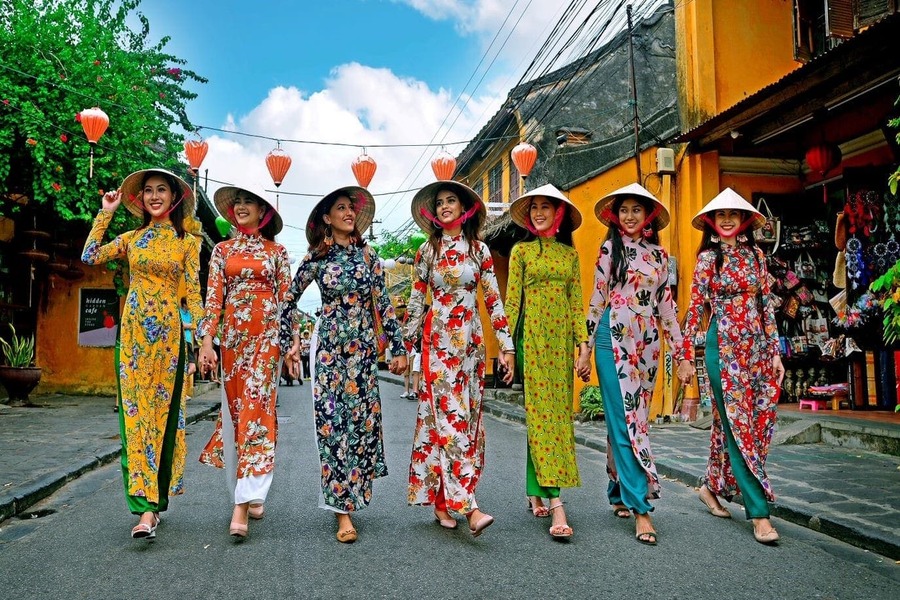
When Is the Best Time to Travel to Northern Vietnam?
Northern Vietnam’s most reliable travel windows are October to November and March to April. These shoulder seasons deliver mild temperatures, manageable rainfall, and the clearest visibility for outdoor activities across the north’s major destinations.
October and November are widely considered the finest months for Hanoi and Ha Long Bay simultaneously. Temperatures in Hanoi settle into the range of 22 to 28 degrees Celsius. The summer rains have ended, the air clarity improves, and Ha Long Bay’s sea conditions are calm enough for overnight cruises without the swell that can affect the bay from June through August. On Ha Long Bay specifically, April to June and September to October represent the two windows of calmest sea conditions — the September to October window requires care as typhoon development remains statistically possible in the South China Sea through October, though most cruise operators monitor forecasts and can adjust departures.
March and April mark spring in the north, with temperatures rising from 18 to 27 degrees Celsius and precipitation low across Hanoi, Ninh Binh, and the coastal areas. This is also a culturally significant period — the Perfume Pagoda Festival near Hanoi runs from the first to the third lunar month and draws significant domestic visitor numbers.
What to avoid in the north: July and August represent the peak of the northern rainy season. Hanoi averages around 240 millimetres of rain in July alone, temperatures routinely exceed 35 degrees, and the combination of heat and humidity makes extended outdoor exploration genuinely uncomfortable. January, while relatively dry, brings northern Vietnam’s coldest temperatures, with Hanoi occasionally dropping to 10 to 13 degrees — manageable in a jacket but noticeably different from the tropical warmth most visitors associate with Southeast Asia.
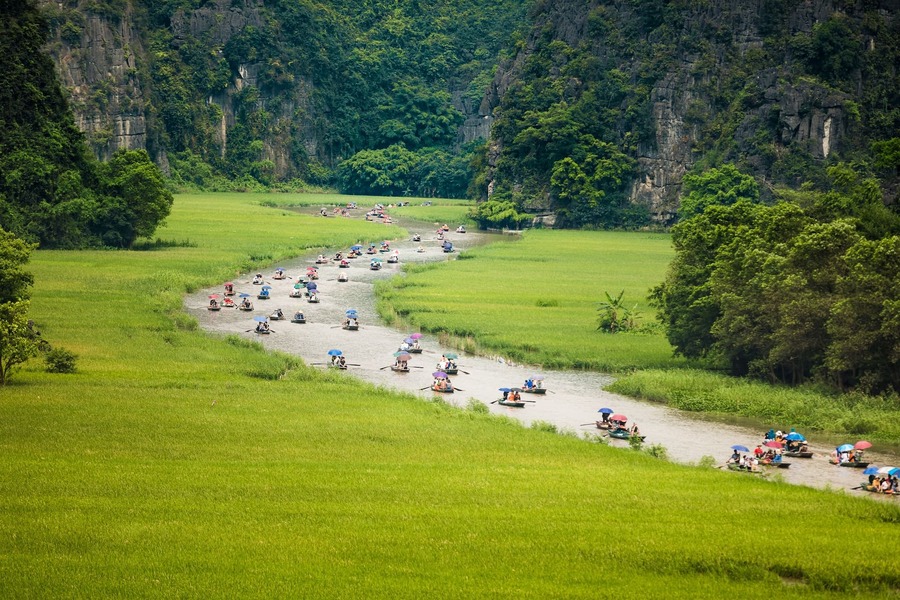
The Best Season to Visit Sapa and the Northern Highlands
Sapa and Ha Giang operate on a different calendar from Hanoi and Ha Long Bay, and conflating the two is one of the most common planning mistakes first-time visitors make. At 1,600 metres elevation, Sapa has a highland climate where the rain and fog that make the lowlands uncomfortable in summer can actually make the mountain landscape dramatically beautiful — while the clear autumn and spring windows are when trekking conditions are optimal.
For rice terrace photography, the two peak windows are:
September to early October: This is Sapa’s harvest season — the most photographically iconic window, when terraced fields across Muong Hoa Valley turn from deep green to layered gold across the hillsides. Temperatures average 18 to 22 degrees Celsius during the day. Early September captures the richest golden colour before the harvest is fully complete. This is also the most popular window, with accommodation filling up 6 to 8 weeks in advance at major homestays.
May to June: The water-pouring season, when fields are flooded for planting and the terraces reflect the sky and surrounding peaks like a series of mirrors. Mist rises from the valleys in the morning. This is a more atmospheric and less crowd-heavy period than September.
For trekking comfort: March to May and October to November offer the best conditions — mild temperatures of 14 to 21 degrees Celsius in spring and slightly cooler in autumn, with trails dry enough for sustained walking without the mud that compromises summer routes.
Sapa in January and February is cold, with temperatures sometimes dropping to 6 degrees Celsius and occasional frost. Snow has fallen on Fansipan peak in recent winters. This is a niche but atmospheric period for travellers who specifically want alpine conditions.
For Ha Giang, September to November is considered the gold standard window — post-harvest landscapes, buckwheat flowers blooming on the limestone plateau from October, and temperatures cool enough for comfortable motorbike riding through the Ma Pi Leng Pass.

When Is the Ideal Time to Visit Central Vietnam?
Central Vietnam’s weather calendar runs counter to most expectations, and this is where the most consequential planning mistakes occur. The dry season for Da Nang, Hoi An, and Hue runs February to August — not December to April as it does in the south. The central rainy and typhoon season is September to January.
The practical implications of this are significant. October is statistically the most volatile month in central Vietnam. Da Nang and Hoi An experience monthly rainfall between 250 and 450 millimetres during the peak rainy window. Hue records some of the highest annual rainfall in the country, reaching up to 2,800 millimetres per year, with the heaviest concentration in October and November. Hoi An’s Ancient Town, built along the Thu Bon River, is prone to flooding during this period — water levels historically reach 1.5 to 2 metres in severe events, temporarily closing street-level businesses and affecting lower-floor accommodation.
In October 2026 – 2027, record rainfall in central Vietnam caused flooding across provinces from Quang Tri to Khanh Hoa, with a 24-hour rainfall record of 1,739.6 millimetres recorded at Bach Ma — a figure that illustrates the upper end of what this season can produce, even if most years do not approach that extreme.
For central Vietnam, the ideal travel windows are:
February to April: The peak comfort window. Temperatures in Da Nang and Hoi An average 22 to 28 degrees Celsius, rainfall is minimal, and sea conditions at Da Nang’s beaches are at their calmest. March and April are the single best months for beach access along the central coast.
May to August: Still dry and suitable for beach and cultural travel, but temperatures climb to 32 to 36 degrees Celsius in July and August. Humidity is high. Golf at courses like Montgomerie Links and Hoiana Shores is best played in early morning tee times during this period rather than midday.
November to late January: A transitional zone requiring flexibility. November can still see significant rainfall, particularly in early November, but conditions typically improve through December. December and January are manageable for cultural tourism in Hue and Hoi An — both cities have indoor and covered attractions — though beach access is limited.

When Is the Best Time to Visit Southern Vietnam?
Southern Vietnam’s weather is the most consistently accessible in the country. Ho Chi Minh City and the Mekong Delta maintain temperatures between 27 and 33 degrees Celsius year-round, with the primary variable being rainfall rather than temperature.
November to April is the dry season and the peak travel window for the south. December to February represents the absolute best combination — dry, sunny, temperatures in the 28 to 31 degree range, and low humidity relative to the wet season months. This is peak season, and hotel rates in Ho Chi Minh City and Phu Quoc reflect it — expect 25 to 40% higher rates than wet season at comparable properties.
May to October is the rainy season in the south. The character of southern Vietnamese rain is different from northern summer rain — afternoon thunderstorms of one to three hours are the typical pattern rather than prolonged all-day rainfall. Many experienced Vietnam travellers visit Ho Chi Minh City during the wet season, arriving in the morning, completing cultural visits, and scheduling outdoor activities before early afternoon. The trade-off is meaningful: wet season hotel rates can be 30 to 35% lower than peak, and the city’s food, cultural, and nightlife assets are fully available regardless of rain.
Phu Quoc’s dry season aligns with the southern window: November to April delivers consistent sunshine and calm seas ideal for diving, snorkelling, and beach access. July and August bring the southwest monsoon, which produces strong swells on the west coast beaches — Bai Dai and Long Beach are most affected — though the east coast remains more sheltered.
Best Time to See Vietnam by Travel Style
Matching your dates to your travel priorities produces a more useful planning framework than following a single national recommendation.
For beach travel, the central coast beaches of Da Nang, Hoi An, and the area between them offer the finest conditions from February to June. South Vietnam beaches including Phu Quoc and the Vung Tau coast are best from November to April. There is no single month where both regions are simultaneously at their beach-season peak, which is why a north-to-south trip in March delivers central Vietnam beaches in ideal condition with the south coast approaching its own comfortable window.
For trekking and outdoor adventure, Sapa’s September to October harvest window is the premier trekking season in Southeast Asia for rice terrace landscapes. Ha Giang’s loop is best from September to November. For Phong Nha and the cave systems of central Vietnam’s interior, February to August avoids the flooding risks of the rainy season while keeping temperatures tolerable for jungle trekking.
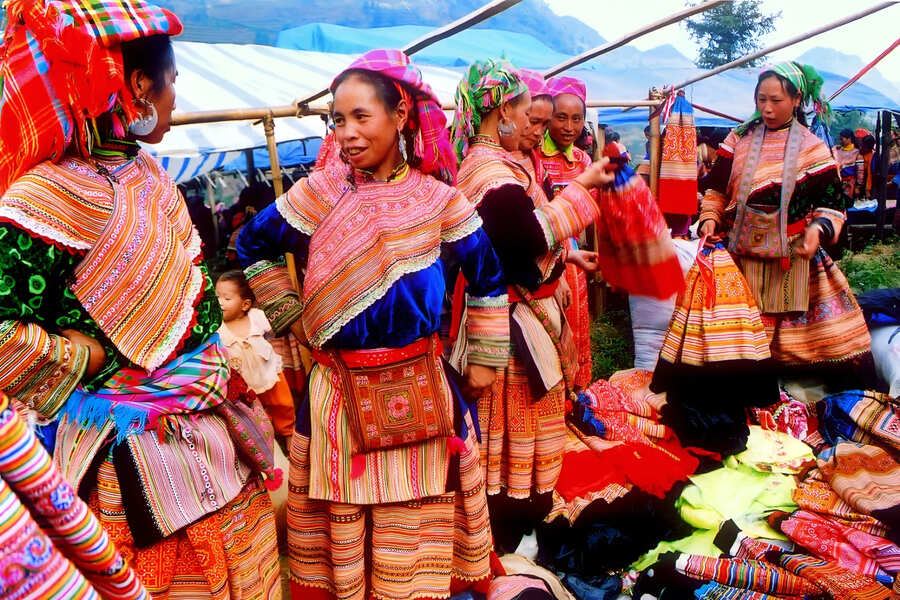
For cultural tourism, the shoulder seasons on either end of Vietnam’s respective regional dry windows deliver the most comfortable conditions for extended sightseeing. Hue in February through April is historically considered the best combination of weather and atmosphere — the Hue Festival, held every two years, brings traditional performance and crafts to the imperial capital in a cultural programme that is the most substantial of any city in Vietnam.
For golf, the Da Nang corridor of courses — BRG Da Nang, Montgomerie Links, Hoiana Shores, Ba Na Hills — plays best from February to April. Temperatures are 22 to 28 degrees, fairways are dry, and sea breezes are manageable rather than the strong coastal winds that affect afternoon play from May onward. For The Bluffs Grand Ho Tram in the south, November to April aligns with both the dry season and the best course conditions — the links-style layout plays very differently in wet versus dry conditions, and the dry season delivers the firm, fast playing surface that the Greg Norman design rewards.
For luxury travel and resort stays, the December to February window opens the finest combination of conditions across Vietnam’s premium properties. The Four Seasons Nam Hai, InterContinental Danang Sun Peninsula, and Banyan Tree Lang Co are all at their atmospheric peak during this period — cool enough for outdoor dining, dry enough for beach and pool use, and with the added dimension of festive programming through Christmas and New Year.
Month-by-Month Summary: When is a Good Time to Visit Vietnam
January: Best for southern Vietnam (Phu Quoc, Ho Chi Minh City, Mekong Delta). Manageable in Da Nang and Hoi An for cultural tourism. Cold in Hanoi (10 to 15 degrees) but dry.
February: One of the best overall months for the whole country. Central Vietnam enters its dry season. Hanoi warms. South Vietnam remains dry and clear.
March and April: The single most recommended window for first-time visitors covering north to central Vietnam. Hanoi at 18 to 24 degrees, Da Nang at 22 to 28 degrees, low rainfall, long daylight hours.
May: The last comfortable month for central Vietnam beaches before heat intensifies. Northern Vietnam starts its wet season.
June to August: Dry season peak for central Vietnam but extremely hot (32 to 36 degrees). Sapa and Ha Giang are at their most photogenic and lush. Wet season in the north and south.
September: Best month to see Sapa’s golden rice terraces. Ha Giang Loop conditions improving. Central Vietnam beach season still active. South Vietnam still wet.
October: Outstanding for northern Vietnam — Hanoi, Ha Long Bay, Ninh Binh. Ha Giang is at its peak. Avoid central Vietnam from October through November.
November: Southern Vietnam enters its dry season. Phu Quoc becomes ideal. Northern Vietnam still good. Central Vietnam improving toward late November.
December: Strong month for southern Vietnam. Da Nang and Hoi An recovering to good conditions. Hanoi cool and dry.

The Honest Answer on When to Go
The best time to visit Vietnam for a first-time visitor covering the country from Hanoi to Ho Chi Minh City is March and April. Temperatures across all three zones are comfortable, rainfall is low in the north and south and minimal in the central region, and the daylight conditions for outdoor photography and sightseeing are at their finest.
For travellers with flexibility and a specific destination focus — Sapa’s rice harvest in September, Phu Quoc’s beaches in December, Da Nang’s golf corridor in February — the optimal window shifts to match the destination. Vietnam is genuinely a year-round country in the sense that one region is always in season. The planning task is simply making sure your dates align with the right region for your priorities rather than following a generic national recommendation.

0 Comment