
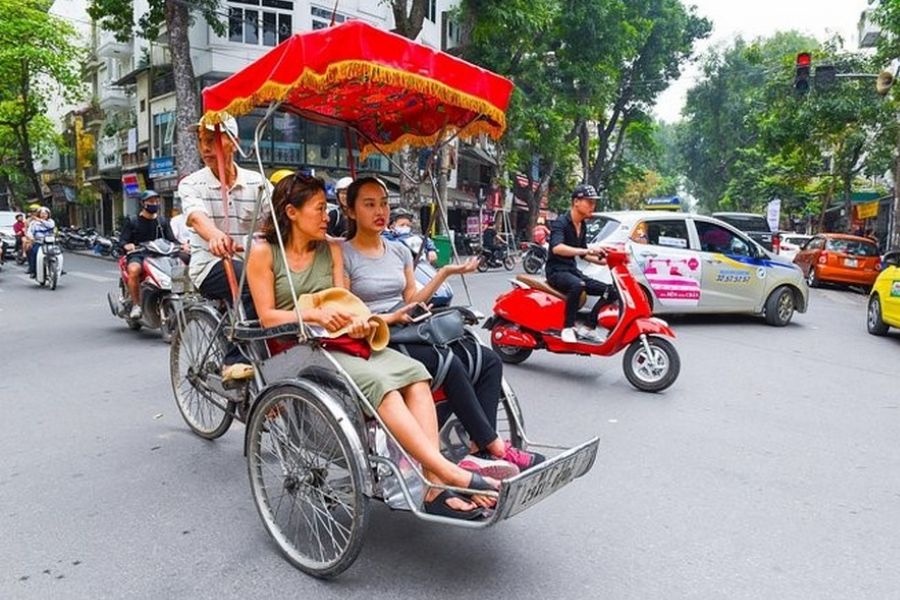

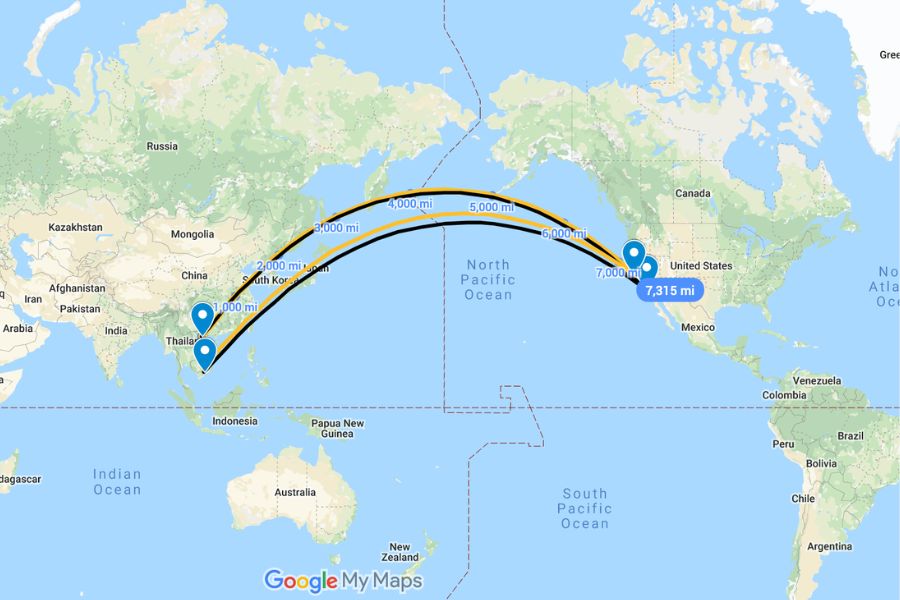
The distance between the United States and Vietnam is no longer the barrier it once was, but it still shapes every decision in the planning process, from which airport to fly into to how many days a trip actually needs. Getting from the US to Vietnam typically means a single stopover in East Asia or the Middle East, a 90-day e-visa applied for online, and a flight budget that starts around USD 500 one way. This guide breaks down flights, visa rules, timing, and trip length so American travelers and the agents planning their trips can build an itinerary with confidence.
1. Quick Facts: Vietnam Travel from USA
| Factor | Details |
| Nonstop flight | San Francisco (SFO) to Ho Chi Minh City (SGN), Vietnam Airlines only |
| Flight duration | Approx. 15h 40m nonstop; 19–30+ hours with one connection |
| Visa requirement | E-visa required for all US passport holders (no visa-free entry) |
| E-visa validity | Up to 90 days, single or multiple entry |
| E-visa cost | Starting from USD 25 (single entry) / USD 50 (multiple entry)* |
| Recommended trip length | 10–14 days minimum, given flight time |
| Best months | February–April and September–November |
Note: Fees are set by the Vietnamese Immigration Department and subject to change; always verify current pricing before booking.
2. Flights from the USA to Vietnam
There is exactly one nonstop route between the two countries: San Francisco International Airport (SFO) to Tan Son Nhat International Airport (SGN) in Ho Chi Minh City, operated by Vietnam Airlines roughly four times a week, with one-way fares starting from around USD 487–600 and a flight time near 15 hours 40 minutes.
For travelers departing from anywhere other than San Francisco or those heading to Hanoi (which has no nonstop US service), a single connection is standard. The most common routings are:
- Via East Asia: Tokyo (JAL, ANA), Seoul (Korean Air), Taipei (EVA Air), or Hong Kong (Cathay Pacific): well suited to West Coast departures.
- Via the Middle East: Doha (Qatar Airways) or Dubai (Emirates): often more convenient for East Coast cities like New York or Boston.
- Via Singapore: Singapore Airlines, serving both Hanoi and Ho Chi Minh City.
Total travel time with a connection generally runs 19 to 30+ hours depending on layover length. For agents booking clients, layover duration matters more than headline fare: a two-hour connection after a 12+ hour flight is a very different experience from a five-hour one, and this is worth flagging when comparing itineraries for first-time long-haul travelers.
3. Vietnam Visa Requirements for US Citizens
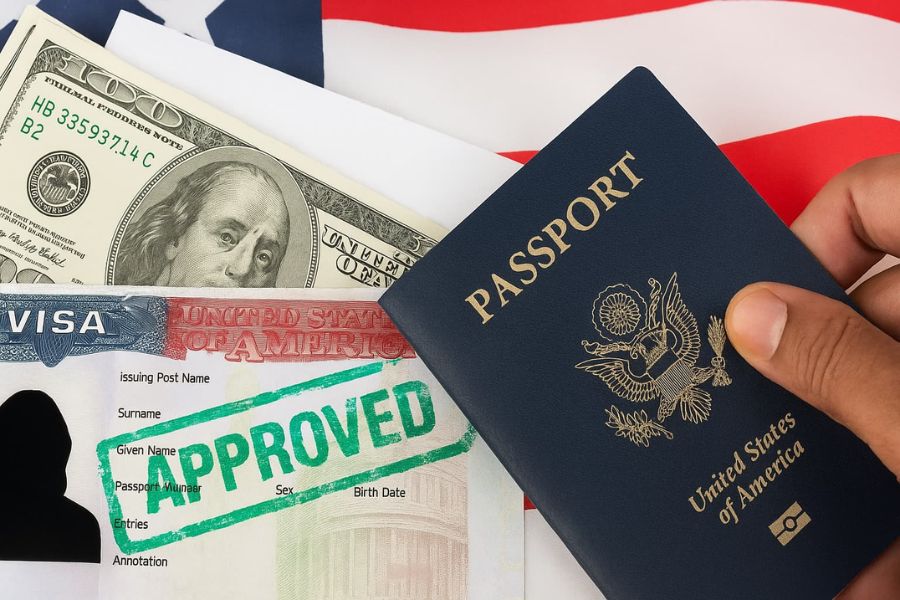
US passport holders have no visa-free entry to Vietnam under any circumstance, including short tourism visits. Every American traveler needs one of the following:
- E-visa: The standard route for almost all US travelers. Applied for online at the official government portal, valid for up to 90 days, single or multiple entry, with processing typically taking 3–7 business days (expedited service available).
- Visa on arrival: Requires a pre-approval letter arranged in advance; less commonly used now that e-visas cover all nationalities.
- Embassy-issued visa sticker: Obtained through the Vietnamese Embassy in Washington, DC, or one of its consulates, mainly used for longer-stay or non-tourist purposes.
One frequent point of confusion: Phu Quoc Island has a separate 30-day visa-free policy, but it applies only to travelers flying directly into Phu Quoc and staying there. It does not extend to Hanoi, Ho Chi Minh City, Da Nang, or any itinerary that includes travel beyond the island.
Passports must be valid for at least six months beyond the planned exit date, with at least two blank visa pages. Because e-visa rules have changed multiple times in recent years, agents and travelers should confirm current fees and processing times directly on the government portal before finalizing any non-refundable bookings.
4. Best Time to Travel to Vietnam from the USA
Vietnam’s climate varies significantly from north to south, so “best time” depends on which regions are on the itinerary:
- North (Hanoi, Sapa, Ha Long Bay): Spring (February–April) and autumn (September–November) offer the most comfortable temperatures and clearer skies.
- Central (Hue, Da Nang, Hoi An): February to May avoids the region’s rainy season.
- South (Ho Chi Minh City, Mekong Delta, Phu Quoc): November to February is cooler and drier.
For a first trip covering both north and south, December through April tends to work best across the country. Given the long flight from the US, arriving with a day of buffer before any packed activities is worth building into the schedule to offset jet lag.
5. How Long Should a Vietnam Trip from the USA Be
Given a minimum 19-hour journey each way, 10 to 14 days is the realistic floor for a first-time itinerary that justifies the travel time and allows both northern and central or southern Vietnam to be covered without feeling rushed. Shorter windows work better when the trip is anchored around a single region, such as a Hanoi and Ha Long Bay loop, or when Vietnam is combined with a broader Southeast Asia itinerary.
6. Booking Vietnam Travel from the USA: FIT, Group, or Through a Local DMC
American travelers and the agents booking for them generally have three paths into a Vietnam trip:
- Fully independent travel (FIT): Booking flights, hotels, and activities separately. Offers flexibility but leaves logistics coordination, transfers, and local vetting entirely to the traveler.
- Packaged group tours: Fixed departures with set itineraries, priced for volume but with limited customization.
- Working with a destination management company (DMC) on the ground in Vietnam: The route most travel agents and tour operators use once they move beyond one-off individual bookings.
For agencies building repeatable Vietnam programs, whether FIT honeymoon requests, small groups, or MICE and incentive travel, routing bookings through a local ground operator solves problems a US-based agent cannot solve alone: real-time hotel and guide availability, net rates instead of retail pricing, dietary and accessibility handling at the property level, and a single point of contact if a flight delay or itinerary change happens mid-trip. This matters especially for booking windows: Vietnam’s peak season (December–February) fills hotel allotments and guide availability months in advance, so agents working with an established DMC get priority access that direct-to-hotel booking often cannot secure.
7. Sample Budget Estimate for a Vietnam Trip from the USA
| Category | Estimated Cost (USD) |
| Round-trip flight (SFO nonstop) | $1,000–$1,300 |
| Round-trip flight (with connection) | $800–$1,400 |
| E-visa | $25–$50 |
| Mid-range hotels (per night) | $50–$120 |
| Ground transport & guide (per day, private) | $60–$150 |
| Meals (per day) | $20–$40 |
Note: Figures are starting-point estimates for planning purposes only and fluctuate with season, exchange rates, and booking lead time. Always verify current rates with your DMC or tour operator before quoting a client.
8. Combining Vietnam with Cambodia and Laos
Because the trans-Pacific flight is long, many American travelers extend their Vietnam trip to include neighboring countries:
- Cambodia: A short flight or a Mekong River journey from Ho Chi Minh City, commonly paired for an Angkor Wat extension.
- Laos and Thailand: Suited to a longer three-week itinerary for travelers wanting a broader Indochina experience.
Agents planning multi-country itineraries should confirm visa requirements separately for each country, since Cambodia and Laos have their own distinct entry rules that don’t align with Vietnam’s e-visa system.
9. Frequently Asked Questions
Are there any direct flights from the USA to Vietnam?
Yes, one route: San Francisco (SFO) to Ho Chi Minh City (SGN) on Vietnam Airlines, operating about four times a week.
Do US citizens need a visa to visit Vietnam?
Yes. The United States is not on Vietnam’s visa-exemption list, so all US passport holders need an e-visa, visa on arrival, or embassy-issued visa sticker for every entry.
How long does a Vietnam e-visa take to process for US applicants?
Standard processing runs 3–7 business days, with expedited options available for travelers booking closer to departure.
Is 10 days enough for a first Vietnam trip from the USA?
Ten days is workable for a single-region itinerary, but 12–14 days gives enough time to cover both northern and southern Vietnam without a rushed pace, given the long flight.
Can US travelers use the Phu Quoc 30-day visa exemption for the rest of Vietnam?
No. The exemption applies only to travelers flying directly into Phu Quoc and remaining on the island; any travel to Hanoi, Ho Chi Minh City, or elsewhere still requires a standard e-visa.
Viet Dan Travel DMC works with travel agencies and tour operators across the USA to build FIT, group, and MICE itineraries backed by on-the-ground logistics, net rates, and local expertise across Hanoi, Ho Chi Minh City, and beyond. Get in touch to start building your next Vietnam program.

0 Comment