
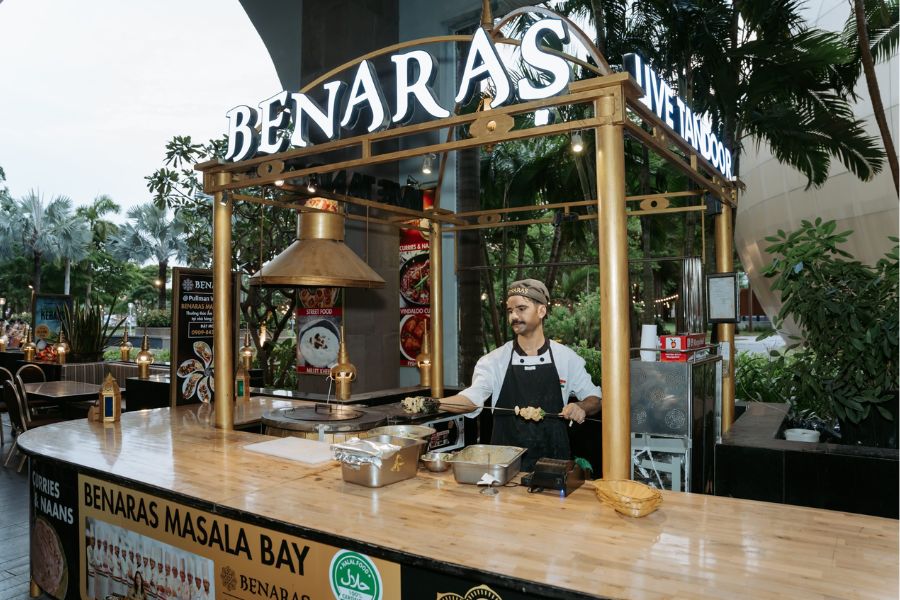

Food is usually the first question a vegetarian or Jain client asks before confirming a Vietnam itinerary, and it is also the question most likely to go wrong if the answer is vague. Vietnamese vegetarian cuisine, known locally as “an chay,” is genuinely abundant, but it is not automatically Jain-safe, since many chay dishes still use onion, garlic, and root vegetables. This guide breaks down exactly what vegetarian and Jain travelers can eat across Vietnam’s main cities, which restaurants and hotels can reliably deliver it, and how travel agents and tour operators can lock in these arrangements without last-minute surprises at the table.
1. Where to Find Vegetarian and Jain Meals Across Vietnam
Vietnam’s Indian restaurant scene has expanded quickly over the past decade, driven largely by rising tourism from South Asia and by resident and expatriate communities who follow vegetarian and Jain diets year-round. Most dedicated Jain-friendly kitchens are concentrated around this Indian restaurant network rather than in standalone Vietnamese establishments.
1.1. Hanoi
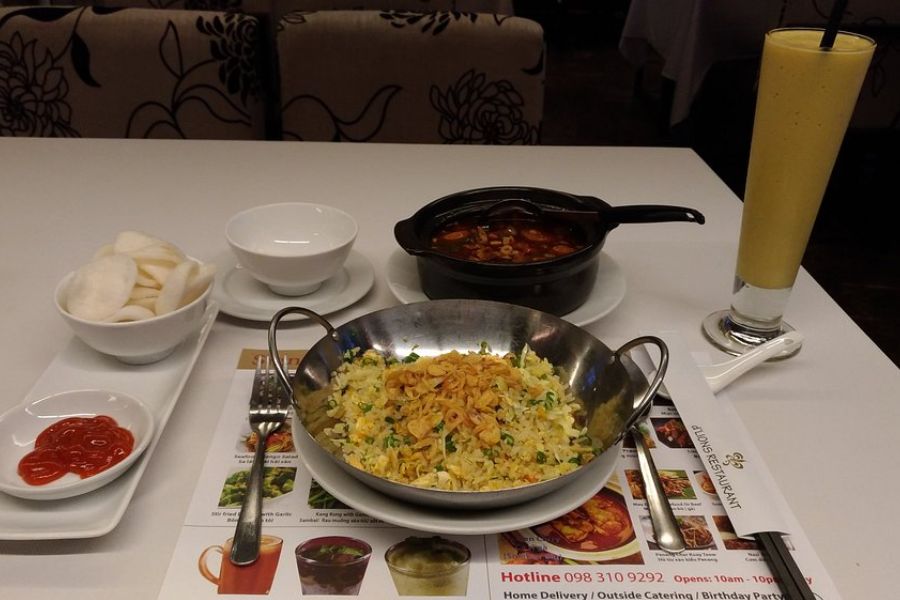
- Address: 126 Tu Hoa, Quang An, Tay Ho, Hanoi (Tandoor / d’LIONS Restaurant)
- Best for: Groups and MICE delegations needing a large, flexible vegetarian and Jain menu
- Price: Approx. USD 12 to 25 per person
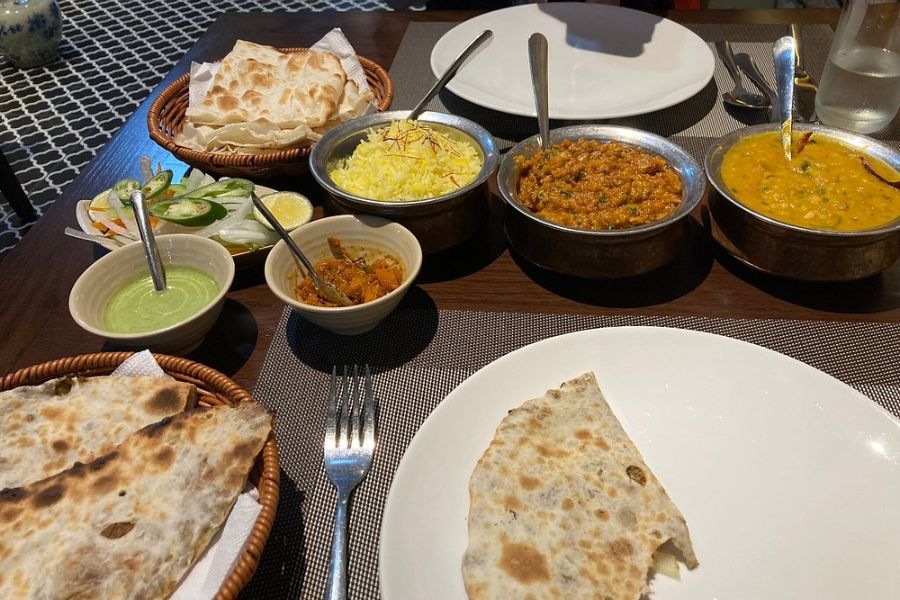
- Recommended dishes: Dal tadka, paneer butter masala, vegetable biryani prepared without onion or garlic on request
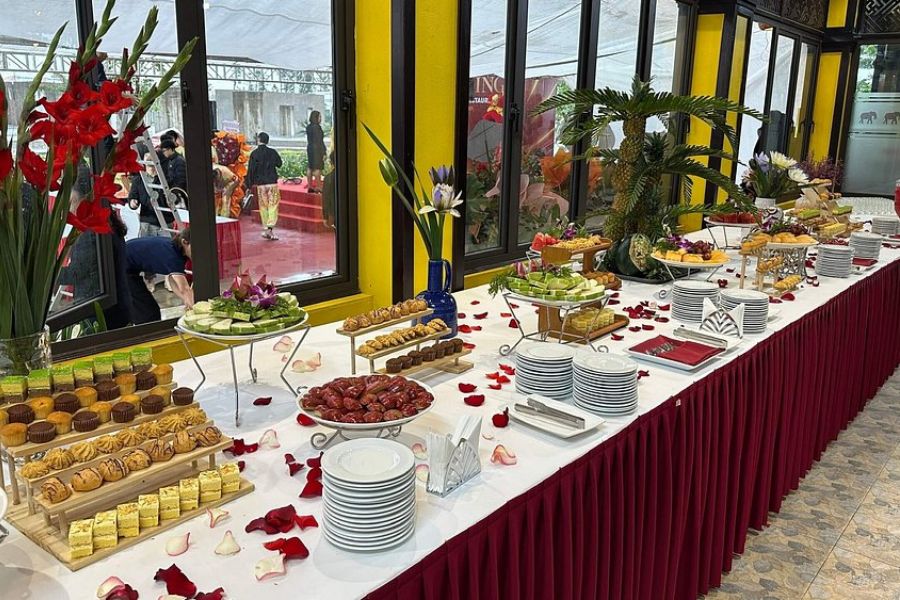
d’LIONS in Hanoi runs over 150 North and South Indian dishes through an in-house team of native Indian chefs, with vegetarian, vegan, and Jain options built into daily service rather than treated as a special order. With seating for around 100 guests, including private dining rooms, it is one of the more reliable venues for a full group tour rather than a small party.
1.2. Ho Chi Minh City
- Address: Old Quarter and District 1, where most established Indian kitchens cluster (Tandoor, Dahi Handi, and similar long-running restaurants)
- Best for: Business travelers and smaller groups staying in the city center
- Price: Approx. USD 6 to 15 per person
- Recommended dishes: Tandoori platter, vegetable thali, plain and masala dosa
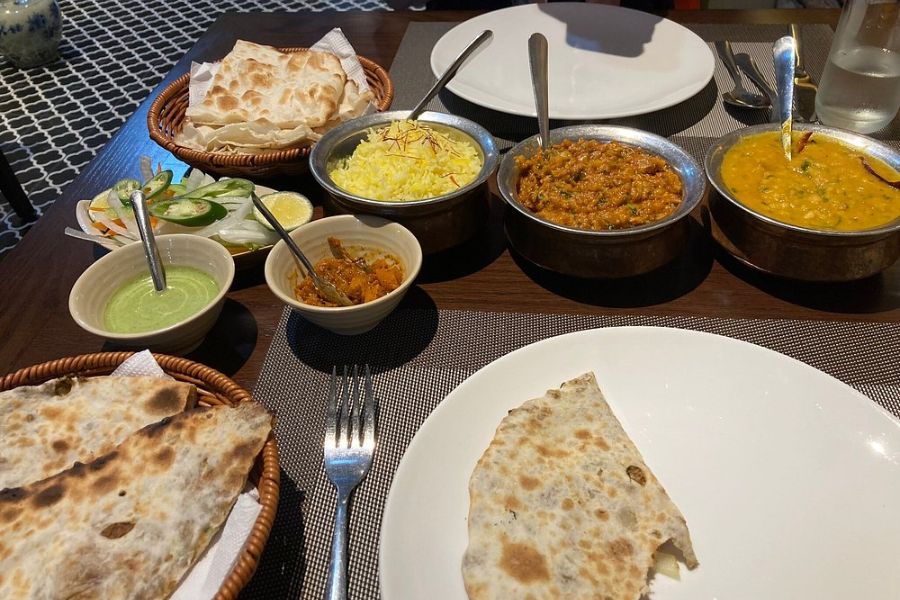
Ho Chi Minh City has the longest-running Indian dining scene in Vietnam, with several restaurants operating for two decades or more. Jain requests are usually handled the same way as elsewhere in the country: by advance notice rather than a fixed Jain menu on the printed card, so confirming the exclusion list ahead of the reservation matters more here than the restaurant’s general reputation for vegetarian food.
1.3. Da Nang
- Address: Central Da Nang and along the beachfront hotel strip
- Best for: Beach-resort itineraries and family groups combining sightseeing with downtime
- Price: Approx. USD 8 to 18 per person
- Recommended dishes: Palak paneer, vegetable korma, South Indian breakfast items such as idli and uttapam
Da Nang’s Indian dining options have grown alongside the city’s rising international arrivals, and hotel kitchens here increasingly build a parallel vegetarian and Jain meal track for group bookings rather than a single shared menu. It is worth confirming this in writing with the resort’s banquet team well before arrival, since Da Nang’s larger properties handle high volumes of mixed dietary groups during peak season.
1.4. Phu Quoc
- Address: Multiple Indian restaurants across the island, including Ganesh Indian Restaurant, No1 Sher-e-Punjab, and Maharaja Lounge
- Best for: Leisure groups and wedding parties, since Phu Quoc has become a popular destination-wedding island
- Price: Approx. USD 8 to 16 per person
- Recommended dishes: Paneer tikka, vegetable biryani, dal makhani
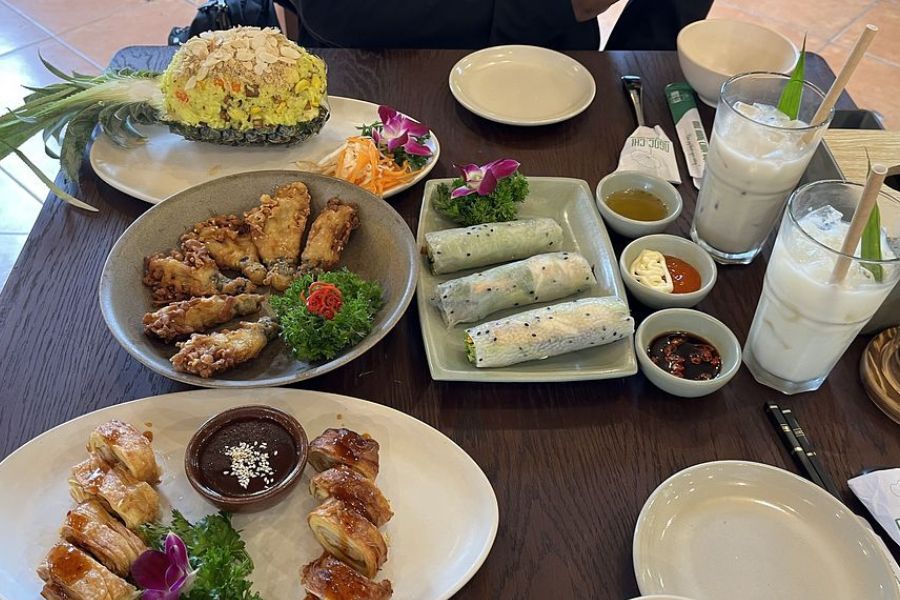
Ganesh Indian Restaurant in Phu Quoc runs a dedicated vegetarian and vegan menu alongside its halal offerings and is used regularly by travel agencies booking vegetarian groups, while No1 Sher-e-Punjab supplements its Indian vegetarian preparations with the island’s fresh produce. Because Phu Quoc is an island with fewer overall dining options than the mainland cities, pre-booking Jain meals here at least a day in advance is safer than assuming walk-in flexibility.
1.5. Halong Bay Cruises
- Best for: MICE incentive groups and family tours combining a bay cruise with land touring
- Price: Cruise dining is typically bundled into the package rate rather than charged per meal
- Recommended approach: Confirm a fully vegetarian or Jain-compliant menu as the cruise’s baseline meal plan, with non-vegetarian dishes added only on request
Cruise kitchens on Halong Bay have limited ability to adjust a menu mid-voyage, so this is the venue type where advance confirmation matters most. Structuring the entire onboard menu as vegetarian or Jain by default, rather than as an exception on a standard menu, removes the need for every guest to check each dish and avoids awkward last-minute substitutions at sea.
2. A Ready-to-Send Dietary Checklist for Hotels and Restaurants
Sending a single-word request such as “Jain meals please” leaves too much room for interpretation. A written checklist gives the kitchen a specific, checkable list instead:
- No meat, fish, seafood, or eggs
- No onion or garlic, including in stock, oil, or pre-made sauces
- No root vegetables (potato, carrot, radish, ginger, beetroot)
- No honey
- Please confirm which oil is used for cooking and whether it is shared with non-Jain dishes
- Please prepare on separate cookware where possible
- Advance notice provided: [insert hours or days]
- Number of Jain meals needed: [insert count], separate from standard vegetarian meals
Handing this list to a DMC or directly to the venue, rather than relying on a verbal description of “Jain style,” is the single change that most reduces dietary complaints on group tours.
3. Common Mistakes Agents Make When Booking Vegetarian or Jain Tours in Vietnam
- Assuming “an chay” equals Jain. Vietnamese vegetarian dishes routinely include onion and garlic, so a chay menu still needs to be screened before it is offered to a Jain client.
- Not confirming the sauce and stock base. Fish sauce, oyster sauce, and meat-based broths appear in many dishes that look vegetable-only on the plate.
- Treating cruise and island itineraries the same as city itineraries. Halong Bay and Phu Quoc have far fewer backup dining options than Hanoi or Ho Chi Minh City, so the same-day flexibility that works in a city fails on a boat or an island.
- Requesting Jain meals without specifying a count. Kitchens preparing for a mixed group need the exact number of Jain meals separated from the general vegetarian order, or they default to one shared vegetarian batch.
- Skipping the final kitchen check for large banquets. For MICE groups and weddings above 50 guests, a tasting session before the event catches problems that a written brief alone cannot.
4. Frequently Asked Questions
Is Jain food available in Vietnam?
Yes, though Vietnam does not have a dedicated Jain restaurant culture the way India does. Jain meals are prepared on request at Indian restaurants and hotel kitchens in Hanoi, Ho Chi Minh City, Da Nang, and Phu Quoc, rather than appearing as a standing menu item.
What is the difference between vegetarian and Jain food in Vietnam?
Vegetarian food in Vietnam excludes meat, fish, and seafood but may still contain onion, garlic, and root vegetables. Jain food additionally excludes onion, garlic, root vegetables, eggs, and honey, which most Vietnamese “an chay” dishes do not account for by default.
How far in advance should Jain meals be booked in Vietnam?
Standalone Indian restaurants can often accommodate Jain requests with a few hours’ notice, hotel restaurants generally need 24 hours, and cruises or large MICE banquets need confirmation at the time of booking, reconfirmed 48 hours before the event.
Which Vietnam cities are best for vegetarian and Jain travelers?
Hanoi and Ho Chi Minh City have the widest concentration of Indian restaurants experienced in Jain requests, followed by Da Nang and Phu Quoc, which have grown their vegetarian dining options alongside rising international tourism.
Do Vietnamese hotels understand Jain dietary requirements?
Most 4-star and above hotels in major cities can prepare vegetarian breakfast items such as idli, dosa, and paratha on request, but a strict Jain requirement should be confirmed through a DMC in advance to verify the kitchen can genuinely exclude onion, garlic, and root vegetables rather than serving a generic vegetarian substitute.
Get Vegetarian and Jain Meals Verified Before You Quote the Trip
Booking a vegetarian or Jain-friendly Vietnam itinerary is far less risky when the meal plan is confirmed with the ground operator before the client ever sees the quote. Viet Dan Travel DMC works directly with Indian restaurant partners and hotel kitchens across Hanoi, Ho Chi Minh City, Da Nang, and Phu Quoc to pre-verify vegetarian and Jain arrangements for group, MICE, and leisure tours, so travel agents can promise a dietary standard with confidence rather than hoping the kitchen understands the request. Reach out to the Viet Dan Travel DMC team to build a vegetarian or Jain-verified Vietnam itinerary for your next group.

0 Comment