
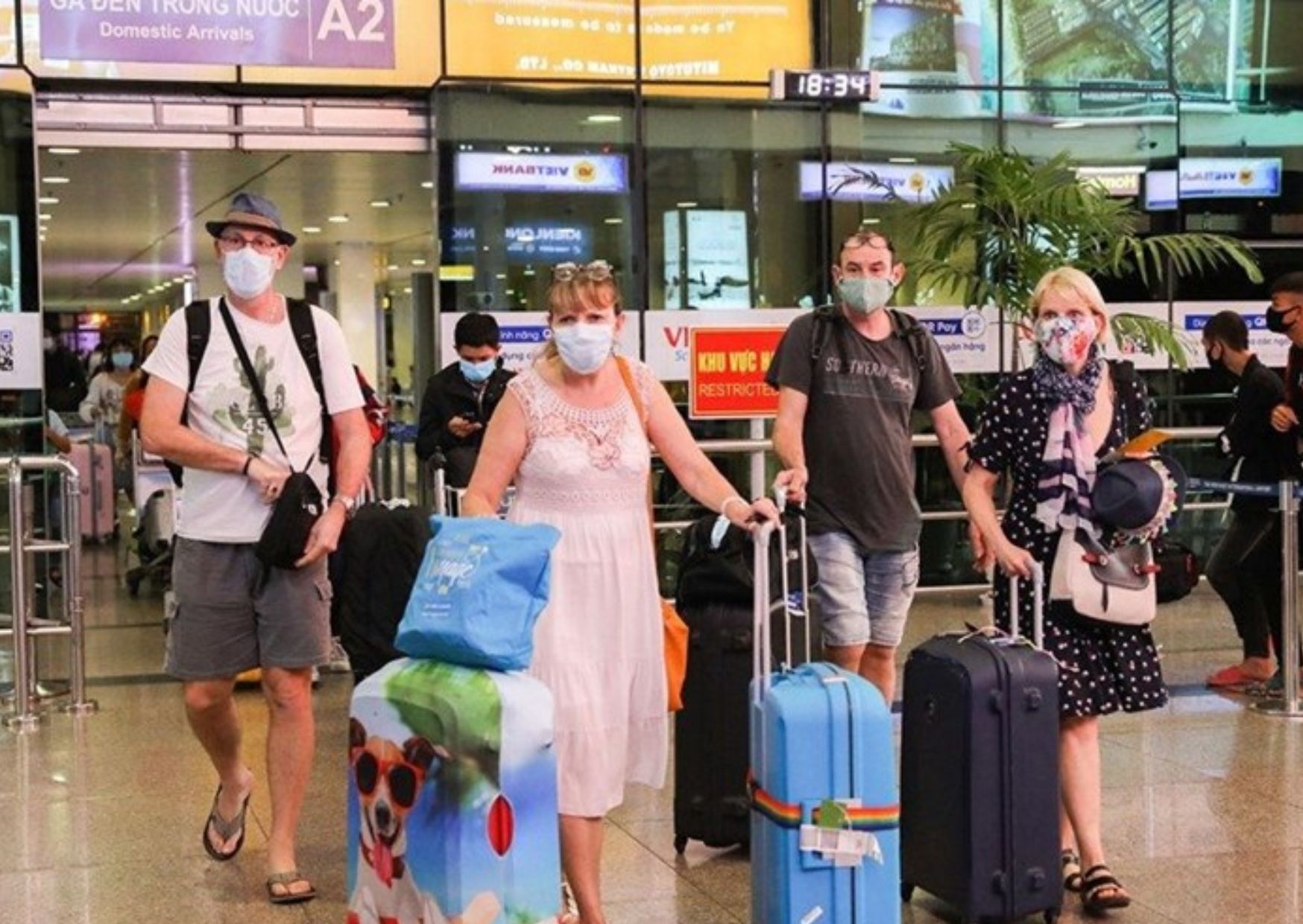

Building a multi-destination Vietnam itinerary almost always means connecting cities that sit hundreds of kilometers apart, and the road or rail alternative can eat an entire travel day. A direct flight between Hanoi and Ho Chi Minh City covers roughly 1,150 kilometers in under two hours, compared with 30+ hours by road or rail. For agents quoting itineraries that combine Hanoi, Da Nang, Nha Trang, Phu Quoc, and Ho Chi Minh City in a single trip, domestic flights aren’t optional, they’re the backbone of the routing plan. This guide breaks down Vietnam’s domestic airline network, route times, airports, and 2026 capacity conditions, with a focus on how agents and tour operators can plan and book these segments efficiently for their clients.
1. Why Domestic Flights Matter When Building Vietnam Itineraries
Vietnam’s geography runs north to south along a coastline comparable in length to the US East Coast. That distance shapes every itinerary decision. A route that looks simple on a map (Hanoi, Hue, Da Nang, Nha Trang, Ho Chi Minh City) can burn two or three full travel days if built around road transfers alone. Domestic flights compress those transfers into 60 to 130 minute hops, which frees up itinerary days for actual sightseeing, factory visits, or conference sessions rather than transit. For agents building 7 to 14 day multi-city tours, MICE programs, or incentive trips with tight schedules, flight segments are usually the single biggest lever for making an ambitious routing actually work within the client’s available days.
2. Vietnam’s Domestic Airlines in 2026
Vietnam’s domestic market is dominated by three carriers, with two smaller players operating limited networks. Choosing the right one for a client segment depends less on price alone and more on reliability, baggage inclusions, and group booking flexibility.
| Airline | Positioning | Baggage (economy) | On-time performance (Q1 2026, CAAV) | Best suited for |
| Vietnam Airlines | Full-service national carrier | 23kg checked included | Around 86% | Premium/luxury clients, MICE groups needing reliability |
| Vietjet Air | Largest budget carrier, widest route count | Checked bags cost extra | Around 73% | Price-sensitive FIT travelers, short hops |
| Bamboo Airways | Mid-range, smaller fleet after 2022-2023 restructuring | Included on most fares | Around 81% | Balanced budget for standard group tours |
| Vietravel Airlines | Subsidiary of Vietravel Group, small fleet, charter-focused | Varies by contract | Limited network data | Custom charter flights for tour groups |
| Pacific Airlines | Budget subsidiary, reduced capacity in 2026 | Extra fee | Limited network data | Secondary routes only |
For clients with tight connections, a cruise departure, or a sleeper train to catch on the same day, on-time performance should weigh more heavily than fare difference. Vietjet’s late-evening departures (after 8pm) are the segment most prone to cascading delays, particularly during the rainy season, so agents should avoid scheduling tight same-day connections on those slots.
3. Key Domestic Routes for Multi-City Itineraries
| Route | Approx. flight time | Typical daily frequency | Common itinerary use |
| Hanoi to Ho Chi Minh City | 2h | 20 to 30 flights/day | Core north-south connector |
| Hanoi to Da Nang | 1h 20m | Multiple daily | Gateway to Hoi An, Hue |
| Ho Chi Minh City to Da Nang | 1h 20m | Multiple daily | South to central connector |
| Ho Chi Minh City to Phu Quoc | 1h | Multiple daily | Beach extension, honeymoon add-on |
| Hanoi to Nha Trang | 1h 50m | Several daily | North to coastal resort routing |
| Ho Chi Minh City to Nha Trang | 1h | Multiple daily | Southern beach extension |
| Da Nang to Phu Quoc | 1h 30m | Limited, seasonal | Central to island combination |
4. Domestic Airports and Ground Transfer Planning
| Airport | City/Region | Approx. transfer to center | Notes for itinerary planning |
| Noi Bai International Airport (HAN) | Hanoi | 35 to 40 minutes | Also gateway for Halong Bay (3.5h) and Sapa (4.5h) transfers |
| Tan Son Nhat International Airport (SGN) | Ho Chi Minh City | 20 to 30 minutes | Operating near capacity during summer 2026 peak, average 720 flights/day |
| Long Thanh International Airport | Dong Nai Province, near Ho Chi Minh City | Under construction transfer infrastructure | Opening mid-2026, expected to gradually absorb Ho Chi Minh City area traffic; agents planning late-2026 and 2027 itineraries should watch which carriers shift operations here |
| Da Nang International Airport (DAD) | Da Nang | 10 to 15 minutes | Central hub for Hoi An and Hue add-ons |
| Cam Ranh International Airport (CXR) | Nha Trang | 30 to 40 minutes | Serves Nha Trang beach resort clusters |
| Phu Quoc International Airport (PQC) | Phu Quoc Island | 15 to 20 minutes | Island resort gateway |
5. Domestic Flights vs Train and Road Transfers: When to Recommend Which
Flying is the right call whenever the itinerary has limited days or the client segment values comfort over scenery. Rail earns its place on one stretch in particular: the Hai Van Pass between Da Nang and Hue offers coastal and mountain views that no flight can replicate, and the Reunification Express trains (SE1 to SE8) run this corridor in soft seat, hard seat, and sleeper classes. For clients with an extra day and an interest in the journey itself, that single rail segment is worth recommending even when a flight exists. Beyond that corridor, road and rail transfers longer than 4 to 5 hours generally cost the itinerary more in fatigue and lost sightseeing time than they add in scenic value, especially for MICE groups working to a fixed conference schedule.
Read these articles to find out interesting information about Vietnam:
- Vietnam Cultural Etiquette Tips 2026: Guide for Travel Agents
- Cost of Traveling to Vietnam in 2026: A Complete Pricing Guide
- Vietnam SIM Card and Internet Guide for Travel Agents
6. How Agents Book Domestic Flights for Group and FIT Clients
Booking a single leisure traveler’s domestic ticket is straightforward through any airline’s standard channel. Group and MICE bookings work differently and require more lead time:
- Group fares (10+ passengers): Airlines typically require a name list and deposit weeks ahead of departure, with fare holds subject to airline-specific rules that vary by carrier and season.
- Charter options: Vietravel Airlines and, on a smaller scale, Bamboo Airways offer charter arrangements suited to incentive groups or conference delegations needing a fixed departure block that doesn’t exist on the scheduled network.
- Peak season lead time: During Tet (Lunar New Year) and summer school holidays, domestic seat inventory on core routes (Hanoi to Ho Chi Minh City and Ho Chi Minh City to Phu Quoc) tightens fast. Group holds should go in at least 60 to 90 days ahead for peak dates.
- Working with a local DMC: A Vietnam B2B DMC with airline relationships can consolidate group tickets, manage name changes closer to departure, and rebook affected passengers quickly if a route gets suspended, which matters given the April 2026 pattern above.
7. Risks Agents Should Flag to Clients Before Booking
- Budget carrier baggage fees can turn an inexpensive fare significantly more expensive once checked bags are added, so the total cost should always be quoted with baggage included.
- Passenger names on domestic tickets must match passport details exactly, since domestic sectors booked as part of an international itinerary are still checked against passport data at Vietnamese airports.
- Late evening flights (after 8pm), particularly on budget carriers, carry a higher delay risk during the rainy season (roughly May to October in the south, September to December in central Vietnam), so avoid scheduling a same-day tight connection after these slots.
- Secondary and shoulder-season routes carry a real risk of suspension, as seen in April 2026, so it’s worth building a short buffer or backup routing option into itineraries that rely on less-trafficked city pairs.
8. Frequently Asked Questions
How long does a domestic flight from Hanoi to Ho Chi Minh City take?
Around 2 hours for a direct flight, compared with roughly 30+ hours by road or rail for the same 1,150-kilometer distance.
Which Vietnam domestic airline is most reliable in 2026?
Based on Q1 2026 CAAV data, Vietnam Airlines posted the highest on-time performance at around 86%, followed by Bamboo Airways at around 81% and Vietjet Air at around 73%.
Can travel agents book group domestic flights in Vietnam directly with airlines?
Yes, though group fares typically require a name list and deposit submitted weeks in advance, and terms vary by carrier. Many agents route group and charter bookings through a local Vietnam DMC to simplify the process and manage last-minute name changes.
Will the new Long Thanh International Airport affect domestic itinerary planning?
Long Thanh is expected to open mid-2026 near Ho Chi Minh City and will gradually take on some domestic and international traffic currently handled by Tan Son Nhat. Agents planning itineraries for late 2026 onward should confirm which airport a given flight departs from before finalizing ground transfer arrangements.
Should I recommend flying or taking the train between Da Nang and Hue?
For most itineraries, the train wins on this specific corridor because of the scenic Hai Van Pass, but flying still makes sense for clients with tight schedules or limited travel days.
For agents and tour operators building multi-city Vietnam itineraries, Viet Dan Travel DMC handles domestic flight sourcing, group and charter arrangements, and airport transfer logistics as part of full tour packages, so routing decisions like these are already built into the itinerary before it reaches your client.

0 Comment