
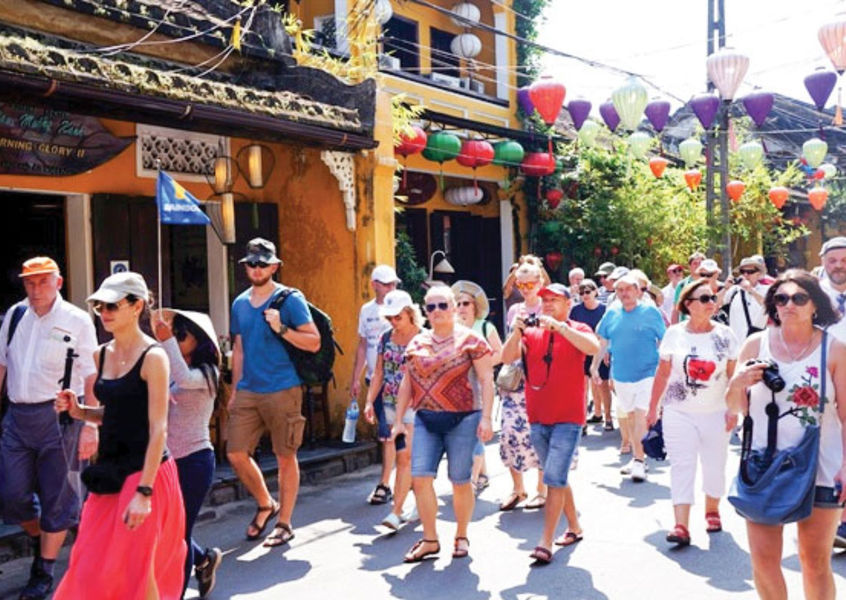

Every Vietnam itinerary eventually leads to the same lantern-lit streets. Hoi An Ancient Town is not a hard sell, clients already want it, but turning that want into a smooth, profitable module inside a multi-day package takes more than knowing it looks good in photos. Ticket logistics, group timing, and seasonal crowd patterns all affect how well the experience actually lands for the traveler on the ground. This guide breaks down what tour operators and travel agents need to plan, price, and deliver Hoi An Ancient Town with confidence in 2026.
1. Hoi An Ancient Town: The Key Selling Points for Agents
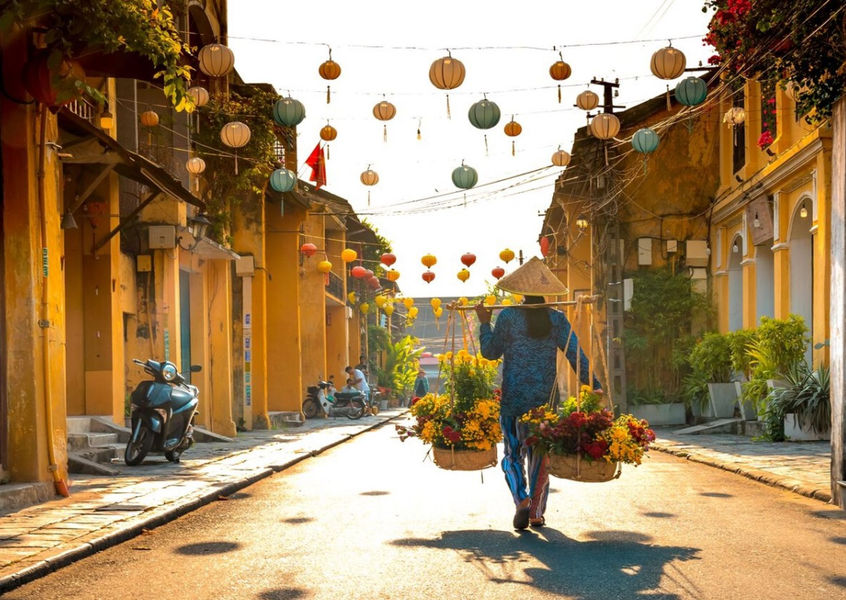
Hoi An Ancient Town is a preserved 15th to 19th century trading port on Vietnam’s central coast, in Quang Nam Province, roughly 40 minutes south of Da Nang. UNESCO inscribed it as a World Heritage Site in 1999, recognizing its blend of Vietnamese, Chinese, and Japanese architecture, a legacy of the merchants who once traded silk, ceramics, and spices along the Thu Bon River. Unlike many heritage sites, Hoi An Ancient Town is still a living neighborhood: tailors, lantern makers, and multigenerational families operate out of the same buildings tourists come to photograph. That combination of authenticity and walkability is exactly what makes it easy to sell and, if not planned properly, easy to oversell into a crowded, rushed stop.
Three things consistently drive client satisfaction with Hoi An Ancient Town, and they are worth building directly into your sales pitch:
- Pedestrian-friendly core. Much of the old town is closed to motor traffic during the day, so clients of all ages and mobility levels can explore on foot without dodging scooters.
- Visual payoff with minimal effort. Yellow facades, silk lanterns, and the Thu Bon riverfront photograph well even for casual travelers, which helps with client satisfaction scores on group tours.
- Food and craft immersion. Street food stalls, tailor shops, and lantern workshops give clients an easy add-on activity between scheduled stops, useful for filling free time blocks in a group itinerary.
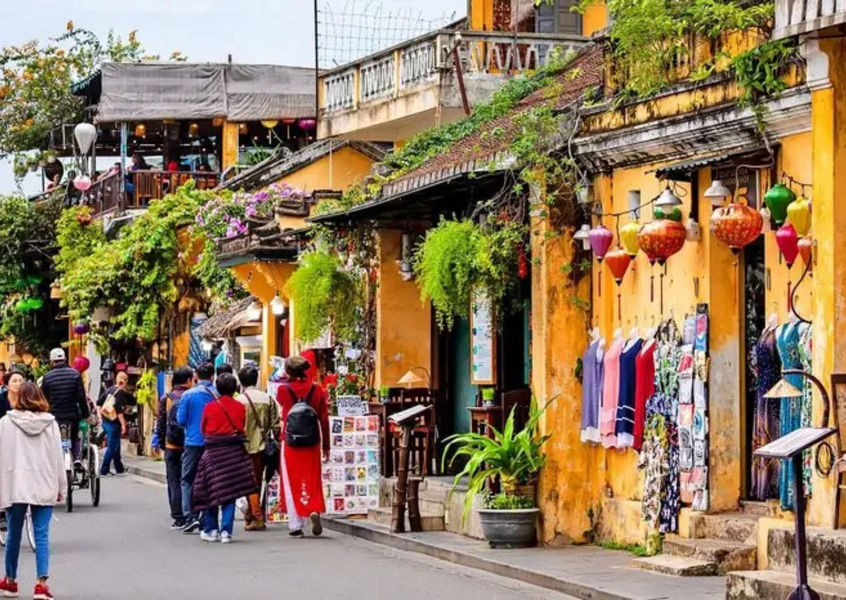
2. How to get to Hoi An from Da Nang
Da Nang International Airport (DAD) is the standard gateway for Hoi An Ancient Town, with the drive taking approximately 40 to 50 minutes depending on traffic and drop-off point. Most DMC-arranged transfers use private cars or minivans, since public transport options are limited and unreliable for group scheduling. For agents building multi-city itineraries, Hoi An Ancient Town works well as either:
- A day trip from a Da Nang beach resort base, ideal for clients who want beach time plus one cultural excursion
- An overnight stop in Hoi An itself, better for clients prioritizing culture, food, or a slower pace, and for evening lantern experiences that a same-day return trip would miss
3. Entrance Tickets & Group Booking Notes
As of 2026, visitors do not need a ticket simply to walk the streets of Hoi An Ancient Town, browse shops, or eat at riverside restaurants. A ticket is required only to enter the ticketed heritage buildings, old houses, assembly halls, museums, and the Japanese Covered Bridge.
| Detail | Information |
| Ticket price | Starting from 120,000 VND (~USD 5) per foreign adult |
| Coverage | Entry to 5 of the roughly 22 ticketed heritage sites, selected by the visitor |
| Validity | 24 hours from purchase |
| Children | Under 1m generally free; 1 to 1.4m pay a reduced rate (starting from ~50,000 VND) |
| Where to buy | Ticket booths at Old Town entrances and near major sites |
Pricing above is presented as a “starting from” reference and should be reconfirmed close to travel dates, as heritage ticket pricing in Vietnam is periodically revised. For group bookings, coordinate ticket purchase in advance through a local ground contact to avoid queue delays at the booth, this is one of the most common friction points for tour leaders managing groups of 15 or more.
4. Best Time to Visit: What to Tell Clients When Planning
The ideal window for a Hoi An Ancient Town visit runs from February to May, when the weather is cool, dry, and comfortable for the kind of slow, on-foot exploring the old town rewards, and this is also when ticketed sites, restaurants, and hotels get booked out fastest, so anything scheduled in this window needs to be confirmed well ahead of the travel date.
- June through August brings heat and humidity along with occasional heavy downpours, which does not rule the season out but does mean walking segments are better placed in the early morning or late afternoon rather than the midday hours.
- September through November is the rainy season proper, and it carries a real risk of flooding in the low-lying streets of the old quarter, so any itinerary built around this period should include a flexible buffer day in case a scheduled visit needs to shift.
- December and January sit in between: cooler and drier than the wet season, with noticeably thinner crowds than the February to May peak, which makes this stretch a solid option for clients who value a quieter, less congested visit over picture-perfect weather.
5. Top Sites to Build Into a Client Itinerary
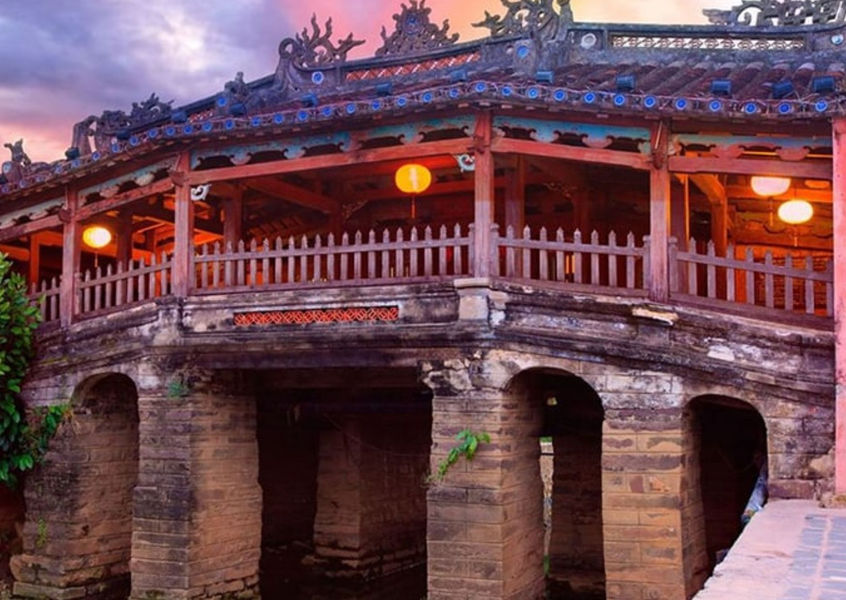
5.1. Japanese Covered Bridge (Chua Cau)
- Address: Nguyen Thi Minh Khai Street, at the junction with Tran Phu Street
- Best for: First-time visitors, photography stops
- Price: Included in the 5-site heritage ticket
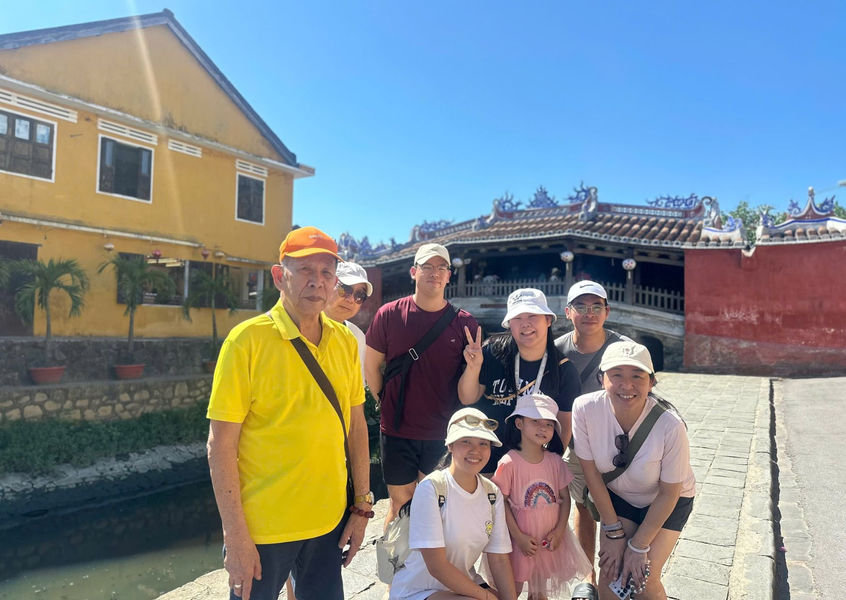
The Japanese Covered Bridge is the single most photographed structure in Hoi An Ancient Town and functions as the de facto starting or ending point for most walking routes, since it sits at the natural crossing point between the town’s two main streets. Built by the Japanese trading community in the 16th century and later restored several times, the bridge houses a small temple at its center dedicated to the god of weather, a detail worth mentioning to clients who ask why a bridge has a shrine built into it. For agents sequencing a walking itinerary, starting here works well because it gives the group an easy, iconic photo moment before energy and attention start to dip later in the walk. It is also one of the busiest single points in the old town by mid-morning, so groups aiming for a calmer, less crowded experience should plan to pass through before 9:00 AM.
5.2. Fujian Assembly Hall
- Address: 46 Tran Phu Street
- Best for: Clients interested in Chinese-Vietnamese trading history
- Price: Included in the 5-site heritage ticket
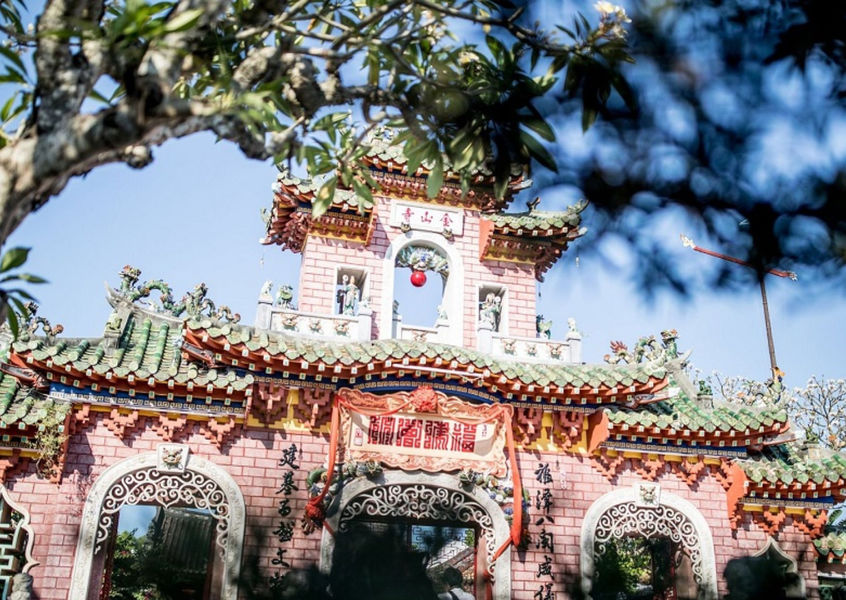
Fujian Assembly Hall was built by Chinese merchants from Fujian province as a community and worship space, and it remains one of the most visually elaborate stops in the old town, with a deep courtyard sequence, dragon-carved gateways, and shrine halls dedicated to Thien Hau, the goddess of the sea and protector of sailors and traders. This is a strong stop for clients with an interest in the trading history that shaped Hoi An, since the hall’s layout and iconography tell that story more directly than a residential heritage house can. It also tends to hold up well for group visits, the courtyard spaces give a group room to spread out and take photos without the bottlenecking that can happen at narrower sites like the covered bridge.
5.3. Tan Ky Ancient House
- Address: 101 Nguyen Thai Hoc Street
- Best for: Clients wanting to see inside a preserved merchant residence
- Price: Included in the 5-site heritage ticket
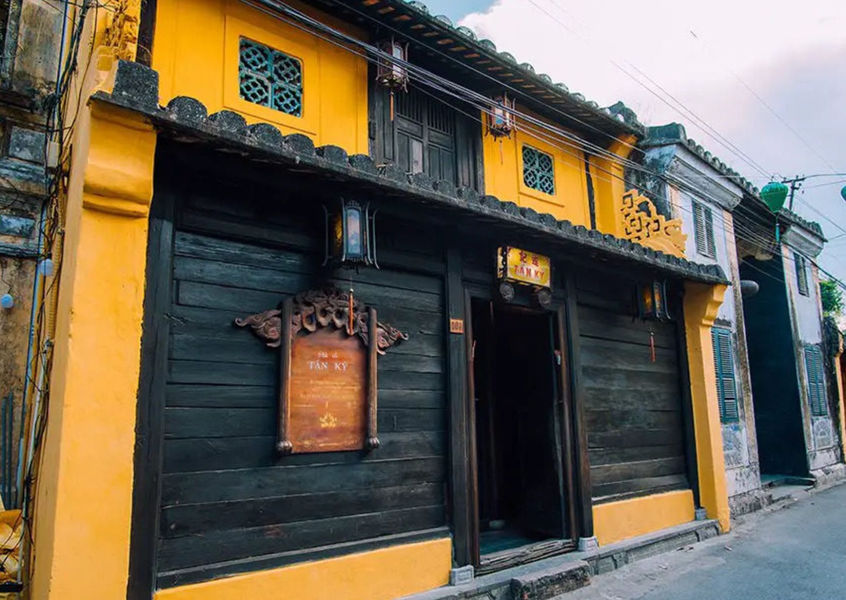
Tan Ky Ancient House is a nearly two-century-old merchant residence still owned and maintained by the same family, and it is one of the few heritage houses in the old town where visitors get a short guided explanation of the building itself rather than just a self-guided walk-through. The layout blends Vietnamese, Japanese, and Chinese architectural elements, visible in details like the crab-shell ceiling design and the imported wood carvings, and the family typically points out flood markers on the interior walls showing historic water levels, a detail that resonates well with clients interested in how the town has adapted to its riverside location over time. This stop works best for culturally curious clients and storytelling-driven itineraries, and less well as a rushed five-minute stop, it rewards groups that can give it 15 to 20 minutes rather than treating it as a quick photo-only pass-through.
5.4. Hoi An Central Market
- Address: Tran Quy Cap Street, along the riverfront
- Best for: Food-focused itineraries, MICE welcome activities
- Price: Free to enter; food and goods priced individually
Hoi An Central Market is the unscripted counterpart to the heritage houses, a working market where locals still shop for produce, herbs, and fresh seafood, and it gives clients a sensory, unstaged contrast after several stops inside quiet, curated buildings. It works particularly well positioned right before a cooking class or a street food tour add-on, since clients get to see the raw ingredients in context before they are used or explained in a hands-on session. For MICE groups, the market also makes a strong welcome or orientation activity on the first day of a program, it is low-pressure, doesn’t require a ticket, and gives a group an easy shared experience to talk about before more structured sessions begin.
6. Sample Itinerary Blocks Agents Can Quote
Half-day (morning, 3 hours): Airport or resort pickup, Japanese Covered Bridge, Fujian Assembly Hall, Tan Ky Ancient House, free time at Central Market, return transfer.
Full-day (6 to 7 hours): Half-day route above, plus a riverside lunch stop, an afternoon tailor or lantern workshop visit, and an early evening return before dinner.
Overnight add-on (evening): Boat ride on the Thu Bon River with lantern release, followed by free time in the night market, best sold as a standalone evening module for clients staying overnight in Hoi An rather than day-trippers on a tight return schedule.
7. MICE & Large Group Considerations
For groups above 20 pax, split into two or three walking sub-groups to keep pace manageable on narrow old town streets and to avoid bottlenecks at ticketed entry points. Morning slots before 9:00 AM and after 4:00 PM see noticeably lower foot traffic than midday, which matters for group photography and for keeping a tour leader’s schedule on track. If Hoi An Ancient Town is being used as a welcome or team-building activity for a MICE program, the Central Market and a private cooking class booking tend to work better for group cohesion than a purely heritage-house walking route, which is more suited to smaller, culturally focused groups.
8. Frequently Asked Questions
Do visitors need a ticket just to walk around Hoi An Ancient Town?
No. Walking the streets, crossing bridges, and browsing shops is free. A ticket is only required to enter the ticketed heritage buildings.
How long should a Hoi An Ancient Town visit take?
A focused visit covering the main heritage sites takes 3 to 4 hours; a fuller day including food and craft stops runs 6 to 7 hours.
Is Hoi An Ancient Town suitable for large tour groups?
Yes, but groups above 20 pax are best split into smaller walking clusters to navigate the narrow pedestrian streets and ticketed entry points smoothly.
What is the best time of year to schedule a Hoi An Ancient Town tour?
February through May offers the most reliable dry, cool weather for walking itineraries; September through November carries flood risk and should be scheduled with a flexible buffer day.
Hoi An Ancient Town is one of the most reliable modules in a Vietnam itinerary, but getting the ticketing, timing, and group flow right is what separates a smooth client experience from a rushed one. If you’re building a program that includes Hoi An, our Vietnam B2B DMC team can help with local logistics, group ticket coordination, and itinerary sequencing tailored to your client segment.

0 Comment