

A Hanoi travel guide for first-time visitors needs to answer one question above all others: where do you start in a city of 8 million people, 1,000 years of history, and streets that feel unlike anything most Western travellers have encountered before? Hanoi is not a city that gives itself up easily. The narrow lanes of the Old Quarter are genuinely confusing until they are not. The traffic — a continuous, orchestrated wave of motorbikes with its own logic — is alarming until you learn to walk through it calmly at a steady pace. The food is extraordinary at every price point, but you have to know what to order and where to sit.
For many travellers joining Vietnam tours, Hanoi serves as the cultural and historical gateway to the country before journeys continue toward Ha Long Bay, Central Vietnam, or the Mekong Delta in the south.
This guide covers the practical and the cultural in equal measure: the top attractions with specific entry details, the street food you should not leave without eating, how to get from Noi Bai Airport to the city centre without paying tourist prices, and how many days to actually allocate before the rest of your Vietnam trip pulls you south.
What Makes Hanoi One of the Best Places to Explore in Vietnam
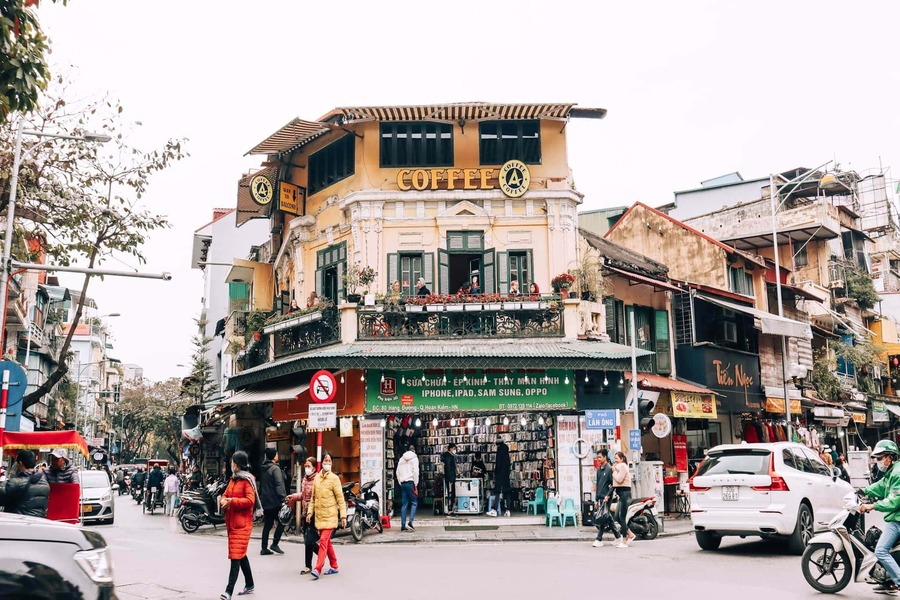
Before arriving in Hanoi, most first-time visitors have a mental image assembled from photographs — the lantern-lit corridors of the Old Quarter, the misty morning light on Hoan Kiem Lake, the yellow-and-white French colonial facades. The images are accurate, but they do not capture the texture of the city’s daily rhythm.
Hanoi is Vietnam’s capital and its most historically layered city. Its 1,000 years as an imperial, colonial, and wartime capital have left a built environment where Confucian scholars’ temples, French-designed opera houses, Soviet-era civic architecture, and contemporary glass towers coexist within a few hundred metres of each other. At the World Travel Awards 2026 – 2027, Hanoi was named Asia’s Leading City Destination and Asia’s Leading City Break Destination. On TripAdvisor, it ranked second among the world’s top 25 cultural destinations globally — ahead of Rome and Kyoto. These are not regional accolades. Hanoi earned 33.7 million visitors in 2026 – 2027, a 22.7% increase in international arrivals from the prior year.
For the first-time visitor arriving from Ho Chi Minh City or a flight from Bangkok or Singapore, the contrast is immediate. Hanoi moves at a different pace. It is cooler, more northern in its cultural sensibility, and far more architecturally dense. Understanding it takes longer than a weekend — but the investment is proportionate to the reward.
How Many Days Do You Need to Explore Hanoi?
Two full days covers the essential sites: the Old Quarter and Hoan Kiem Lake area, the Temple of Literature, the Ho Chi Minh Mausoleum complex, and a water puppet performance in the evening. Three days allows you to move through everything at a comfortable pace, add a Hoa Lo Prison visit and an afternoon at the Vietnam Museum of Ethnology, and spend at least one full morning eating your way through the Old Quarter’s breakfast food culture without rushing anywhere.
Four days opens the possibility of a day trip. Ninh Binh — 90 kilometres south and home to the Trang An Scenic Landscape Complex, a UNESCO World Mixed Heritage Site of limestone caves and river passages — is reachable in a 90-minute private transfer and worth a full day. Ha Long Bay requires an overnight commitment to experience properly: a day trip from Hanoi, at 3.5 hours each way, delivers only 4 hours on the water. Two nights in Hanoi plus two nights on a Ha Long Bay cruise is the most efficient combination for first-timers who want to experience both.
Most first-time visitors to Vietnam underestimate Hanoi. Three nights is the practical minimum that does the city justice.
Hanoi Travel Tips: How to Get from Noi Bai Airport to the City Centre
Noi Bai International Airport sits approximately 30 to 35 kilometres north of Hanoi’s Old Quarter. The journey takes 45 to 75 minutes depending on traffic and the time of arrival.
The most cost-effective option for travellers with standard luggage is Bus 86, an express route that runs from Terminal 2 directly to the Hoan Kiem area via the Old Quarter. The fare is VND 45,000 per person — approximately $1.80 USD — and the service operates from 6:30 AM to 11:00 PM at 20 to 30-minute intervals with air conditioning. The bus is reliable and comfortable for travellers who are not arriving at peak hour or very late at night.
For direct, door-to-door travel, Grab is the recommended option over street taxis. Fares from the airport to the Old Quarter via Grab typically run VND 180,000 to VND 300,000 (approximately $7 to $12 USD), which is significantly lower than unmetered taxi quotes from drivers approaching the arrivals hall. Download the Grab app before landing — airport WiFi can be unreliable for initial setup — and connect to the terminal’s NoiBaiFreeWiFi network once inside.
If you choose a metered taxi, use Mai Linh (identified by green vehicles) or Vinasun only. These are the two reputable metered operators at the airport. Confirm the meter is running before the car moves. Fares to the city centre should come to VND 300,000 to VND 400,000 for metered rides — any price quoted as a flat rate significantly above this before the journey begins indicates a non-standard arrangement.
Avoid drivers who approach you before the taxi stand. They are invariably charging tourist rates without meters.
The Top Attractions in Hanoi for First-Time Visitors
Hoan Kiem Lake and the Old Quarter
Hoan Kiem Lake is the natural starting point for any first visit to Hanoi. The lake — whose name translates as Lake of the Returned Sword, referencing a legend of a emperor receiving and returning a magic sword — sits at the southern edge of the Old Quarter and functions as the city’s living room. At any hour from 5 AM onward, Hanoians circle the lake on foot for morning exercise, sit at its edge with iced tea, or cross the red painted Huc Bridge to Ngoc Son Temple on the small island at the lake’s north end. Temple entrance is VND 30,000 per person.
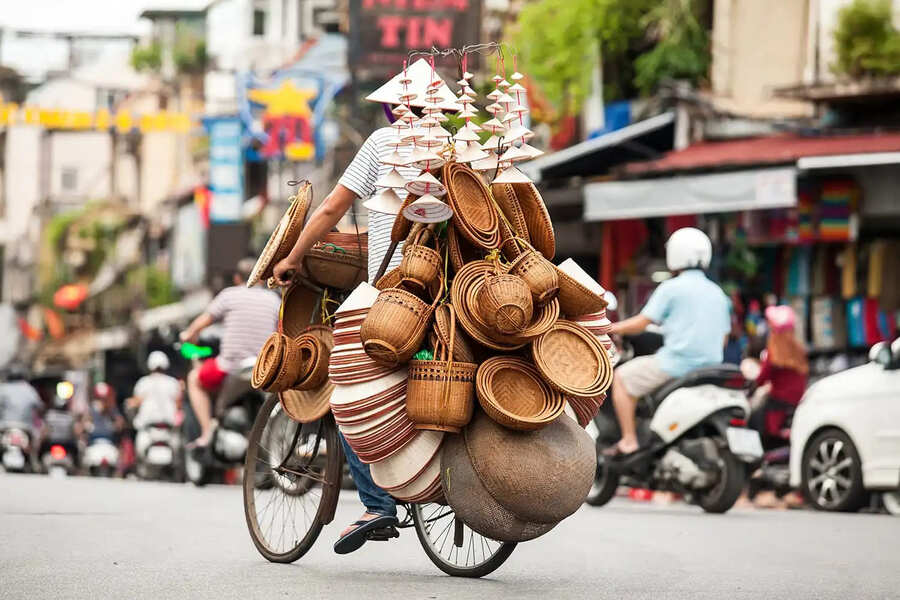
The Old Quarter extends north and west from the lake in a dense grid of 36 streets, each historically associated with a specific trade — silk on Hang Gai, paper goods on Hang Ma, tin goods on Hang Thiec. Many of these specialisations still hold. Hang Gai (Silk Street) remains the primary address for tailored clothing and quality silk products. Hang Ma still produces the decorative paper goods used in religious ceremonies. Walking this area without a fixed itinerary, turning into alleys when something looks interesting, and following the smell of grilling meat to whichever street stall produces it is one of the most genuinely rewarding urban walking experiences in Southeast Asia.
The weekend walking street around Hoan Kiem Lake operates Friday through Sunday evening, closing the surrounding roads to traffic and turning the area into a pedestrian zone filled with street performers and food vendors.

Temple of Literature
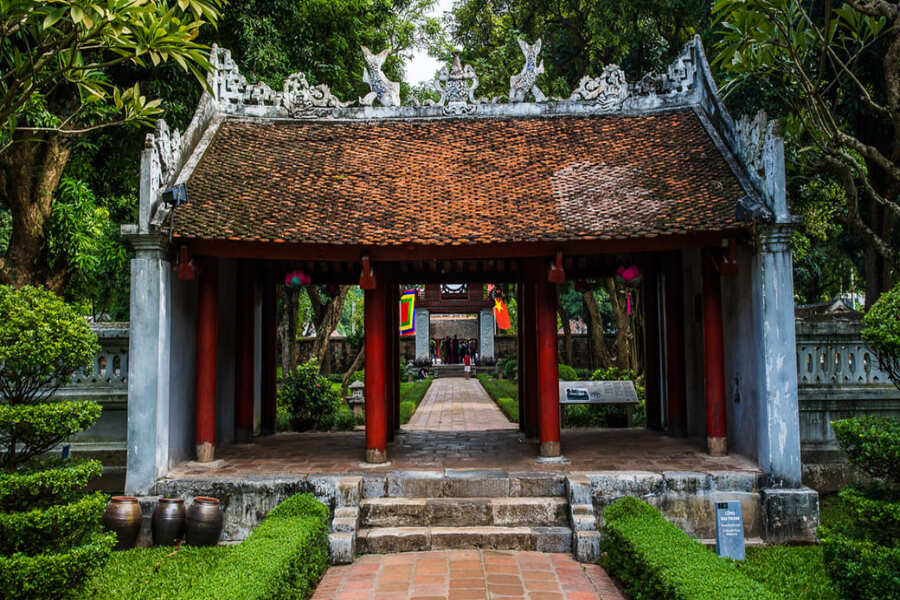
The Temple of Literature — Van Mieu Quoc Tu Giam — was founded in 1070 under Emperor Ly Thanh Tong and served as Vietnam’s first national university. It is the best-preserved example of traditional Vietnamese architecture in Hanoi, and one of the most significant historical sites in the country.
The complex is organised across five successive courtyards leading from the entrance gate to the House of Ceremonies. The third courtyard contains the Well of Heavenly Clarity and the most photographed feature of the site: 82 stone steles mounted on stone tortoise plinths, each recording the names of doctoral graduates from the university’s 700-year academic history. Vietnamese students still visit to rub the tortoise heads before examinations, a tradition that has continued without interruption.
The Temple of Literature is located at 58 Quoc Tu Giam Street, approximately 2 kilometres from Hoan Kiem Lake. Entrance is VND 70,000 per adult. Opening hours run from 7:30 AM to 5:30 PM in summer and 8:00 AM to 5:30 PM in winter. Cash only at the ticket counter. Allow 60 to 90 minutes for a thorough visit.
Ho Chi Minh Mausoleum and Ba Dinh Square
Ba Dinh Square is where Ho Chi Minh read the Declaration of Independence on September 2, 1945, establishing the Democratic Republic of Vietnam. The mausoleum, built in 1975 and modelled on Lenin’s mausoleum in Moscow, holds Ho Chi Minh’s embalmed body in a glass case. Visiting requires silent, slow-moving passage through the chamber in a single-file queue, and is one of the most sobering and genuinely moving experiences available in Hanoi.
Entrance to the mausoleum is free, but queues are long and the site is closed on Monday and Friday, and closes at 10:30 AM most days. Arrive before 9:00 AM. Strict dress code applies: shoulders and knees must be covered for both men and women. Photography is not permitted inside the mausoleum chamber.
Adjacent sites worth combining in the same visit are the One Pillar Pagoda, an 11th-century single-column structure rising from a lotus pond, and the Ho Chi Minh Museum. The Thang Long Imperial Citadel, a UNESCO World Heritage Site since 2010, sits 1.2 kilometres from the mausoleum and can be combined in the same half-day.
Hoa Lo Prison
Hoa Lo Prison — nicknamed the Hanoi Hilton by American prisoners of war held there during the Vietnam War — was built by French colonial authorities in 1896 and used to detain Vietnamese political prisoners. The museum preserves both periods of its history through artefacts, photographs, and reconstructed cells.
The section documenting the French colonial period, including conditions in which Vietnamese nationalist prisoners were held, is the more historically frank of the two. Entrance is VND 40,000 per adult. Allow 45 to 60 minutes. The prison is located at 1 Hoa Lo Street, Hoan Kiem District, approximately 15 minutes on foot from the lake.
Thang Long Water Puppet Theatre
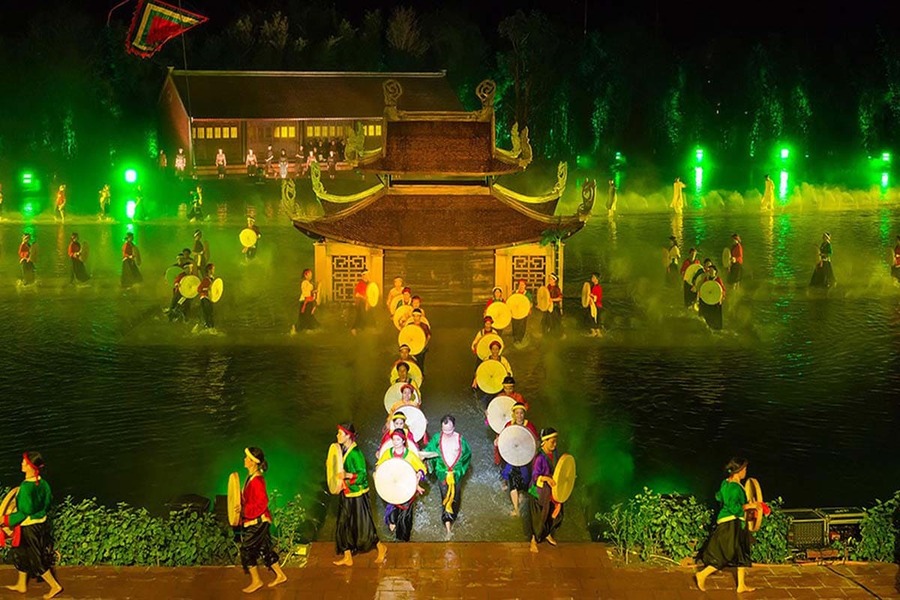
Water puppetry is a performance art form specific to the Red River Delta region of northern Vietnam, dating back to the 11th century. Shows are performed in a waist-deep pool, with puppeteers operating their figures from behind a bamboo curtain using long bamboo rods submerged below the water’s surface.
The Thang Long Water Puppet Theatre on Dinh Tien Hoang Street is the most recommended venue in Hanoi for this performance. Shows run approximately 50 minutes and include traditional Vietnamese musical accompaniment. Tickets are VND 100,000 to VND 200,000 depending on seat category. Book at least one day in advance for evening performances in peak season — December to March fill up quickly. This is one of those experiences that photographs cannot fully replicate; the technical skill involved in operating the figures from beneath the water is best appreciated in person.
Things to See and Do in Hanoi Through Its Local Food Culture
Hanoi is considered by serious food travellers to have the most distinctive and refined regional food culture in Vietnam. Northern Vietnamese cooking is characterised by lighter sauces, cleaner broths, and less sweetness than the south. Understanding what the city’s signature dishes are and where to eat them transforms the Hanoi visit from sightseeing with meals attached to something more like a structured food experience with sightseeing on the side.
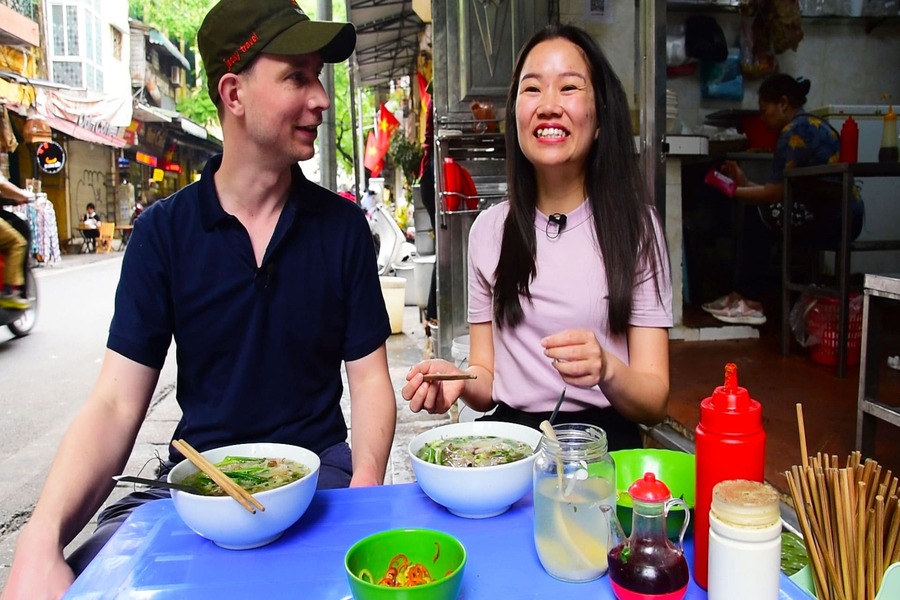
Pho is Hanoi’s most iconic dish and a northern Vietnamese creation. The version in Hanoi is cleaner and less garnished than pho served in the south — a clear, deeply flavoured beef broth with flat rice noodles, thin slices of beef, and minimal condiments. A bowl costs approximately VND 50,000 at street stalls and local restaurants. Pho Bat Dan at 49 Bat Dan Street in the Old Quarter is widely cited as one of the city’s finest traditional pho restaurants, with queues out the door from 6:00 AM onward. It closes when the pot empties, typically by 10:00 AM.
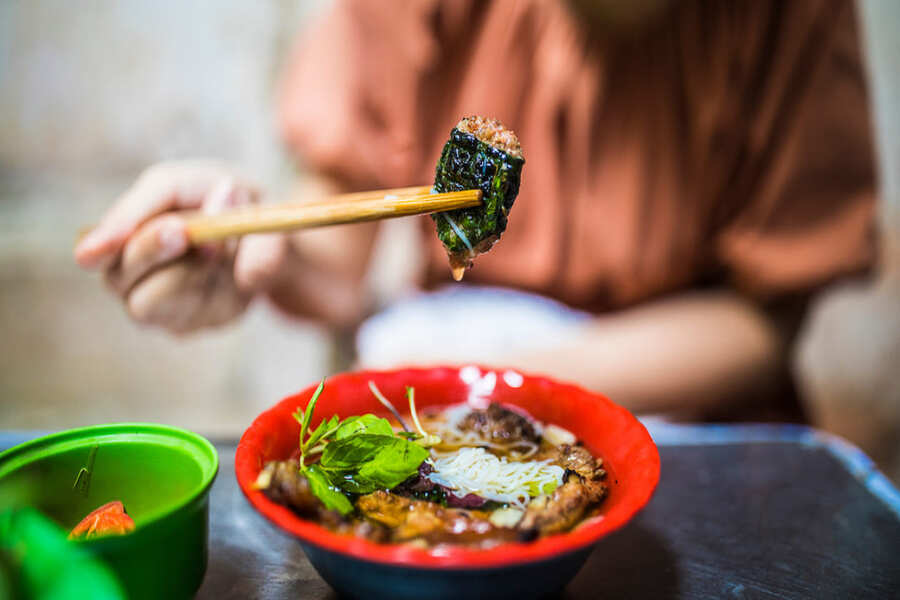
Bun cha is the dish that put Hanoi’s food culture on the global map when President Obama and Anthony Bourdain ate together at Bun Cha Huong Lien in 2016. The dish is grilled marinated pork — both patties and belly slices — served alongside a bowl of light fish sauce broth with rice vermicelli noodles, fresh herbs, and optional crispy crab spring rolls on the side. Price at street-level restaurants runs VND 50,000 to VND 80,000 per person.
Egg coffee — ca phe trung — is a Hanoi original invented at Cafe Giang in 1946. The drink is a strong robusta espresso base topped with a thick, whipped mixture of egg yolk and condensed milk, served either hot or iced. The result tastes like a cross between a tiramisu and an affogato. Cafe Giang at 39 Nguyen Huu Huan Street in the Old Quarter is the originating address. A glass costs VND 30,000 to VND 40,000. Arrive before noon on weekends — the narrow upstairs room fills quickly.
Banh mi in Hanoi uses a slightly chewier, crustier baguette than the southern version, and the fillings lean toward pate and cold cuts rather than the more varied southern combinations. Banh Mi 25 on Hang Ca Street in the Old Quarter is the most consistent recommendation among international travellers — the queue is genuine and the price is VND 25,000 to VND 35,000 per sandwich.
Where to Stay in Hanoi for a First Visit
The Old Quarter is the best base for first-time visitors without qualification. It places you within walking distance of Hoan Kiem Lake, the weekend night market, and the city’s densest concentration of restaurants and cafes. Accommodation ranges from budget hostels at VND 150,000 to VND 250,000 per night to mid-range boutique hotels at VND 800,000 to VND 2,000,000.
The French Quarter, directly south of Hoan Kiem Lake, is quieter and more upscale. The Sofitel Legend Metropole Hanoi on Ngo Quyen Street — which earned a Michelin Key in 2026 – 2027 and was named Best City Hotel in Vietnam by Travel and Leisure — is the city’s most storied luxury address. The hotel’s 1901 wing, the original colonial building, houses the Bamboo Bar and the Spice Garden restaurant. Rates start from approximately $300 USD per night.
Tay Ho, the West Lake area approximately 4 kilometres northwest of the Old Quarter, is preferred by expats and longer-stay visitors for its lakeside cafes, wide residential streets, and relative calm. It is less convenient for first-time sightseeing but is a reasonable base for visitors staying four or more nights.
Essential Hanoi Travel Tips for First-Time Visitors
Crossing the road in Hanoi requires abandoning instincts developed in cities with traffic lights that govern pedestrian movement. The correct technique is to step off the kerb, move at a slow, consistent pace, and trust that motorbikes will adjust their path around you. Do not stop suddenly or speed up unexpectedly. This works — every Hanoian does it every day — but requires about half a day to become comfortable.
The weather in October and November is the most reliably pleasant for first-time visitors: temperatures of 22 to 28 degrees Celsius, low humidity, and clear light in the late afternoon. March and April are equally good — spring light in Hanoi on a clear morning at Hoan Kiem Lake is one of the most atmospheric urban experiences in Southeast Asia.
Carry cash in small denominations. Street food stalls and smaller restaurants rarely accept cards. VND 500,000 notes are hard to break at small vendors; VND 20,000 to VND 50,000 notes are the most useful denomination for food and market purchases. Withdraw cash from ATMs at banks rather than standalone machines to minimize the risk of card skimming.
A Vietnamese SIM card purchased at the airport or at any Viettel or Mobifone store in the Old Quarter will cost VND 80,000 to VND 150,000 with data included — essential for using Grab, offline maps, and translation tools throughout the trip.
Best Day Trips and Places to Explore Near Hanoi
Ninh Binh and the Trang An Scenic Landscape Complex is the most efficient day trip from Hanoi for first-time visitors. The site’s boat cave passages through limestone karst formations take two to three hours, and the Van Long Nature Reserve nearby adds a wetland wildlife component with critically endangered Delacour’s langur visible during early morning boat tours. A private car round trip from Hanoi costs approximately VND 900,000 to VND 1,400,000 depending on vehicle type.
The Perfume Pagoda, approximately 60 kilometres southwest of Hanoi in My Duc District, is a significant Buddhist pilgrimage site involving a river boat ride and either a mountain hike or cable car ascent to the main cave sanctuary. It is best visited from February to April when the annual festival is active.
Bat Trang Ceramic Village, 13 kilometres from central Hanoi along the Red River, is the most accessible cultural day trip for visitors interested in Vietnamese craft traditions. The village has produced glazed ceramics for more than 600 years and several family workshops allow visitors to try hand-building and painting. Travel by taxi or Grab in approximately 30 minutes from the Old Quarter.

0 Comment