


Every year between June and November, travel agents booking Vietnam for their clients face the same question: will a typhoon disrupt this trip? The honest answer is that it depends entirely on which region, which month, and how flexible the itinerary is built. For B2B partners managing group tours, MICE events, or destination weddings, that answer needs to come with a plan, not just a warning.
1. Vietnam Typhoon Season: Key Facts at a Glance
| Detail | Information |
| Typhoon season duration | June to late November (occasionally early December) |
| Peak risk period | August to October |
| Average typhoons per year | 5 to 10, plus 2-3 tropical depressions |
| Most affected regions | Northern Vietnam (June-August), Central Vietnam (September-November) |
| Least affected region | Southern Vietnam (Ho Chi Minh City, Mekong Delta, Phu Quoc) |
| Official monitoring source | National Center for Hydro-Meteorological Forecasting (Vietnam) |
Vietnam’s coastline stretches more than 1,600 kilometers, so typhoon season does not hit the whole country the same way at the same time. Storms follow a predictable seasonal migration that international agents can plan around rather than fear.
2. Regional Breakdown: Where and When Typhoons Hit
| Region | Peak risk months | Key destinations | Typical impact |
| Northern Vietnam | June – August | Hanoi, Ha Long Bay, Sapa, Ninh Binh | Cruise suspensions on Ha Long Bay, landslide risk in Sapa, urban flooding in Hanoi |
| Central Vietnam | September – November | Da Nang, Hoi An, Hue, Nha Trang | Highest typhoon landfall risk in the country; road and flight disruption |
| Southern Vietnam | Year-round low risk | Ho Chi Minh City, Mekong Delta, Phu Quoc | Heavy seasonal rain, but rarely direct typhoon landfall |
The pattern is straightforward: storms forming in the South China Sea track toward the Gulf of Tonkin early in the season, exposing the north first. As the season progresses, the storm track shifts south, making Central Vietnam the highest-risk zone from September through November. Southern Vietnam sits closest to the equator and is rarely hit by direct typhoon landfall, making it the most reliable region to route clients toward during peak months.
3. What This Means for Your Clients’ Itineraries
For agents selling FIT, group, or custom tours to India, the Middle East, and other source markets, the practical takeaway is not “avoid Vietnam from June to November.” It is: match the itinerary to the region’s risk window.
- June to August: build flexibility into northern itineraries (Ha Long Bay, Sapa). Have a backup land-based itinerary ready in case cruise operators cancel departures on short notice.
- September to November: treat central coast bookings (Da Nang, Hoi An, Hue, Nha Trang) as the highest-priority itineraries to monitor. Confirm cancellation and rebooking policies with hotels and cruise operators before final payment.
- Any time June to November: southern Vietnam (Ho Chi Minh City, Mekong Delta, Phu Quoc) remains the safest fallback region to shift clients toward if a storm warning is issued elsewhere.
>>> Explore Vietnam cultural tips for planning your clients an authentic experience in Vietnam
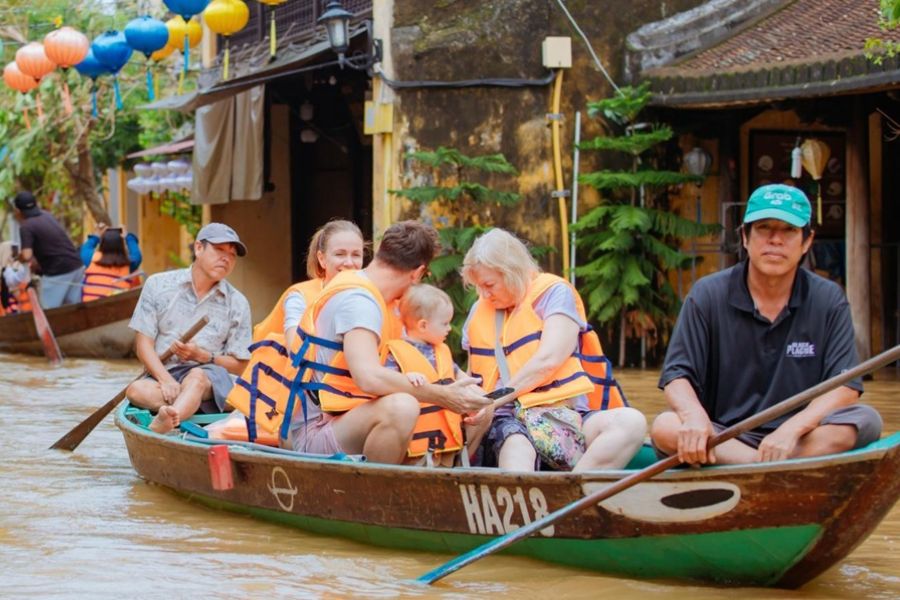
4. Impact on Tours, Cruises, and MICE/Wedding Events
Typhoon warnings rarely shut down the whole country, but they do affect specific, bookable components of a trip:
- Ha Long Bay cruises are suspended by operators during storm warnings as a safety precaution, even when the bay itself would technically be navigable.
- Domestic flights to and from central coast airports (Da Nang, Hue, Nha Trang) are the first to see delays or cancellations.
- Outdoor MICE events and destination weddings carry higher exposure than standard FIT tours, since mandap setups, outdoor gala dinners, or beach ceremonies depend on stable weather windows. Agents booking weddings or incentive trips for Indian clients should build a rain-contingency venue into the contract from the start, not as an afterthought.
- Sapa and northwest Vietnam face landslide risk during heavy rain, which can affect trekking and homestay itineraries independent of a named typhoon.
5. How Viet Dan Travel DMC Manages Typhoon Risk for Partners
As a ground operator based in Hanoi and Ho Chi Minh City, Viet Dan Travel DMC builds typhoon contingency into every itinerary running between June and November, not just after a storm forms. For partner agents, that means:
- Daily monitoring of official forecasts during active storm windows, with proactive rebooking recommendations sent before a client’s travel dates are affected
- Pre-agreed backup itineraries for northern and central routes, so a cruise cancellation or flight delay can be resolved with an alternative activity within hours, not days
- Dedicated support for MICE and destination wedding bookings, including indoor backup venues confirmed at the contracting stage
- Direct communication with partner agents in India and other source markets, so the agent, not the traveler, controls the messaging to the end client
This is the operational layer that a booking engine or OTA listing cannot provide, and it is the reason B2B partners work with a DMC that has a physical, on-the-ground team rather than a remote consolidator.
>>> Find out the best time to visit Vietnam to plan the memorable itinerary for your clients.
6. Official Sources to Monitor
For agents who want to verify conditions independently before advising clients:
- Vietnam National Center for Hydro-Meteorological Forecasting: official Vietnamese storm bulletins
- U.S. Joint Typhoon Warning Center: international storm tracking
- Windy.com and Zoom Earth: real-time satellite storm tracking, useful for client-facing updates
7. FAQ
Is it safe to book Vietnam tours during typhoon season?
Yes, with regional planning. Southern Vietnam carries low typhoon risk year-round, while northern and central itineraries need flexible cancellation terms between June and November.
Which month has the highest typhoon risk in Vietnam?
September and October are typically the most active months, with the highest concentration of typhoon landfalls along the central coast.
Does typhoon season affect Ho Chi Minh City and Phu Quoc?
Rarely with direct typhoon landfall. Both destinations see heavy seasonal rain but are geographically less exposed than Ha Long Bay or Da Nang.
Should I avoid booking Ha Long Bay cruises between June and August?
Not necessarily, but agents should confirm the cruise operator’s cancellation and rebooking policy at the time of booking, since suspensions during storm warnings are common and non-negotiable.

0 Comment