
Vietnam has become one of Asia’s fastest-growing destinations for international tourism and corporate travel. For travel planners and event organizers, understanding the peak tourist season in Vietnam is essential for building successful itineraries, securing venue availability, and controlling costs. In this guide, you will discover when peak season in Vietnam occurs, how demand differs across regions, and practical Vietnam tour planning tips that help travel professionals deliver high-quality experiences even during the busiest months.
1. When is Peak Season in Vietnam?
Vietnam welcomes millions of international visitors every year, and tourism demand is not evenly distributed throughout the year. Understanding the peak tourist season in Vietnam helps travel partners anticipate higher hotel occupancy, increased flight demand, and limited availability of meeting venues or tour services.
In general, the Vietnam peak travel season is influenced by three main factors: international travel trends, regional weather patterns, and holiday calendars. Different source markets tend to visit Vietnam during specific periods, which is especially important for MICE planners and tour operators working with multiple markets.
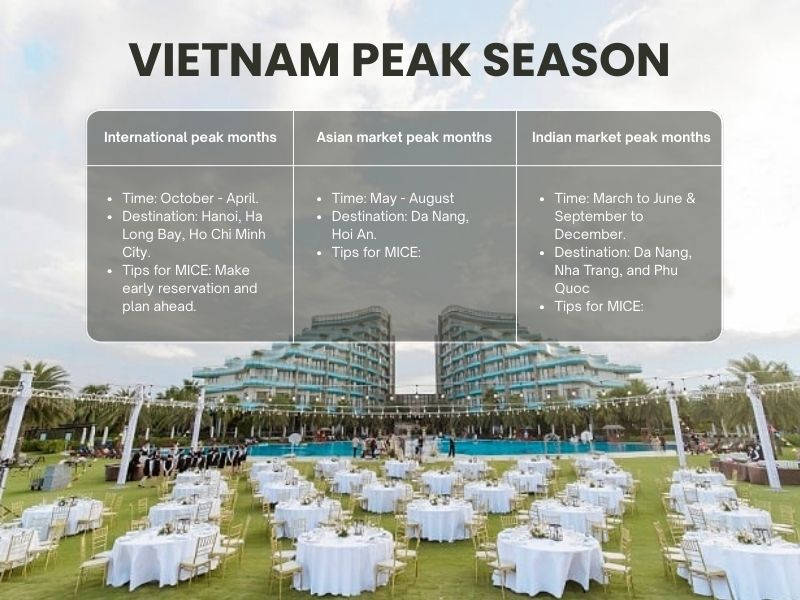
1.1. International tourist peak months
For many long-haul markets such as Europe, Australia, and North America, the most popular time to visit Vietnam is from October to April. During these months, the weather in northern and southern Vietnam is generally cooler and drier, making it ideal for sightseeing and outdoor activities.
Destinations such as Hanoi, Ha Long Bay, and Ho Chi Minh City often experience higher visitor numbers during this period. Hotels, cruise operators, and tour guides tend to reach high occupancy levels, especially between November and March.
For travel partners planning multi-destination itineraries or large groups, early reservations are essential during these months. The strong international demand during this period makes it one of the most competitive phases of the Vietnam peak travel season.
1.2. Asian market peak periods
Regional travelers from Asian markets often travel during summer holidays between May and August. This period coincides with school vacations in many countries and results in a surge of leisure and family travelers.
Beach destinations such as Da Nang and Hoi An become particularly busy. Resorts, beachside venues, and entertainment attractions often reach full capacity.
For MICE planners, this time can still offer opportunities for corporate incentives and company retreats, especially when organized mid-week. Understanding these Vietnam tourism peak months allows travel professionals to adjust event dates and venue selections more effectively.
1.3. Indian market peak travel windows
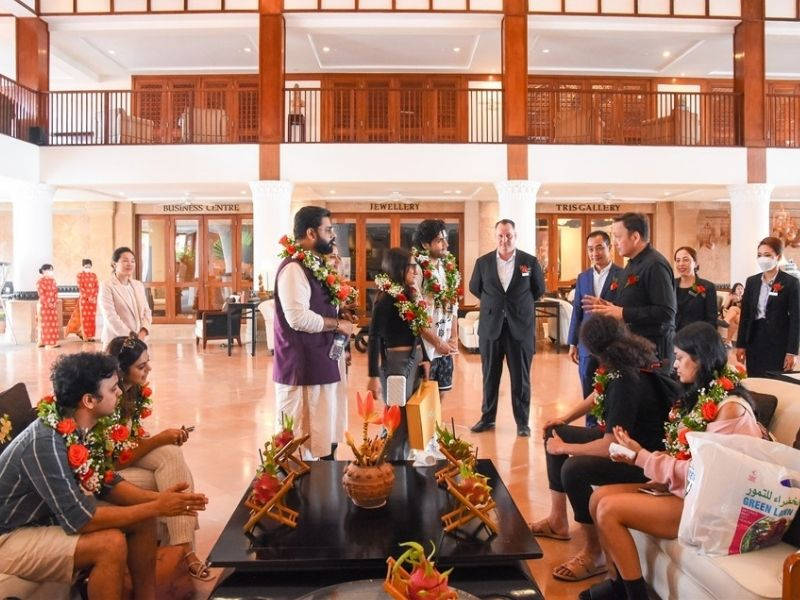
The Indian outbound market has become one of the fastest-growing segments for Vietnam tourism, especially in the MICE and wedding sectors. As a result, travel planners often see concentrated demand during several key periods.
Common Vietnam MICE travel season windows for Indian groups include:
- March to June, when companies organize incentive trips and conferences.
- September to December is popular for corporate events and destination weddings.
- Festival periods such as Diwali or long holiday weekends.
Cities like Da Nang, Nha Trang, and Phu Quoc are frequently selected for large incentive groups due to their resort infrastructure and international connectivity.
Because many Indian corporate groups travel in large numbers, early planning and strong local partnerships are crucial. Working with experienced local suppliers can greatly support Vietnam tour planning tips such as venue selection, logistics coordination, and on-ground event management.
2. Peak Season by Region in Vietnam
Vietnam is an S-shaped country with its regions expanding from north to south. Unlike many destinations with a single tourism cycle, the Vietnam peak travel season changes depending on the region.
2.1. Northern Vietnam
Northern Vietnam experiences four distinct seasons, which strongly influence the peak tourist season in Vietnam for destinations in this region.
The most favorable travel period is generally October to April, when the weather is cooler, drier, and more comfortable for sightseeing. This makes it the busiest season for many iconic attractions.
Popular destinations include Hanoi, Ha Long Bay, and Sapa, all of which attract large numbers of international visitors during the winter and spring months.
During this period, travelers enjoy pleasant temperatures, scenic landscapes, and clear skies that are ideal for cultural exploration, cruises, and trekking activities. As a result, hotel occupancy and tour bookings tend to increase significantly.
For MICE planners, northern Vietnam also offers strong opportunities for conferences and corporate meetings in cities like Hanoi. However, due to high demand during the Vietnam tourism peak months, venues and accommodations should be secured several months in advance.
2.2. Central Vietnam
Central Vietnam follows a different travel pattern compared to the north. The region’s best travel window usually falls between February and August, when the weather is sunny and dry.
This period marks the peak travel season for beach destinations and resort cities along the central coast. Locations such as Da Nang, Hoi An, and Hue attract large numbers of international and regional tourists.
For MICE planners, central Vietnam has become one of the country’s most popular destinations due to its combination of beaches, modern convention facilities, and luxury resorts. Many international conferences, corporate incentives, and team-building programs are hosted here.
Between September and November, however, the region may experience seasonal rains and occasional storms. Travel partners planning large-scale events should consider this when choosing dates and venues.
Despite these weather considerations, central Vietnam remains one of the most attractive destinations during the Vietnam MICE travel season, particularly for incentive groups seeking beachfront experiences and integrated resort venues.
2.3. Southern Vietnam
Southern Vietnam has a tropical climate with two main seasons: the dry season and the rainy season. The peak tourist season in Vietnam for the southern region typically occurs during the dry season from December to April.
During this time, destinations such as Ho Chi Minh City, the Mekong Delta, and Phu Quoc experience high visitor demand.
The dry season offers warm temperatures, low rainfall, and excellent conditions for sightseeing, cultural tours, and island vacations. As a result, many international travelers combine southern Vietnam with central or northern destinations in multi-city itineraries.
For MICE planners, Ho Chi Minh City is a major hub for conferences, exhibitions, and corporate meetings thanks to its international flight connectivity and modern event infrastructure. Meanwhile, Phu Quoc has become increasingly popular for luxury incentive trips and corporate retreats.
Understanding these regional patterns allows travel professionals to plan programs more strategically during the Vietnam peak travel season, ensuring that clients enjoy the best weather conditions while avoiding unnecessary operational challenges.
3. Vietnam Holidays that affect Peak Season
Besides weather patterns and international travel trends, public holidays and festive periods also play a major role in shaping the peak tourist season in Vietnam. During these times, domestic travel demand increases significantly, while international visitors also plan trips around global holiday periods.
For travel partners organizing tours, incentives, or corporate events, understanding these holiday-driven travel peaks is essential. Hotels, transportation, and attractions can reach full capacity quickly, which makes early planning a key part of successful Vietnam tour planning tips.
Below are some of the most important holidays that influence the Vietnam peak travel season.
- Vietnam Lunar New Year (Late January – Mid February): Tet is the most important holiday in Vietnam and has a major impact on the Vietnam peak travel season. Domestic travel surges as families return to hometowns or take vacations. Transportation hubs become extremely busy, and many local businesses close for several days. While it offers a unique cultural atmosphere for visitors, travel partners usually avoid scheduling conferences or corporate programs during the main holiday week due to limited service availability.
- Vietnam National Day (2nd September): National Day creates a short but intense travel peak, especially for domestic tourism. Many Vietnamese travelers take advantage of the long weekend to visit beach destinations and resort cities. Popular locations such as coastal resorts and island destinations can reach high occupancy levels. For travel partners managing itineraries or group bookings, early reservations are recommended to avoid limited availability during this brief but busy period in the Vietnam tourism peak months.
- Christmas and New Year (23th December & 1st January): The international holiday season is one of the busiest periods for international tourism in Vietnam. Travelers from Europe, Australia, and North America often visit during winter holidays, making it a key phase of the peak tourist season in Vietnam. Cities and beach resorts see strong demand, and many companies organize incentive trips or year-end celebrations. For MICE planners, this period offers good opportunities but requires early planning due to high hotel demand.
4. Challenges Travel Partners Face During Vietnam Peak Season
While the Vietnam peak travel season creates strong opportunities for tourism growth and corporate events, it also presents several operational challenges for travel planners. During the busiest months, demand for hotels, transportation, and event venues increases rapidly, which can affect pricing, availability, and overall program logistics.
For tour operators and MICE planners, understanding these challenges in advance is essential for smoother operations and better Vietnam tour planning tips. Below are some of the most common difficulties travel partners may encounter during the peak tourist season in Vietnam.
- Limited hotel availability: During the Vietnam tourism peak months, hotels in major destinations often reach high occupancy levels. Popular cities such as Da Nang, Hanoi, and Phu Quoc can experience heavy demand from both international and domestic travelers. Large MICE groups or corporate incentives may face difficulties securing sufficient room blocks unless reservations are made well in advance.
- Higher travel and accommodation costs: Increased demand during the peak season in Vietnam often leads to higher hotel rates, flight prices, and service fees. This can impact overall program budgets, especially for corporate events or group tours. Travel planners may need to secure contracts earlier or explore alternative destinations to maintain cost efficiency.
- Transportation and flight capacity constrains: Flights to major gateways such as Ho Chi Minh City and Hanoi can fill up quickly during busy travel periods. Domestic flights and ground transportation may also experience limited availability, particularly for large groups moving between destinations. Careful itinerary planning and early ticket reservations are essential.
- High demand for tour guides and event staff: Professional tour guides, interpreters, and event coordinators are in high demand during the Vietnam MICE travel season. For large corporate groups or conferences, securing experienced staff becomes critical. Without early booking, travel partners may struggle to find qualified personnel to manage complex itineraries.
- Overcrowded attractions and venues: Many famous destinations become significantly more crowded during peak travel months. Attractions such as Ha Long Bay or historic areas like Hoi An may experience heavy visitor traffic. This can affect scheduling, visitor experience, and timing of group activities if not properly planned.
5. Tips for Travel Partners to Manage Vietnam Peak Season
As mentioned above, travel operators might encounter several difficulties during Vietnam’s peak season. While demand for travel services increases significantly during the busiest months, experienced travel planners can still deliver smooth programs by preparing early and adopting flexible strategies.
For tour operators, event organizers and corporate travel planners, the following Vietnam tour planning tips can help manage logistics more effectively and maintain service quality throughout the Vietnam peak travel season.
- Book key services well in advance: One of the most effective strategies is to secure hotels, transportation, and event venues several months ahead of time. In popular destinations such as Da Nang, Hanoi, and Phu Quoc, accommodation can sell out quickly during the Vietnam tourism peak months. Early bookings help travel partners lock in better rates and ensure availability for large groups or corporate events.
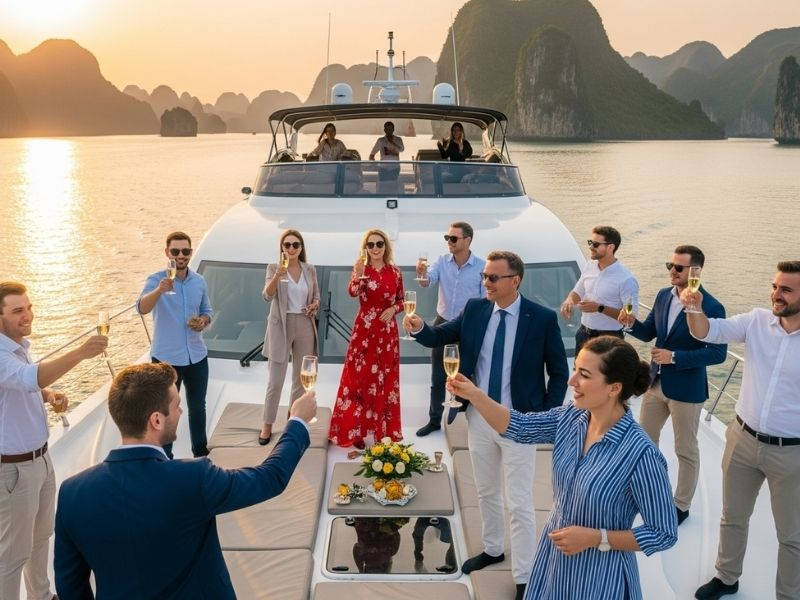
- Plan flexible itineraries: Flexibility is essential when operating during the busiest travel periods. Adjusting sightseeing schedules, visiting attractions during off-peak hours, or exploring alternative destinations can help reduce congestion and improve guest experiences. For example, when planning visits to popular sites such as Ha Long Bay, scheduling earlier departures or overnight cruises may help avoid the heaviest visitor traffic.
- Consider alternative destinations: When major tourist hotspots become crowded, travel partners can diversify itineraries by including emerging destinations. Instead of focusing only on the most famous locations, planners can combine popular cities with less crowded regions to balance travel flow. This approach helps maintain program quality while still showcasing Vietnam’s diverse landscapes and cultural experiences.
- Work with reliable local suppliers: Partnering with experienced local operators is especially valuable during the Vietnam MICE travel season. Vietnam DMCs often have established relationships with hotels, venues, and transportation providers, which can help secure services even during high-demand periods. A strong local partner also provides on-ground support for managing unexpected schedule changes or operational challenges.
- Plan group logistics carefully: For large corporate groups or incentive trips, detailed logistical planning becomes even more important during the peak tourist season in Vietnam. Coordinating airport transfers, internal transportation, and event schedules in advance helps avoid delays and ensures smoother operations. Proper planning allows travel partners to deliver professional experiences despite the higher demand for tourism services.
In conclusion, to operate a successful tour during the peak season in Vietnam, organizers need careful planning, strong supplier relationships, and reliable local support. For travel partners organizing corporate events, incentive trips, or large group tours, working with an experienced destination management company can make all the difference.
At Viet Dan Travel DMC, we specialize in supporting international travel partners with professional ground handling services, customized itineraries, and dedicated on-site coordination across Vietnam’s top destinations. With more than 19 years of experience in the industry and strong local networks, our team helps ensure smooth operations even during the busiest travel periods.
If you are looking for a trusted partner to manage your programs during the Vietnam peak travel season, connect with Viet Dan Travel DMC – a reliable B2B Vietnam DMC to plan seamless and memorable experiences for your clients.
0 Comment