
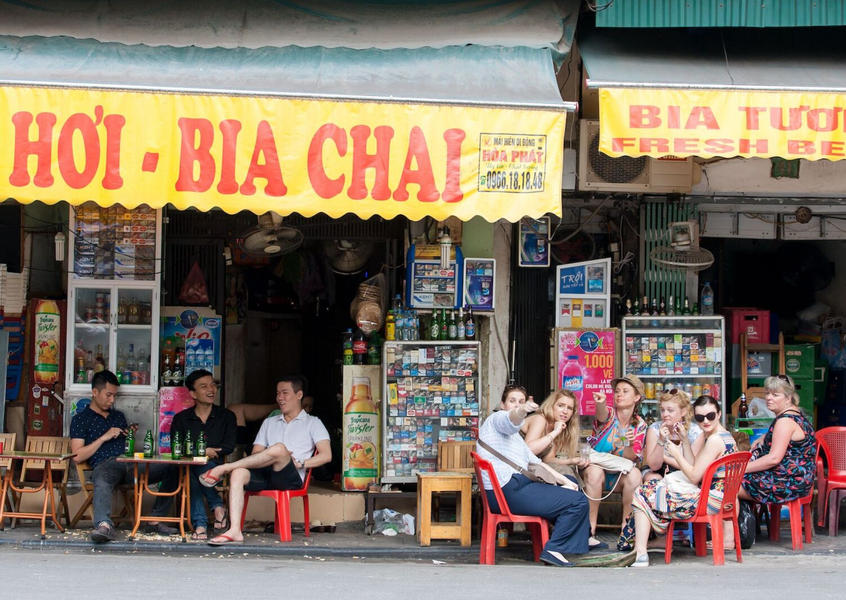

Hanoi is the street food capital of Vietnam, where every street holds its own unique flavor, every stall tells a story. From a steaming bowl of pho at 6 am, a plate of smoky bun cha at noon, to a cup of egg coffee in the evening. Here are 12 MUST-TRY Hanoi street food dishes, along with specific addresses and actual prices.
1. The 12 Essential Hanoi Street Food Dishes
Hanoi street food isn’t just about eating. It’s about understanding how a city lives. Each dish carries a story: a recipe passed down through generations, a cooking technique unique to the North, a flavor profile that can’t be replicated anywhere else in Vietnam. In this part, Viet Dan Travel DMC will walk you through the unforgettable culinary journey with top 12 best Vietnamese dishes:
1.1. Phở (Pho): The soul of Hanoi in a bowl
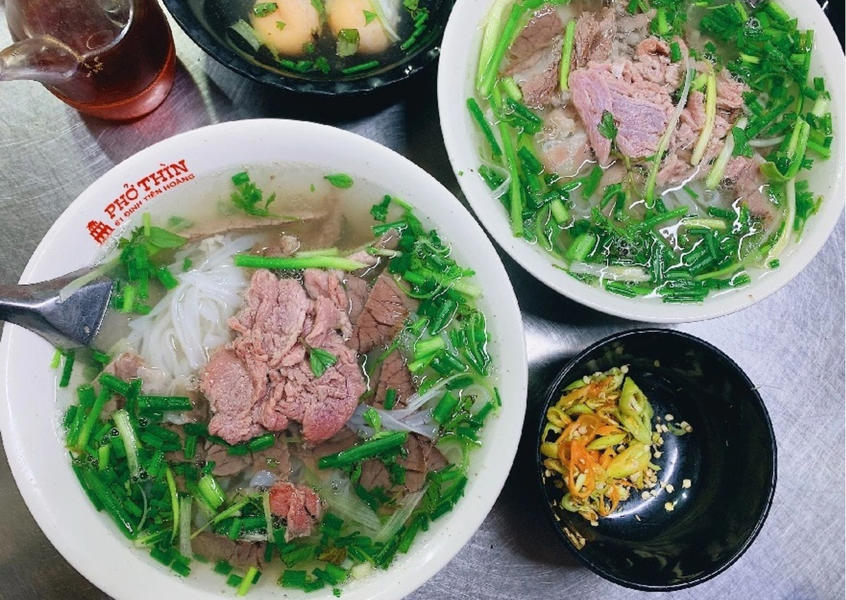
Pho is Vietnam’s most iconic dish, and Hanoi is its birthplace. A clear, aromatic broth simmered for 8–12 hours with beef bones, star anise, cinnamon, and ginger. Served with flat rice noodles, thinly sliced beef or chicken, and fresh herbs.
Northern vs Southern style: Hanoi pho is distinct—the broth is lighter and cleaner than its southern counterpart, with less sweetness and no bean sprouts added by default. The focus is on the pure umami of the bones and spices.
Price: 40,000–80,000 VND (~$1.60–$3.20)
Best time to eat: 6:00 AM – 9:00 AM (breakfast is peak pho time in Hanoi)
Where to eat:
- Phở Bát Đàn: 49 Bat Dan Street, Hoan Kiem District. One of Hanoi’s most legendary pho spots, now listed in the Michelin Guide. Queue outside the counter, pay, and find your own stool. Open mornings and evenings only.
- Phở 10 Lý Quốc Sư: 10 Ly Quoc Su Street, Hoan Kiem. Always has a line. The coriander-topped bowls are consistently praised by locals.
- Phở Thìn: 13 Lo Duc Street, Hai Ba Trung District. Famous for its stir-fried beef variation. Price: ~50,000 VND/bowl.
Local tip: Always squeeze your lime into the flat-bottomed spoon before adding it to the bowl and it keeps the bitter pips out of your broth.
1.2. Bún Chả: The dish that made Obama Love
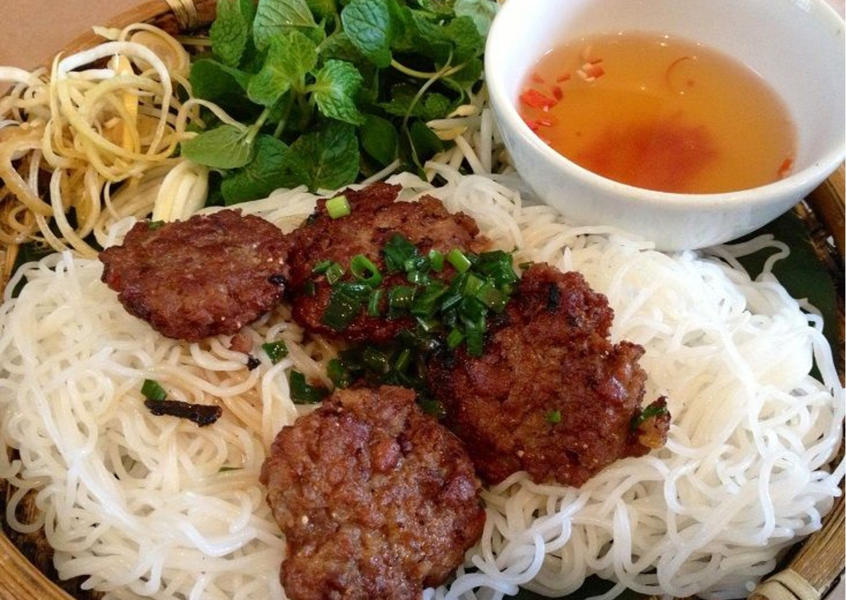
Bún Chả is the grilled fatty pork patties and sliced pork belly, served in a sweet-savory fish sauce broth with vermicelli noodles, fresh herbs, and pickled green papaya. The smokiness from the charcoal grill is non-negotiable.
The Obama connection: In 2016, President Barack Obama and Anthony Bourdain sat down for bun cha at Bún Chả Hương Liên on Le Van Huu Street. The table, chairs, and bill (around $6) are now preserved behind glass. It’s become a pilgrimage site for food travelers — and the food is genuinely excellent.
Price: 40,000–85,000 VND (~$1.60–$3.40)
Where to try:
- Bún Chả Hương Liên: 24 Le Van Huu Street, Hai Ba Trung District. The “Obama restaurant.” It’s best to arrive before noon as they often sell out.
- Bún Chả Đắc Kim: 1 Hang Manh Street, Hoan Kiem District. Michelin-selected. The nuoc cham here uses finely sliced pickled green mango.
- Tuyết Bún Chả 34 : Bib Gourmand recognition from Michelin 2025. Pork is chargrilled to order. Try adding a crispy spring roll on the side.
1.3. Bánh Mì: The world’s best sandwich
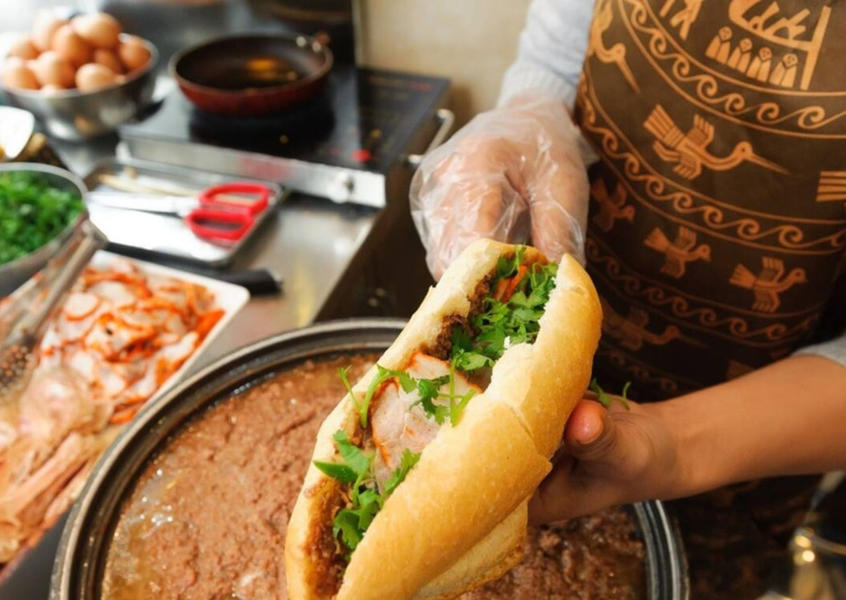
A Vietnamese baguette (lighter and crispier than its French ancestor, thanks to a rice flour blend) packed with layers of pâté, mayonnaise, various meats, pickled daikon and carrots, cucumber, and fresh herbs.
Hanoi vs. Saigon banh mi: Northern banh mi tends to be simpler and less sweet, focusing on the quality of the bread and the balance of savory fillings over heavy sauces.
Price: 20,000–45,000 VND (~$0.80–$1.80)
Where to try:
- Bánh Mì 25: 25 Hang Ca Street, Hoan Kiem. Popular with both locals and tourists, with vegetarian and vegan options.
- Bánh Mỳ 38 Đinh Liệt: 38 Dinh Liet Street, Old Quarter. A classic Old Quarter spot.
- Neighborhood stalls: Honestly, the best banh mi is often from an unmarked cart near your hotel. Look for the ones with the longest queue of office workers at 7 AM.
1.4. Cà Phê Trứng (Egg Coffee): Hanoi’s most unique drink
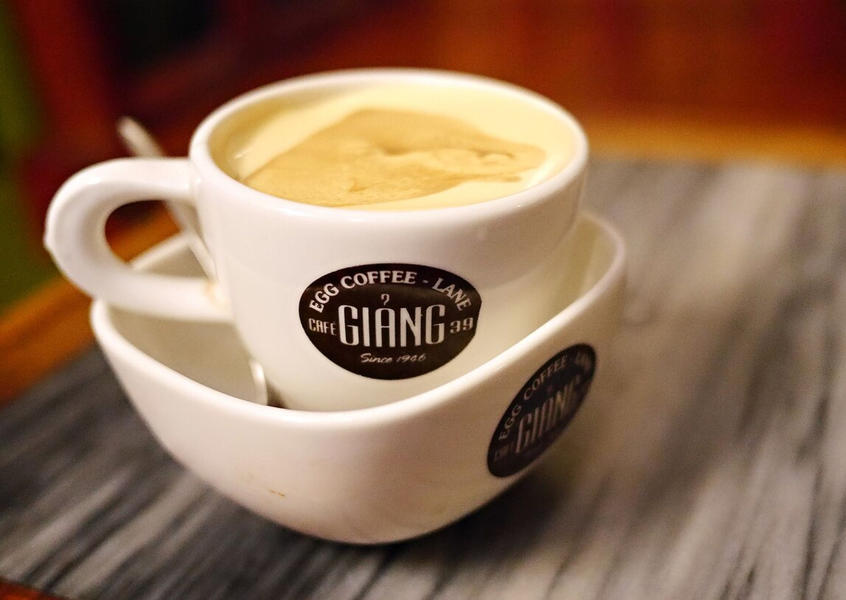
Egg coffee is strong Vietnamese robusta coffee topped with a thick, creamy foam made from whisked egg yolks, condensed milk, and sugar. The result tastes somewhere between a dessert and a coffee, rich, velvety, and unlike anything you’ve had before.
The origin story: Egg coffee was created in 1946 at Cafe Giang by Nguyen Van Giang, a former bartender at the Sofitel Legend Metropole Hotel. During the milk shortage after WWII, he substituted egg yolk for condensed milk. It became a Hanoi institution.
Price: 30,000–55,000 VND (~$1.20–$2.20)
Served hot or cold: Hot egg coffee is placed in a small bowl of warm water to maintain temperature. Cold versions are also popular in summer.
Where to try:
- Cafe Giang: 39 Nguyen Huu Huan Street, Hoan Kiem. The original since 1946. Hidden upstairs, small space, always packed.
- Cafe Dinh: 13 Dinh Tien Hoang Street, near Hoan Kiem Lake. A quieter, old-school atmosphere.
1.5. Bánh Cuốn (Steamed Rice Rolls): Breakfast done right
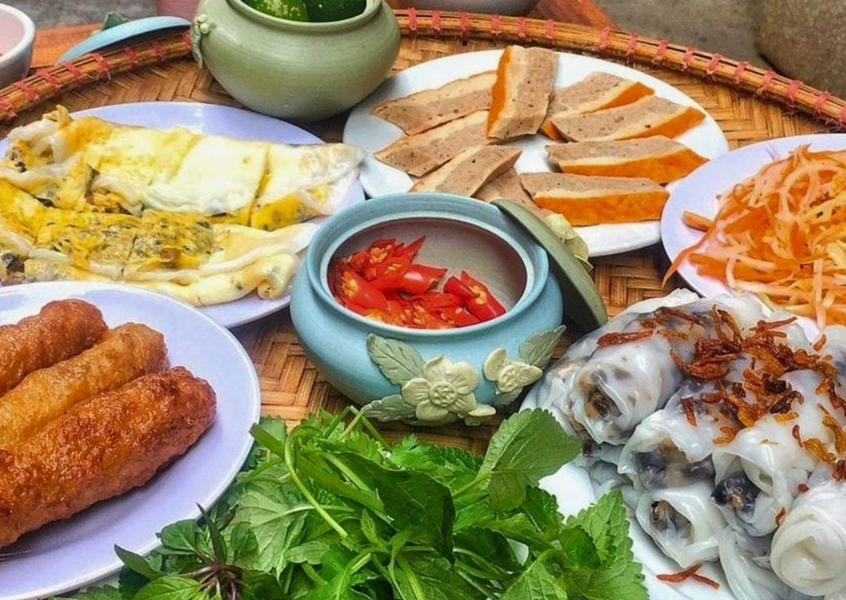
Steamed Rice Rolls is a delicate rice flour crepes steamed on cloth stretched over boiling water, then filled with minced pork and black fungus, rolled tightly, and served with fried shallots, fresh herbs, and a light dipping sauce. A skilled banh cuon maker works incredibly fast. It is interesting to note that watching the prep is part of the experience.
Price: 35,000–55,000 VND (~$1.40–$2.20)
Where to try:
- Bánh Cuốn Bà Xuân: Michelin Guide-selected, 2025. Both morning and evening service available. Ask for the version with a soft poached egg.
- Bánh Cuốn Thanh Vân: 14 Hang Ga Street, Hoan Kiem. A longtime local favorite, open from 7 AM.
1.6. Bún Thang: The queen of Hanoi noodle soups
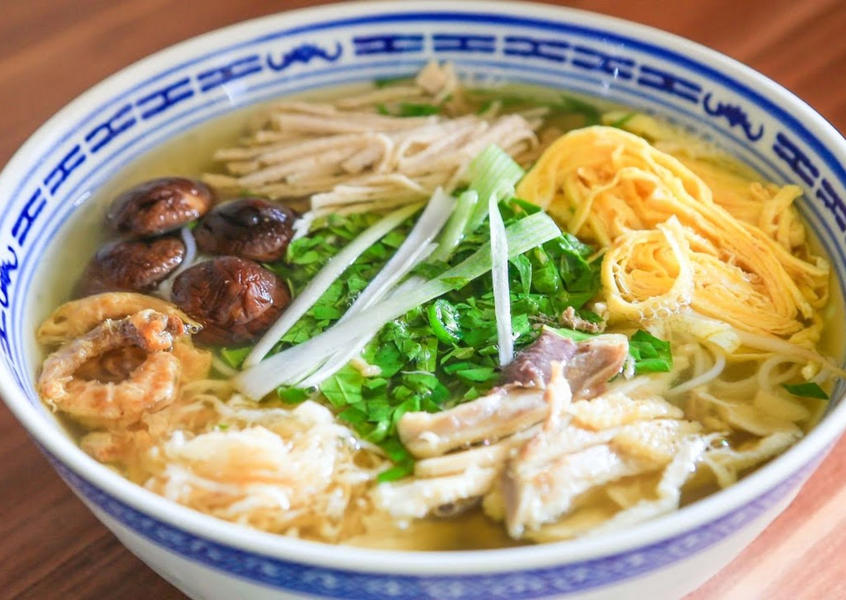
If pho is the king, bun thang is the queen. This dish is refined, labor-intensive, and rarely found outside Hanoi. The crystal-clear broth is made from simmering chicken bones, dried shrimp, and squid. Topped with thin egg crepe strips, shredded chicken, Vietnamese pork sausage (gio lua), and fine shrimp floss arranged with near-artistic precision.
Bun thang represents the sophisticated side of Hanoi’s culinary identity that historically associated with affluent Hanoian households and Tet celebrations. Finding a place that still makes it the traditional way is increasingly rare.
Price: 45,000–80,000 VND (~$1.80–$3.20)
Where to try:
- Phở Hà – 15 Hang Hom Street, Hoan Kiem. It serves both pho ga and bun thang. An English menu is available. Friendly staff.
1.7. Bánh Tôm Hồ Tây (West Lake Shrimp Cakes): Hanoi’s original specialty
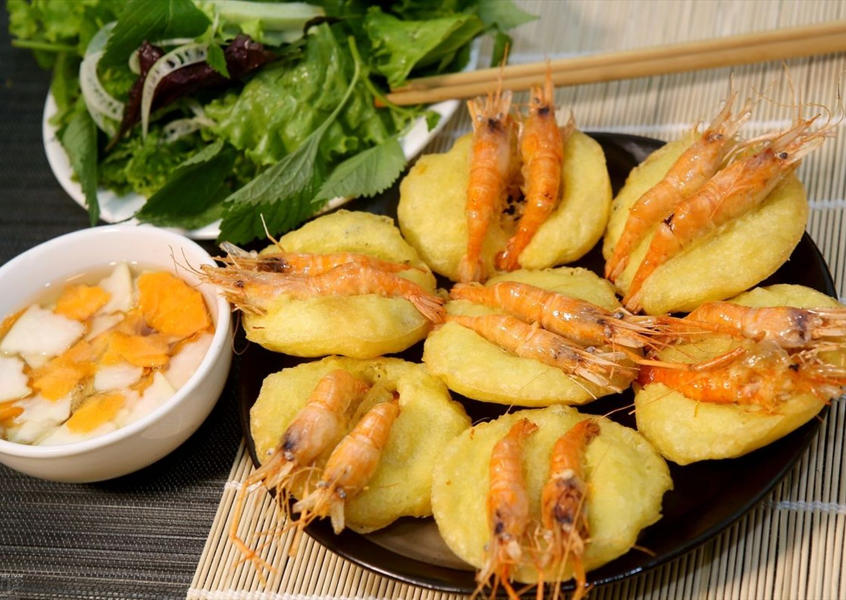
The dish is a kind of deep-fried sweet potato cake topped with whole freshwater shrimp from West Lake. The batter is crispy on the outside, soft and sweet inside, with the shrimp providing a burst of umami. Served with lettuce, herbs, and a tangy dipping sauce.
Bánh tôm originated on the shores of West Lake and uses the specific small shrimp (tôm riu) found in its waters. You’ll struggle to find a version this good anywhere else in Vietnam.
Price: 40,000–70,000 VND (~$1.60–$2.80)
Where to try:
- Bánh Tôm Hồ Tây: 1 Thanh Nien Street, Ba Dinh District, on the shores of West Lake. The most famous address for this dish, with a view of the lake.
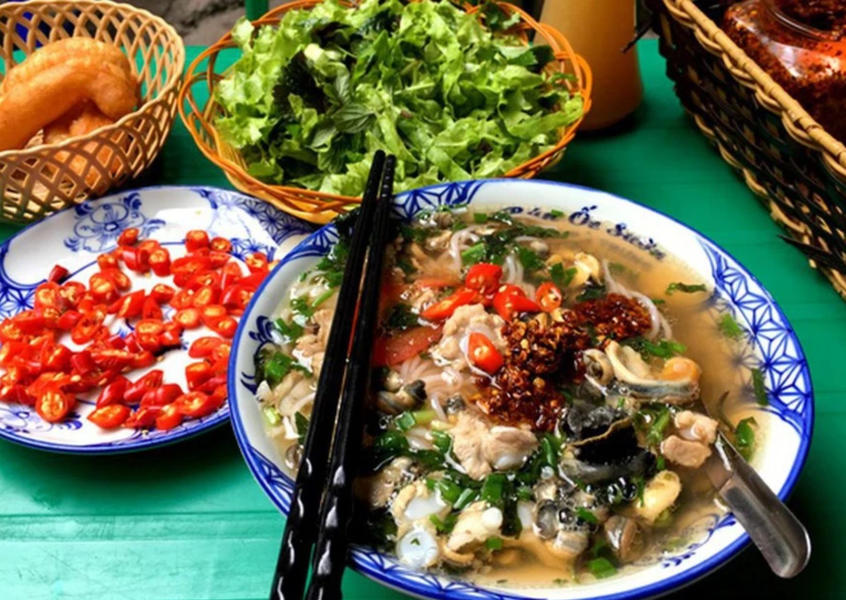
1.8. Bún Ốc (Snail Noodle Soup): The bold, tangary surprise
Bún Ốc or snail noodle soup is a bright, tomato-based broth with a deliberate sourness from vinegar, loaded with plump freshwater snails, crispy tofu, banana blossoms, and fresh herbs including perilla and cilantro. Bold, complex, and surprisingly addictive.
Price: 35,000–60,000 VND (~$1.40–$2.40)
Best time: Afternoon to evening — this is more of a snack or light dinner dish.
Where to try: Look for stalls run by older women in the Old Quarter’s back alleys, particularly around Hang Buom and Ma May Streets.
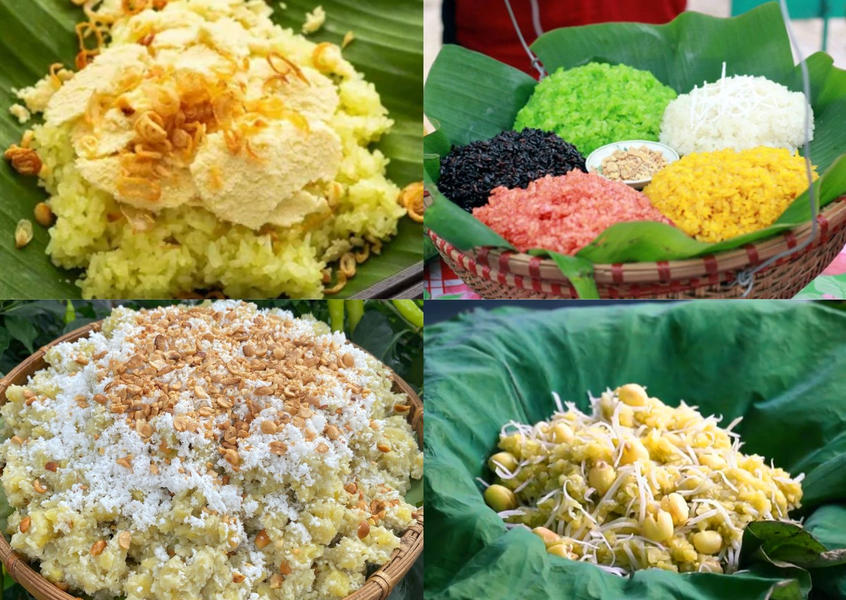
1.9. Xôi (Sticky Rice): The breakfast that keeps you going
Glutinous sticky rice served with various toppings such as crispy shallots, loaded versions with shredded chicken, Chinese sausage (lap xuong), or creamy mung bean paste. Traditionally wrapped in banana leaves or a lotus leaf.
Why locals love it: Cheap, filling, and available from 5:30 AM. Construction workers, students, and office commuters all eat xoi. It’s the most democratic breakfast in Hanoi.
Price: 15,000–35,000 VND (~$0.60–$1.40)
Where to try: Xôi Yến at 35B Nguyen Huu Huan Street is one of the most famous xoi spots in the Old Quarter. Expect a queue.
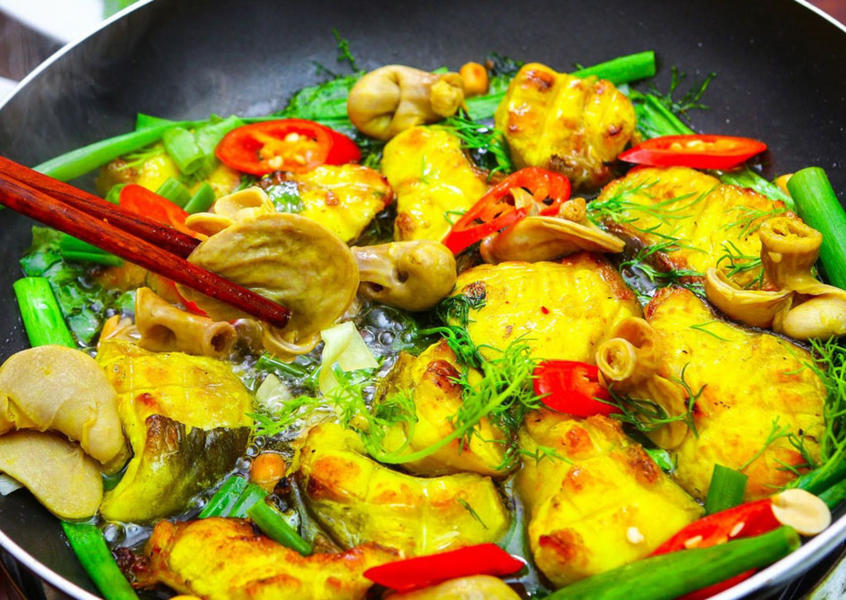
1.10. Chả cá Lã Vọng (Turmeric fish): The dish with its own street
The cuisine is marinated snakehead fish coated in turmeric paste, grilled on charcoal, and then finished tableside on a sizzling pan with dill and spring onions. Served with vermicelli noodles, peanuts, shrimp paste, and fresh herbs. You assemble your own bowl.
The cultural significance: Cha Ca La Vong is so iconic that the street where it originated (Hang Son Street) was officially renamed Cha Ca Street in its honor. The restaurant Lã Vọng has been serving this dish since the 1870s.
Price: 150,000–250,000 VND (~$6–$10), one of Hanoi’s pricier street food experiences, but worth it.
Where to try:
- Chả Cá Lã Vọng – 14 Cha Ca Street, Hoan Kiem District. The original since 1871. This place is quietly touristy but authentic.
- Chả Cá Thăng Long – 19-21 Duong Thanh Street. A more affordable alternative with equally good fish.
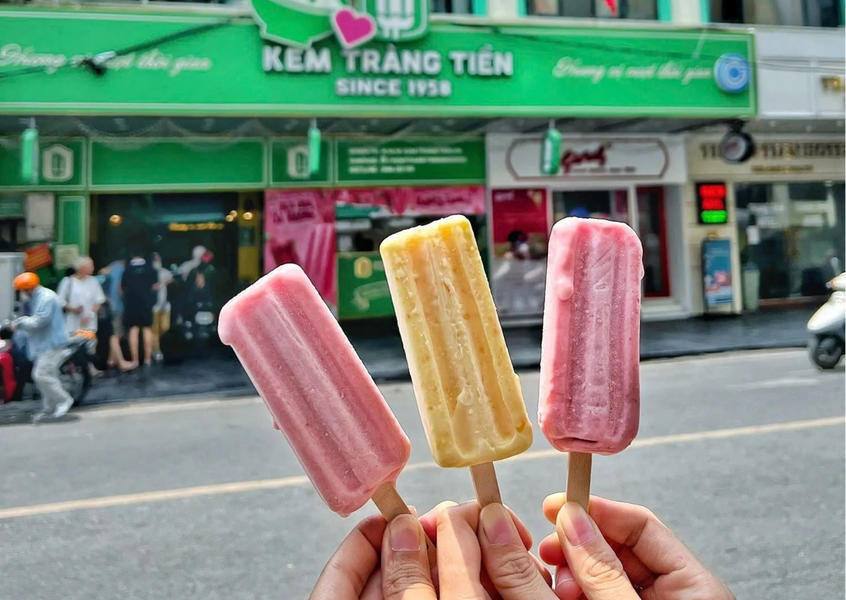
1.11. Kem Tràng Tiền (Trang Tien Ice Cream): Old Hanoi nostalgia
Old-school Vietnamese ice cream on a stick, in flavors like green bean, coconut, young rice, and chocolate. No waffle cones, no fancy toppings. Just ice cream and the pavement outside the shop near Hoan Kiem Lake.
Kem Trang Tien has been here since 1958. On weekend evenings, the sidewalk fills with families, couples, and tourists all eating the same simple ice cream. This is a rare moment of shared Hanoi experience that hasn’t changed in decades.
Price: 8,000–15,000 VND (~$0.30–$0.60)
Address: 35 Trang Tien Street, Hoan Kiem District. Near the Opera House and Hoan Kiem Lake.
1.12. Cháo (Rice Porridge): The late-night comfort bowl
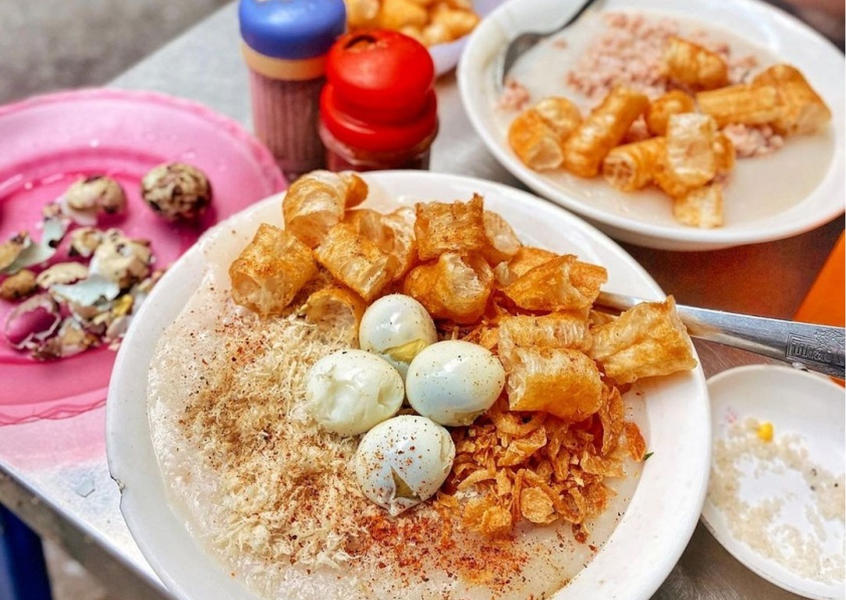
Smooth, silky rice porridge is available in numerous variations, including chao long (with offal), chao ga (chicken), and chao ca (fish). Deeply savory, warming, and perfect for late nights or when you’ve had too much bia hoi.
Price: 25,000–50,000 VND (~$1.00–$2.00)
Where to try: Street carts around the Old Quarter after 9 PM. Look for the large clay pots with steam rising.
Hanoi Street Food by Time of Day:
| Time | What to Eat | Where |
|---|---|---|
| 6:00–9:00 AM | Pho, Banh Cuon, Xoi, Banh Mi | Old Quarter, Ba Dinh |
| 10:00 AM–1:00 PM | Bun Cha, Bun Thang, Banh Tom | Hang Manh, West Lake area |
| 2:00–5:00 PM | Egg Coffee, Banh Mi snack | Cafe Giang, Old Quarter cafes |
| 5:00–9:00 PM | Cha Ca, Bun Oc, Banh Xeo | Cha Ca Street, back alleys |
| After 9:00 PM | Chao, Kem Trang Tien, Bia Hoi | Hoan Kiem Lake, Ta Hien Street |
2. The Best Areas for Street Food in Hanoi
Hoan Kiem Old Quarter is the most accessible starting point. The area is full of stalls, walkable, and covered by most food tours. Streets like Hang Be, Ma May, Luong Ngoc Quyen, and Ta Hien are all strong for evening eating.
Ba Dinh District (around West Lake and Lang Ha) is where many Hanoian professionals eat. Less tourist-facing, more local, and home to banh tom and quality bun cha spots.
Hang Dao Walking Street runs on weekend evenings and is Hanoi’s street food market equivalent such as grilled skewers, snacks, and chaotic, fun energy.
Hom Market area (Hoan Kiem) has excellent banh cuon and pho ga spots that see more local than tourist traffic.
3. What to Budget for Hanoi Street Food
A full day of eating Hanoi street food including breakfast, lunch, an afternoon coffee, dinner, and dessert, typically costs between 150,000–300,000 VND (~$6–$12) per person, including drinks. This covers 3–4 full meals at authentic street stalls.
Budget travelers can eat extremely well for under $10/day. Spending more typically means visiting restaurant-style stalls or Michelin-recognized spots, which still represent extraordinary value by any global standard.
4. Helpful Tips for eating street food in Hanoi
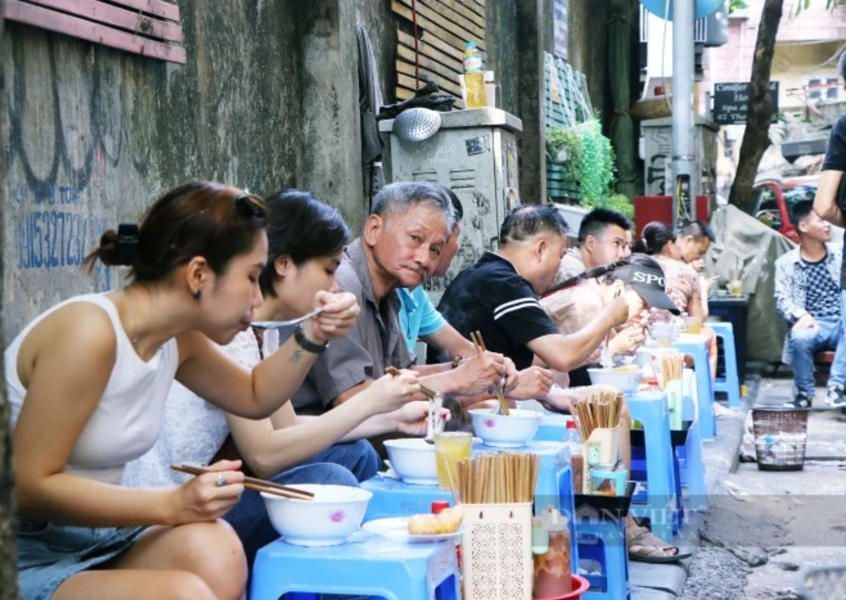
A few ground rules that separate a great experience from a frustrating one would be important for first-timers coming to Hanoi for an unforgettable culinary journey. These tips below will help you eat smarter, safer, and more authentically.
- On hygiene: Look for stalls with high turnover. The food is being cooked and replenished constantly, which means fresher ingredients and lower risk. Avoid pre-cooked dishes sitting out for more than an hour in hot weather.
- On ordering: Most stalls have a very limited menu, often just one or two dishes. Point, smile, and hold up fingers for the quantity. Prices are usually posted or assumed. Pay when you order at stalls; pay after eating at sit-down spots.
- On prices: If you’re quoted a price that seems high (relative to the guide above), it’s fine to ask or compare with what locals around you are paying. Most street food vendors are completely honest; occasional tourist pricing exists but is the exception.
- On allergies: Peanuts are in many dipping sauces and toppings (especially with bun cha and cha ca). Fish sauce is in almost everything. If you have dietary restrictions, communicate clearly, our guides can help translate.
- On timing: Many of the best pho spots are only open mornings. Bun cha spots typically close by early afternoon. Plan accordingly.
Hanoi’s street food scene isn’t static. New stalls appear, old ones evolve, and the best spots are often known only to people who live in a five-block radius. That’s part of the charm.
Come hungry, sit on a plastic stool, order something you can’t pronounce. The city will take care of the rest.
So, are you ready to dive deep into Vietnam’s rich culinary culture? Contact Viet Dan Travel DMC for local support. Our team experts will designed private tours, food experiences, and cultural itineraries for those who wat to go beyond the guidebook.

0 Comment