
A Vietnam DMC (destination management company) provides hotels, transfers, licensed guides, cruises, group handling, and 24/7 support inside Vietnam for overseas travel agencies and tour operators. This guide covers 10 core services, what a DMC does not provide, and how to check a partner before you send your first brief.
What Services Does a Vietnam DMC Provide?
A full-service Vietnam DMC covers ten areas. The table shows what each service delivers to the agent.
| Service | What the agent receives | |
| 1 | Hotel and resort contracting | Confirmed rooms at net rates, group blocks |
| 2 | Airport meet and greet, private transfers | Vehicle and driver per leg, meeting-point details |
| 3 | Licensed local guides | Language-matched guides, guide names before arrival |
| 4 | Itinerary design and net-rate quotes | Day-by-day program with costs split by line |
| 5 | Ha Long Bay and Lan Ha Bay cruises | Cabin allocation, boarding and transfer plan |
| 6 | Group, series and FIT programs | One operating plan for the whole group |
| 7 | MICE and incentive programs | Venues, gala dinners, team activities |
| 8 | Special-interest and dining programs | Food, cycling, culture, family and dietary-matched plans |
| 9 | Domestic flights, trains and intercity transport | Coordinated schedule between regions |
| 10 | 24/7 operations support and white-label delivery | Emergency contact, vouchers under the agent’s brand |
1. Hotel and Resort Contracting
A Vietnam DMC contracts hotels directly or through allotments, from boutique city hotels to beach resorts. The agent receives confirmed rooms at net rates instead of public rates. Group blocks, room types and meal plans are agreed in writing before the trip is quoted as final.
Hotel contracting matters most when a program crosses several regions. A single route can combine Hanoi, Hoi An, Ho Chi Minh City and Phu Quoc, and each city has its own supplier market. The DMC checks availability across all of them in one request.
2. Airport Meet and Greet and Private Transfers
Airport meet and greet is the first service a guest sees. A driver or representative waits at arrivals with a name board and takes the group to the hotel in a private car, minibus or coach. The same vehicle chain covers hotel-to-pier, hotel-to-station and sightseeing transfers.
The agent receives the vehicle type, the pickup time and the contact number for each leg. Flight changes are handled by the DMC operations desk, which adjusts pickups without the agent rewriting the program.
3. Licensed Local Guides
Guiding in Vietnam is a regulated profession. Vietnamese tourism rules cover tour guide badges and tie guides to employment or membership arrangements. A DMC assigns guides who hold the required card and who speak the language the group needs, such as English, French, German or Japanese.
The agent should ask for guide names and languages before arrival. A DMC with its own guide pool can replace a guide faster than one that books freelancers on the day.
4. Itinerary Design and Net-Rate Quotes
A Vietnam DMC turns an agent’s brief into a costed program. The quote lists each hotel night, transfer, meal, entrance fee and guide day as a separate line. The agent adds a margin and sells the trip.
Some DMCs quote net rates, so the advisor sets the margin and pays the DMC the net amount, while others give a retail price and pay commission. A line-by-line net quote allows the agent to swap a hotel or drop a day without asking for a full requote.
5. Ha Long Bay and Lan Ha Bay Cruises
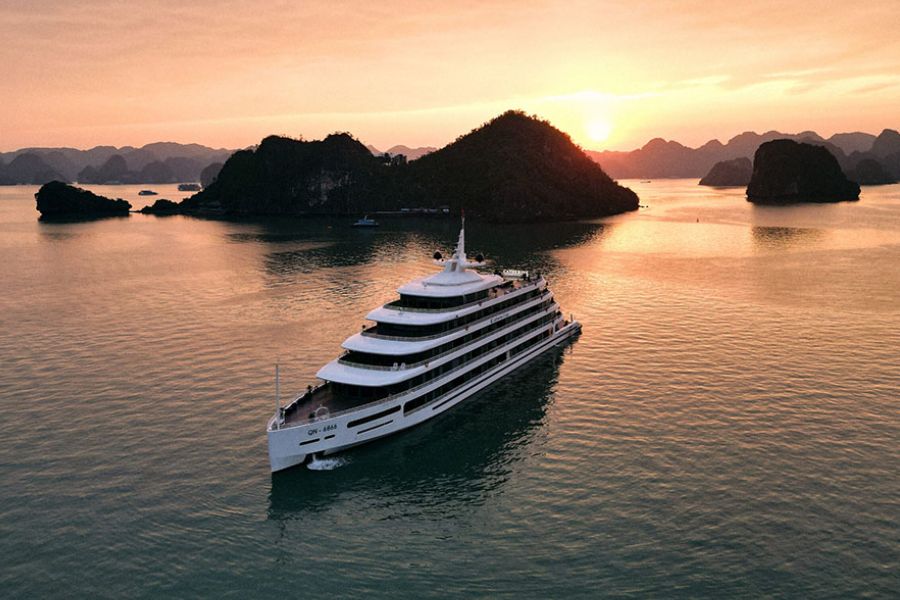
A DMC arranges overnight and day cruises on Ha Long Bay and Lan Ha Bay, matched to budget, cabin category and route. The agent receives the vessel, cabin allocation, boarding time and the hotel-to-pier transfer plan.
Weather can change the program. Authorities can suspend Ha Long Bay departures in bad weather, so a prepared DMC keeps an alternative program ready. Ask each DMC what its plan is before you need it.
6. Group, Series and FIT Programs
A DMC handles three program types. Leisure groups travel together on a shared plan. Series departures repeat the same program on set dates. FIT programs serve individual travelers or small private parties.
For groups, the DMC coordinates rooming lists, coach size, meal timing and guide-to-guest ratio. For FIT, the DMC prioritizes flexibility and private service. The agent receives one operating plan per program type.

7. MICE and Incentive Programs
MICE stands for meetings, incentives, conferences and exhibitions. A DMC sources venues, plans gala dinners, arranges team activities and manages group movement for corporate clients. Vietnam’s beach destinations and major cities offer varied venues for incentive travel.
The planner should ask for the largest group the DMC has actually operated, not only the largest group it says it can handle.
8. Special-Interest and Dining Programs
Special-interest programs include food tours, cycling, cultural visits, wellness, photography and family itineraries. The DMC also coordinates meal preferences, such as vegetarian, vegan or religious dietary needs. Some DMCs state that meal requests, including Jain and Indian meals, are coordinated where suppliers can provide them and confirmed per program.
Dietary and mobility needs should appear in the brief. The DMC cannot promise a menu it has not confirmed with the restaurant.
9. Domestic Flights, Trains and Intercity Transport
Vietnam runs more than 1,600 km from north to south, so most multi-region programs need an internal flight, a train or a long road transfer. The DMC books or coordinates these legs and aligns them with hotel check-in times and tour starts.
The agent receives one connected schedule instead of separate bookings. If a flight changes, the DMC reroutes transfers and tells the hotel, which removes a common cause of missed pickups.
10. 24/7 Operations Support and White-Label Delivery
A DMC runs an operations desk that stays reachable while the group travels. The agent receives an emergency contact and a named coordinator. Medical issues, delays and lost items are handled by the local team in real time.
White-label delivery means vouchers, guide boards and documents carry the agent’s brand, not the DMC’s. A DMC tour can be white-labeled for the outbound operator, so the client sees only the agent. The DMC also gives visa guidance to the agent, but the traveler or the agent applies for the visa through the official channel.
What Does a Vietnam DMC Not Provide?
A Vietnam DMC does not sell international flights. The agent or the traveler books the flight into and out of Vietnam, and the DMC plans arrival and departure transfers around it.
A Vietnam DMC does not issue visas. Vietnam’s e-visa is open to all nationalities, valid for up to 90 days, at 25 USD for a single entry and 50 USD for multiple entries. The traveler applies on the government portal. Some passports qualify for visa exemption, but the list changes, so confirm the rules for each passport at the time of booking.
A Vietnam DMC does not replace the agent’s travel insurance advice. The agent should confirm medical and cancellation cover with the client, and ask the DMC what liability cover the DMC itself holds.
A Vietnam DMC does not compete for your client when it works B2B only. If the DMC also sells directly to the public, ask how it protects your pricing and your client relationship.
How Does a Vietnam DMC Work With Agents?
Most partnerships follow six steps.
- Registration and agreement. The agent and DMC agree on net rates, payment terms and cancellation rules.
- Enquiry. The agent sends a brief with the client’s needs.
- Proposal. The DMC returns a costed program, ideally within one working day.
- Confirmation. The agent approves and pays the agreed deposit.
- Operation. The DMC reconfirms services before arrival and runs the trip with a named coordinator.
- After the trip. The DMC sends final invoices and handles feedback.
What a good quote contains. A line-by-line quote lists the hotel, room type and nights, each transfer, each guide day, entrance fees, meals, cruise cabin type and any single supplement. The quote should show a validity date, a season band, the inclusions and exclusions, and the payment and cancellation terms. A quote that shows one lump-sum price per person hides where the margin sits and slows every change request.
What Should Agents Send in a Brief?
A complete brief lets the DMC quote in hours instead of days. Send these items:
- Travel dates or travel month, and the flexibility on either
- Number of guests, ages of children, and rooming pattern
- Source market and client profile (family, honeymoon, corporate, seniors)
- Hotel category and any preferred brands
- Destinations and preferred pace
- Meal needs, allergies and religious dietary requirements
- Guide language and transport preferences
- Mobility or accessibility needs
- Flight arrival and departure details, if booked
- Budget guidance and must-have inclusions
- Whether documents must be white-labeled
How Do Seasons Affect DMC Services?
Vietnam has different seasons by region, so a DMC should route around the weather. The north is cool and dry from October to April, the center is best from February to August, and the south and Phu Quoc are driest from November to April. A north-center-south circuit in July is a different operation from the same circuit in November.
Demand is rising. Vietnam welcomed nearly 21.2 million international visitors in 2025, up 20.4 percent on 2024. In the first half of 2026 the figure reached about 12.3 million, up 14.9 percent year on year. Europe recorded the strongest growth among source markets in that period, at 56.1 percent. More demand means tighter hotel and cruise inventory in peak months, so agents should confirm early.
The administrative map changed. From July 1, 2025, Vietnam merged its 63 provinces into 34 and ended the district tier. Quang Nam joined Da Nang, so Hoi An now sits within Da Nang City. The place names tourists know have not changed, but some addresses on vouchers, permits and supplier documents have. Ask your DMC whether its documents are updated.
How Do You Check a Vietnam DMC?
Check these points before you send a first brief:
- Business license. Vietnam’s tourism law requires a business license, and the operator must keep meeting the conditions while it operates. Ask for the international tour operator license number and verify it with the authority.
- Deposit and insurance. International tour operators must hold a bank deposit under Vietnamese tourism rules. Ask what liability insurance covers the guests.
- Own team or outsourced. Ask which services the DMC contracts directly and which it subcontracts.
- Quote format. Insist on a line-by-line quote with a validity date.
- Response time. Ask for the quote turnaround in writing. Same working day is a reasonable standard.
- Named coordinator and 24/7 contact. A shared inbox is not an emergency line.
- Weather plan. Ask what happens when a cruise departure is suspended.
- References. Ask for agencies in your source market that use the DMC.
Red flags: no license number, no named contact, quotes without a validity date, cruise options with no vessel named, and documents that still show old province names.
What Else Do Agents Ask About Vietnam DMCs?
What does DMC stand for?
DMC stands for destination management company. It is a local company that plans and operates travel services inside one destination.
Is a Vietnam DMC the same as a tour operator?
No. A tour operator usually packages trips in the source market and sells them under its own brand. A Vietnam DMC runs the destination side and often works only with the trade.
Do Vietnam DMCs offer net rates?
Many do. The agent adds a margin to the net rate and sells to the client. Some DMCs use a commission model instead, so confirm the model before you compare quotes.
Can a Vietnam DMC white-label a trip?
Yes. A DMC can prepare vouchers, guide boards and itineraries under the agent’s brand, so the client sees only the agent.
Does a Vietnam DMC handle visas?
A DMC gives guidance, but the traveler applies for the visa. Citizens of all nationalities can apply for an e-visa, and the exemption list differs by passport, so confirm at booking.
Can a Vietnam DMC run MICE and incentive groups?
Yes, if it has venue access, transport capacity and named on-site coordinators. Ask for the largest group it has run.
How far ahead should groups be booked?
For large groups in peak months, six to twelve months ahead is a common recommendation. Cruise cabins and beach resorts fill first.
Can a Vietnam DMC combine Vietnam with Cambodia or Laos?
Some DMCs operate across Indochina. Ask whether the DMC runs both sides with its own team or hands the group to a partner at the border.
A Vietnam B2B DMC is the right choice when your program crosses several regions, needs cruise or group inventory, or requires fast quotes and on-the-ground support. A single hotel stay may not need one. Viet Dan Travel DMC works with international agencies and tour operators on Vietnam ground services. Send your next brief through Viet Dan Travel DMC and ask for a line-by-line net quote.
0 Comment