
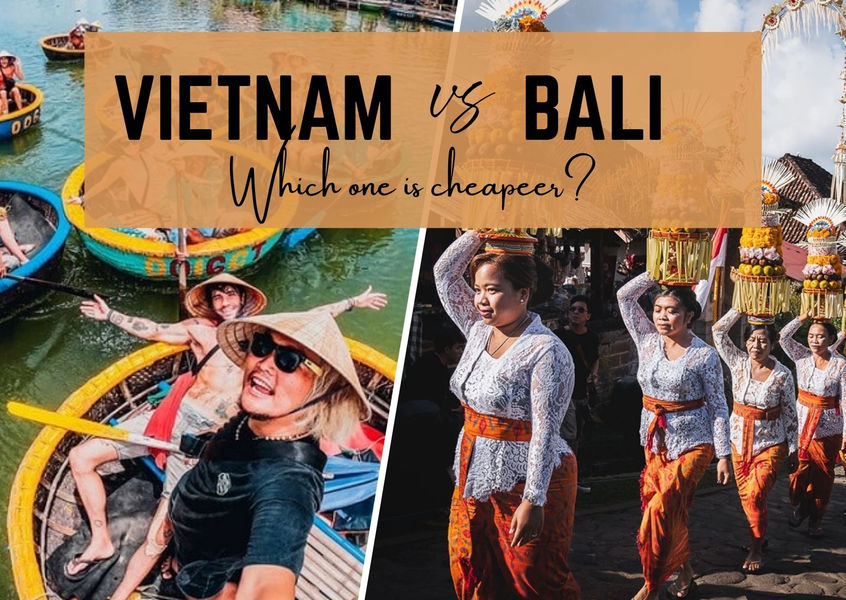

Choosing between Vietnam and Bali often comes down to one question: which destination stretches your budget further. Both are popular Southeast Asian picks for travelers chasing affordable adventure, but the real cost difference only becomes clear once you break down accommodation, food, transport, and activities side by side. For anyone planning a trip, or a travel agent building a package around either destination, understanding where the money actually goes matters more than a single average daily figure.
1. Is Vietnam Cheaper Than Bali? The Short Answer
Yes, Vietnam is generally cheaper than Bali across most categories, particularly accommodation, food, and local transport. Multiple cost-of-living and travel-budget comparisons place Vietnam’s average daily spend at roughly USD 45 to 55 per person, compared to USD 55 to 70 in Bali, depending on travel style. The gap widens further once mid-range and upscale hotels are compared, since Bali’s tourist zones like Seminyak, Canggu, and Nusa Dua carry a premium that Vietnam’s equivalent cities such as Da Nang or Hoi An do not.
That said, Vietnam is not universally cheaper in every category. Bali can offer better value on private drivers and some activity packages, and its all-inclusive resort model sometimes hides costs that a per-category comparison misses.
2. Vietnam vs Bali: Cost Comparison Table
| Category | Vietnam (per day, USD) | Bali (per day, USD) | Cheaper Option |
| Budget accommodation | 8 – 15 | 12 – 20 | Vietnam |
| Mid-range hotel (3-4 star) | 25 – 45 | 40 – 70 | Vietnam |
| Local street food meal | 1.50 – 3 | 3 – 6 | Vietnam |
| Western/cafe-style meal | 5 – 8 | 10 – 15 | Vietnam |
| Scooter rental (per day) | 5 – 7 | 6 – 9 | Vietnam |
| Private car with driver (full day) | 55 – 60 | 35 – 40 | Bali |
| Visa/entry cost | Free for many nationalities (up to 45 days) or ~USD 25 e-visa | USD 35 visa-on-arrival + tourist levy | Vietnam |
| Average daily budget (mid-range) | 45 – 55 | 55 – 70 | Vietnam |
Note: Figures are approximate averages compiled from multiple 2026 travel-cost sources and vary by season, region, and booking method. Treat them as planning benchmarks rather than fixed quotes.
2.1. Accommodation: Where the Gap Is Widest
Accommodation is where Vietnam’s price advantage shows up most clearly. A beachfront villa in Seminyak or Ubud typically runs noticeably higher than an equivalent property in Da Nang or Hoi An, largely because Vietnam’s hospitality infrastructure has expanded rapidly in the past decade, adding modern mid-range and upscale supply that keeps prices competitive. Bali’s accommodation often wins on design character and boutique villa atmosphere, but that character carries a price premium, especially in high-demand areas like Canggu and Nusa Dua.
2.2. Food: Vietnam’s Street Food Advantage
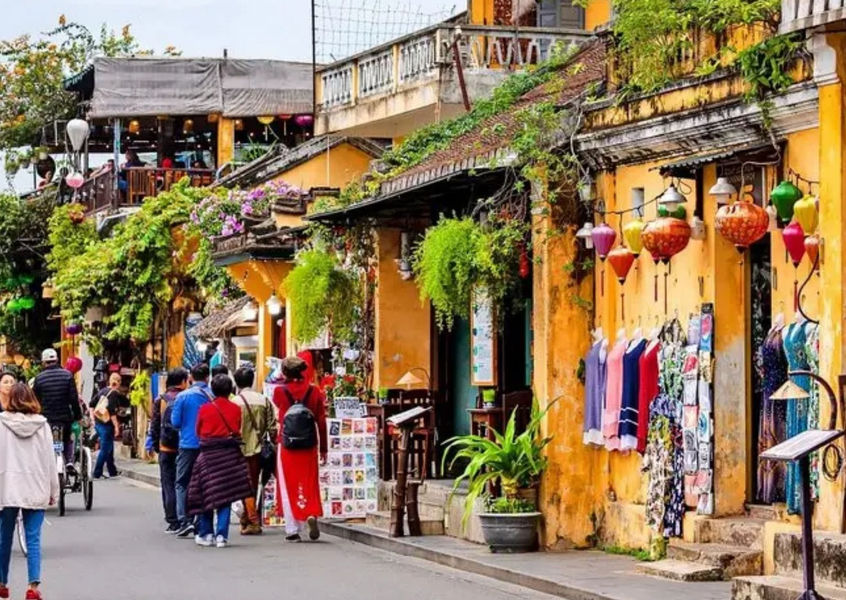
Food costs favor Vietnam almost across the board. Local dishes like pho, banh mi, and com tam cost a fraction of an equivalent meal in Bali, where the large expat and digital-nomad population has pushed up prices for cafes, brunch spots, and health-focused restaurants in areas like Canggu and Seminyak. A single brunch plate with coffee in Bali can cost as much as an entire day of street food in Vietnam. Travelers sticking to local warungs in Bali can still eat cheaply, but the tourist-facing food scene skews the average upward more than in Vietnam.

2.3. Transport: Mixed Results
Transport is one category where the comparison is not entirely one-sided. Scooter rentals and ride-hailing are slightly cheaper in Vietnam, and many Vietnamese cities are more walkable, reducing reliance on paid transport. However, hiring a private car with a driver for a full day is often cheaper in Bali than in Vietnam, since driver rates in Bali are more standardized and competitive. Long-distance travel within Vietnam, particularly overnight sleeper buses and domestic flights, tends to be more affordable than equivalent inter-region transport in Bali.

2.4. Activities and Entry Fees
Vietnam’s activity pricing benefits from its geographic diversity. Entry to heritage sites like the Hue Imperial City or Marble Mountains typically costs a few dollars, and boat tours through UNESCO sites like Trang An in Ninh Binh are similarly affordable. Bali’s most popular activities, from Mount Batur sunrise treks to beach club day passes, are also reasonably priced individually, but they add up faster because Bali’s tourism model encourages frequent paid experiences layered into a single day.

2.5. Hidden Costs: Where Bali Can Surprise Travelers
Bali carries more hidden costs than Vietnam in practice. Beyond the visa-on-arrival fee, Bali added a mandatory tourist levy in recent years, and many restaurants apply an automatic service charge on top of Indonesia’s VAT. Temple visits often require sarong rental fees, and parking charges at popular attractions add small but frequent costs. Vietnam’s fee structure is comparatively simpler, with fewer stacked charges at the point of payment, which makes daily budgeting more predictable.
2.6. Which Destination Is Cheaper for Your Travel Style
Budget backpackers: Vietnam is the clearer choice, with lower costs across accommodation, food, and local transport, and a lower baseline for a comfortable week of travel.
Families: Vietnam’s lower per-person daily cost and diverse itinerary options, from Halong Bay to Sapa, make multi-city family trips more affordable than an equivalent multi-day Bali itinerary.
Honeymooners and couples seeking a resort stay: Bali holds its own here despite higher prices, since its villa culture and beach-club experiences are built specifically for this traveler type, and some couples find the premium worth it for the atmosphere.
Luxury travelers: Both destinations offer four and five-star experiences, but Vietnam typically delivers a similar or higher standard of amenities for 15 to 30 percent less, particularly in newer developments in Da Nang, Hoi An, and Phu Quoc.

3. For Travel Agents and Tour Operators: What the Cost Gap Means for Package Design
The cost difference between Vietnam and Bali is not just a traveler talking point, it directly affects margin and pricing flexibility when building group, FIT, or MICE packages. A few points worth factoring into itinerary planning:
- Group and incentive travel: Vietnam’s lower per-person land cost gives tour operators more room to include premium add-ons, such as a Halong Bay overnight cruise or a private cultural experience, without pushing the package price above competitive benchmarks.
- Seasonal pricing swings: Ground costs in Vietnam fluctuate more predictably by region and season than Bali’s, where high-demand periods in Seminyak and Ubud can compress margins quickly if contracts are not locked in early.
- Working with a ground operator vs. retail booking: Agents booking through a Vietnam DMC typically access better net rates on accommodation and transport than retail online pricing, since a DMC negotiates volume rates directly with hotels and local suppliers, an advantage that is harder to replicate in Bali’s more fragmented supplier landscape for group blocks.
- Indian market packages: For agents serving the Indian outbound segment, Vietnam’s combination of e-visa access, growing vegetarian food infrastructure, and lower group land cost makes it easier to price competitively against Bali-focused competitors while still meeting dietary and cultural requirements.

4. Frequently Asked Questions
Is Vietnam cheaper than Bali for a week-long trip?
Yes. A week in Vietnam typically costs USD 350 to 500 excluding flights, while a comparable week in Bali runs USD 500 to 750, mainly due to higher accommodation and food costs in Bali’s tourist areas.
Is Bali more expensive than Vietnam for luxury travel?
Generally yes. Four and five-star properties in Bali run 20 to 30 percent higher than comparable Vietnamese resorts, though Bali’s villa design and atmosphere are often cited as the trade-off for the higher price.
Which country has more hidden costs, Vietnam or Bali?
Bali tends to have more stacked hidden costs, including a visa-on-arrival fee, a tourist levy, VAT, automatic service charges, and small fees like sarong rentals at temples. Vietnam’s fee structure is simpler and more predictable.
Is Vietnam a good option for Indian travelers on a budget?
Yes. Vietnam offers e-visa access for Indian passport holders, a lower average daily budget than Bali, and an expanding range of Indian and vegetarian dining options in major tourist cities.
Do group and MICE packages cost less in Vietnam than Bali?
Generally yes, since Vietnam’s lower per-person land costs and more standardized ground-operator rates give tour operators more flexibility to include premium experiences while keeping package prices competitive.

0 Comment