
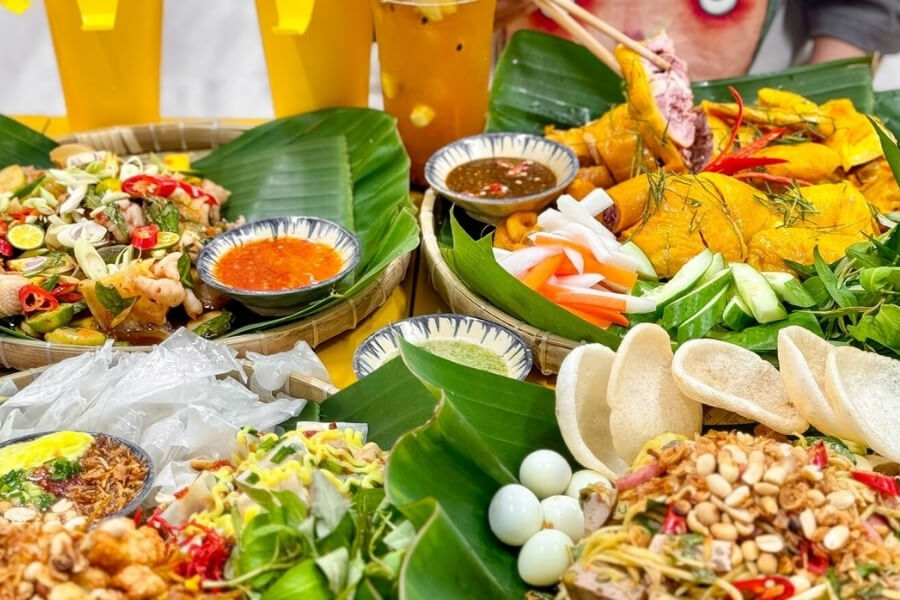

A ho chi minh city tour can take you past famous landmarks, historic buildings and lively markets, but the food you encounter along the way often reveals another side of Saigon. A bowl of noodles can introduce you to generations of culinary influence; a neighbourhood coffee shop can show you how locals take a break from the heat; and a simple plate of broken rice can tell you more about southern Vietnamese eating habits than an elaborate restaurant meal.
The difficulty is not finding something to eat. It is deciding what deserves a place on your list when almost every street seems to offer something tempting.
If this is your first visit, start with the dishes below. You will find familiar favourites, regional specialities and a few snacks that may look unusual at first but are well worth discovering.
1. Bánh Mì: The Sandwich That Makes a Perfect First Bite
There are easier ways to grab lunch in Ho Chi Minh City, but few are as satisfying as a freshly made bánh mì.
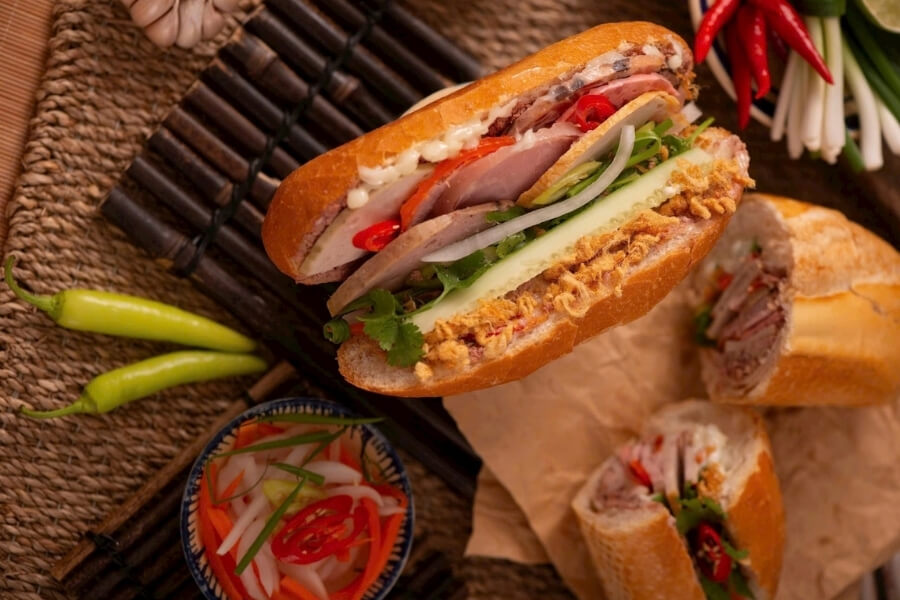
The first thing you notice is the bread. Its thin crust breaks with a gentle crunch, giving way to a light interior that holds the filling without becoming too heavy. Inside, a good sandwich balances savoury ingredients with fresh herbs, pickled vegetables and sauces.
Depending on the vendor, the filling may include grilled pork, Vietnamese cold cuts, pâté, cucumber, coriander, pickled carrot and daikon, chilli or mayonnaise. Some shops have built their reputation around one traditional combination, while others offer chicken, eggs or vegetarian alternatives.
That variety is part of the appeal. Two bánh mì sandwiches bought from different vendors can taste surprisingly different, even when they share the same basic ingredients.
What Should You Order?
For a first taste, try a classic pork or mixed-meat bánh mì. It offers a good balance of savoury filling, fresh vegetables and tangy pickles.
If you prefer milder flavours, ask for no chilli. If you do not eat pork, check which alternatives are available rather than assuming every vendor has the same menu.
Bánh mì is best eaten shortly after it is made. Leave it sitting for too long and the bread can lose the crispness that makes the sandwich so enjoyable.
Best time to try it: Breakfast or a light lunch. It is also a practical option when you want to keep moving without committing to a full restaurant meal.
2. Cơm Tấm: The Breakfast That Can Keep You Going All Day
For many visitors, breakfast in Vietnam means phở. In Ho Chi Minh City, however, cơm tấm deserves just as much attention.
Often translated as broken rice, cơm tấm is particularly associated with southern Vietnam. The rice grains are smaller than intact grains, and the dish is commonly served with grilled pork, egg, pickled vegetables and fish sauce.
A plate of cơm tấm can look simple, but the appeal lies in the details. Pork marinated with seasonings is grilled until its edges are browned, sometimes with a little smoky sweetness from the charcoal. The rice provides a soft base, while pickled vegetables add acidity and the fish sauce brings the flavours together.
You may also see bì, a mixture featuring shredded pork skin, or chả trứng, a savoury steamed egg-and-pork cake. The combinations vary between restaurants.
Why Cơm Tấm Is Worth Trying in Saigon
Cơm tấm is not a dish that needs a special occasion. People eat it for breakfast, lunch and dinner, making it a useful introduction to everyday southern Vietnamese food.
Look for a restaurant where the grill is active and the pork is prepared regularly. If you are unsure what to order, grilled pork with egg is a straightforward starting point.
The fish sauce served alongside the rice is important, but add it gradually if you are unfamiliar with the flavour. A little can transform the dish; too much may overwhelm the other ingredients.
A practical tip: Cơm tấm is filling. If you plan to spend the day sampling street food, consider sharing a plate or choosing a smaller meal before moving on to something else.
3. Bánh Xèo: A Crispy Pancake You Assemble Yourself
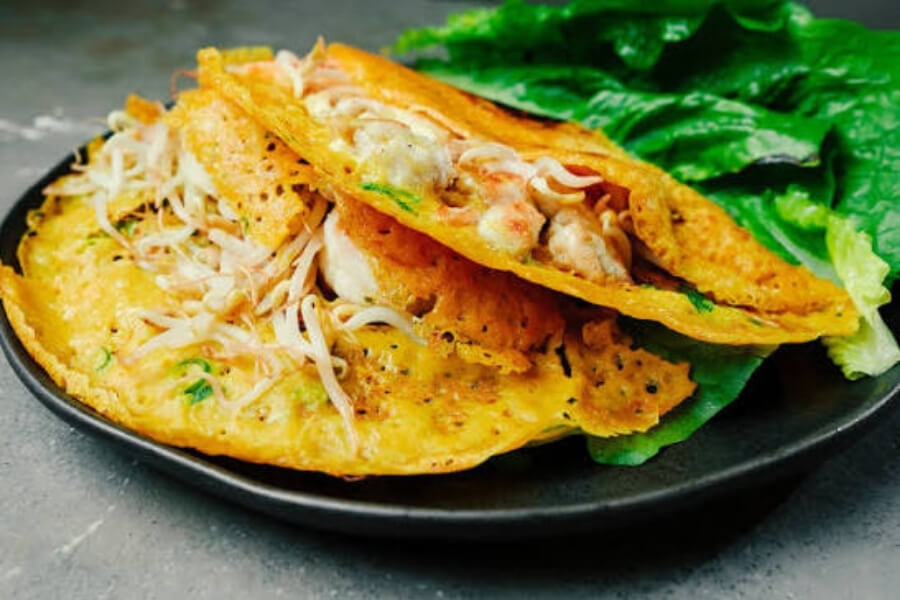
You can usually hear bánh xèo before it reaches the table. The batter sizzles against a hot pan, the edges turn golden, and the cook folds the pancake around its filling.
Made from rice-flour batter, often coloured yellow with turmeric, bánh xèo is commonly filled with pork, shrimp and bean sprouts. The result is a large, thin pancake with crisp edges and a softer centre.
But the real pleasure begins when it is served.
Rather than eating the pancake on its own, diners often tear off a piece, wrap it in lettuce or rice paper with fresh herbs, and dip it into sauce. Each bite combines the warmth and crunch of the pancake with cool greens and fragrant herbs.
It is a more interactive meal than it first appears.
The Best Way to Enjoy Bánh Xèo
If you have never eaten it before, watch how other diners assemble their portions or ask the staff for help. There is no need to get the technique perfect.
Do not leave the herbs on the side. They are part of the dish, balancing the richness of the pancake and adding freshness to each bite.
Bánh xèo is also well suited to sharing. If you are travelling with a companion, ordering one pancake first can be a sensible way to find out whether you want more.
Best time to try it: Late lunch or early dinner, particularly when you have time to sit down and enjoy the meal rather than eat in a hurry.
4. Hủ Tiếu: A Noodle Dish With More Than One Personality
Ask several people about hủ tiếu and you may not get the same answer. Some will describe a bowl of noodles in clear broth; others will think of a dry version served with sauce and a separate bowl of soup.
Both can be part of the experience.
Hủ tiếu has developed through a mixture of culinary influences associated with Vietnamese, Chinese and Cambodian traditions. In Ho Chi Minh City, different restaurants have their own ways of preparing it, with variations in noodles, broth, toppings and seasoning.
One bowl might contain pork and shrimp in a light broth. Another may feature noodles coated in a savoury sauce, topped with meat and vegetables, with soup served on the side.
Should You Choose Soup or Dry Hủ Tiếu?
If the restaurant offers both, choose according to your preference.
The soup version allows you to focus on the broth, while the dry version puts more emphasis on the noodles and sauce. Neither is necessarily better; they simply offer different experiences.
If the menu is unfamiliar, ordering the house specialty is often a good place to begin. You can also look at what other customers are eating, especially in a busy noodle shop with a focused menu.
Hủ tiếu is a particularly good option for lunch, when you want something satisfying without committing to a large multi-dish meal.
5. Phở in Ho Chi Minh City: Worth Ordering Even If You Have Tried It Before
Phở is one of the Vietnamese dishes most familiar to international travellers. That familiarity can make it tempting to skip when visiting Ho Chi Minh City, especially if you have already eaten it in Hanoi.
Give it another chance.
Phở is enjoyed throughout Vietnam, but the way it is served can vary. Southern versions are often accompanied by a selection of herbs, bean sprouts, lime and sauces that diners can adjust at the table. Individual restaurants also differ in the depth of their broth, the cut of meat and the balance of seasoning.
The first step is to taste the broth before adding anything. Notice its aroma and how the flavour develops, then add herbs, lime or chilli in small amounts if you wish.
There is no need to follow a strict rule about how much seasoning to use. The point is to find the balance you enjoy.
Phở for Breakfast
A bowl of phở is a good way to begin a sightseeing day. It is warm, filling and widely available, although opening hours vary by restaurant.
If you are visiting several Vietnamese destinations, trying phở in different cities can be an interesting part of your food journey. The differences are not universal, but they may give you a sense of how regional tastes and individual cooks influence a familiar dish.
6. Ốc and Seafood: How Saigon Eats After Dark
In the evening, the city’s food scene shifts outdoors. Tables fill up, kitchens become louder, and trays of seafood appear beside charcoal grills and steaming pans.
This is when you should consider trying ốc, a broad category of snail dishes that is often served alongside other shellfish and seafood.
Some snails are grilled with spring onions or garlic. Others are stir-fried with tamarind, chilli or butter. Menus may also include clams, oysters, prawns and other seafood, prepared with different seasonings.
The dishes are usually designed for sharing. Instead of ordering one large plate per person, a group may choose several smaller dishes and try a little of each.
That is part of the experience: people talking across the table, reaching for another shellfish and ordering one more plate because someone has spotted something interesting on the next table.
Where to Try Seafood in Ho Chi Minh City
District 4 is well known for casual seafood and snail restaurants. Other neighbourhoods also have seafood eateries, so you do not necessarily need to travel far from your hotel to find them.
If this is your first visit, ask the staff which dishes are popular and how they are prepared. You can also point to a dish being served nearby if you see something that looks appealing.
Check the price and serving size before ordering seafood sold by weight. If you have allergies, explain them clearly before the food is prepared.
Best time to try it: Early evening, when you can enjoy the atmosphere without feeling rushed.
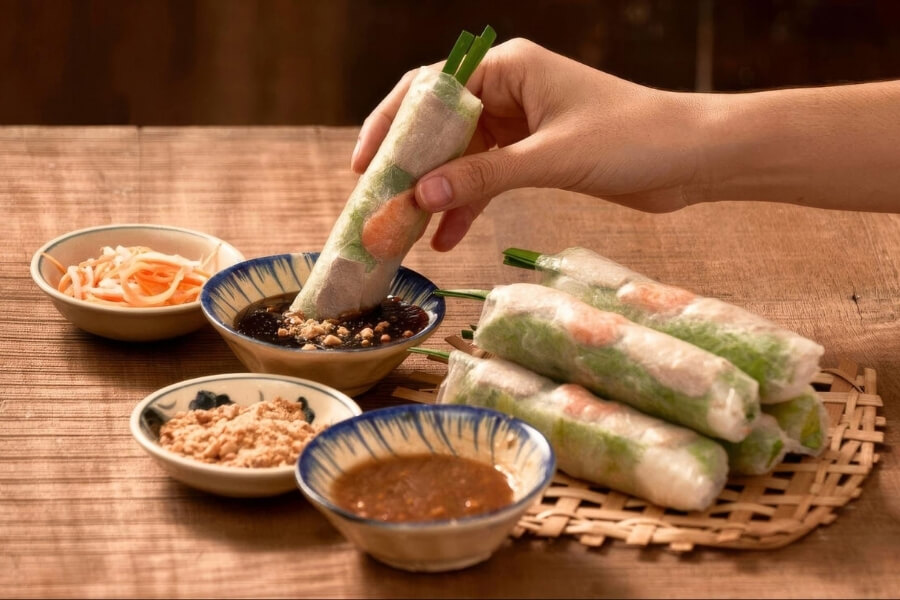
7. Gỏi Cuốn: Fresh Spring Rolls for a Lighter Bite
After several rich dishes, a plate of gỏi cuốn can be a welcome change.
These fresh spring rolls are typically made with rice paper wrapped around ingredients such as rice vermicelli, lettuce, herbs, pork or shrimp. Unlike fried spring rolls, they are served fresh.
The rice paper is soft and slightly chewy, while the herbs and vegetables add freshness. Depending on the filling, the rolls can make a light snack or part of a larger meal.
The dipping sauce is worth paying attention to. Some restaurants serve a peanut-based sauce, while others offer a fish-sauce-based dip. Each changes the flavour of the rolls in a different way.
Gỏi cuốn is easy to share and works well when you want to try another dish without ordering something too heavy.
If you have dietary restrictions, check the ingredients first. Fresh spring rolls may contain shrimp, pork, fish sauce or peanuts even when the filling looks mostly green.
8. Vietnamese Coffee: The Break You Should Not Rush
Vietnamese coffee is more than a drink to have on the way to your next attraction. In Ho Chi Minh City, it is a familiar part of daily life.
In the morning, people stop for coffee before work. Later, friends meet at cafés to talk, students settle in with their phones or laptops, and residents take a break from the afternoon heat.
One of the most popular choices is cà phê sữa đá, strong coffee served with condensed milk and ice. It is rich and sweet, with enough bitterness to keep the flavour from becoming one-dimensional.
If you prefer a less sweet drink, try cà phê đen đá, black iced coffee. You can also ask for less condensed milk, although the available options depend on the café.
Where Should You Drink Coffee?
There is no single right answer.
A modern specialty café can be a good place to explore Vietnamese beans and contemporary brewing methods. A small neighbourhood café offers a different atmosphere, often with simple furniture and a view of the street.
Choose whichever setting suits your mood. The important thing is to give yourself enough time to enjoy it.
Sit down, watch the traffic and notice the small details around you. A coffee break can be a welcome pause in a city that rarely seems to stand still.
One practical note: Vietnamese coffee can be strong, so consider a smaller serving if you are sensitive to caffeine.
9. Chè: A Sweet Ending With Unexpected Textures
Vietnamese desserts can look quite different from the cakes and pastries many visitors are used to. Chè is a good example.
Rather than referring to one specific dessert, chè describes a broad range of sweet dishes and drinks. Depending on the recipe, you may find beans, fruit, jellies, tapioca, coconut milk, sticky rice or crushed ice.
Some versions are served warm, while others are chilled. The texture may be creamy, chewy or jelly-like, sometimes combining several elements in the same bowl.
If you are not sure what to order, ask the vendor which options are popular or choose a version with ingredients you recognize. Once you have tried one, you may find yourself curious about the more unusual combinations.
Chè is an easy way to finish a meal or take a break in the late afternoon. It is often available at small dessert shops and street stalls, although the selection varies by location.
10. Bánh Tráng Trộn: A Snack With a Little Bit of Everything
Bánh tráng trộn is a popular choice for anyone who wants to try something casual and distinctly different from a noodle soup or rice dish.
It is made by mixing strips of rice paper with ingredients that may include dried shrimp, green mango, peanuts, herbs, quail eggs, chilli and a savoury dressing. Recipes vary between vendors.
The result combines several textures in one serving. Rice paper gives the dish a chewy quality, green mango adds acidity, peanuts provide crunch and the seasoning brings everything together.
It is usually eaten as a snack rather than a full meal, making it a convenient choice when exploring a market or walking through a neighbourhood.
The seasoning can be spicy, so ask about chilli if you prefer milder food. As with any street snack, look for vendors who handle ingredients cleanly and store perishable items appropriately.
11. Bún Thịt Nướng: Grilled Pork and Fresh Herbs in One Bowl
For a meal that feels lighter than cơm tấm but still satisfying, try bún thịt nướng.
This dish typically combines rice vermicelli with grilled pork, herbs, vegetables and a dressing based on fish sauce. It may also be topped with crushed peanuts, fried shallots or other garnishes.
The combination works because the ingredients bring different qualities to the bowl. The pork has a smoky, savoury flavour, the noodles are soft, the vegetables add freshness and the dressing balances sweet, salty and tangy notes.
When the dish arrives, mix the ingredients so that the dressing coats the noodles and the flavours come together.
Bún thịt nướng is a good lunch option, especially on a warm day when you may not feel like eating a large bowl of hot soup.
If you do not eat pork, ask whether the restaurant offers a chicken or vegetarian alternative.
12. Vietnamese Seafood Hotpot: Make Dinner a Shared Experience
If you are travelling with friends or family, a Vietnamese seafood hotpot can be a satisfying way to spend an evening.
A pot of simmering broth sits at the centre of the table, surrounded by seafood, vegetables, noodles and other ingredients. Diners add what they want to the broth and eat as the ingredients cook.
The broth varies by restaurant. Some versions are sour and aromatic, while others are richer or spicier. If you have never eaten hotpot before, ask the staff which ingredients should go into the pot first and how long they need to cook.
Unlike bánh mì or a quick noodle bowl, hotpot is not designed for a rushed meal. It gives everyone time to talk, sample different ingredients and build their own bowl.
Check portion sizes before ordering, especially if you are travelling as a couple. Some hotpots are intended for larger groups, although smaller servings may be available.
Where to Explore Street Food in Ho Chi Minh City
Saigon’s food culture is spread across the city. Instead of looking for one street that claims to offer everything, choose an area that matches the kind of meal you want.
District 1: A Convenient Starting Point
District 1 is a practical option for visitors staying in the city centre. You can find cafés, bánh mì stalls, noodle restaurants and casual eateries within a relatively compact area.
It is convenient for a first meal after arrival or a quick stop between sightseeing activities. Menus, prices and dining styles vary, so check the menu before ordering.
District 3: Neighbourhood Restaurants and Coffee Shops
District 3 has a mix of cafés, local restaurants and residential streets where food businesses sit alongside everyday city life.
It is a good area to combine a coffee break with a simple meal. Rather than planning every stop, choose a street with several eateries and see which ones appeal to you.
District 4: Seafood and Snails in the Evening
District 4 is a strong choice if you want to explore Saigon’s evening seafood culture.
The atmosphere can become lively after work, when groups gather around tables to share snails, shellfish and other dishes. Arrive with enough time to look around, compare menus and choose a restaurant that suits your budget.
District 5 and Cholon: Chinese-Vietnamese Food Traditions
District 5 and the wider Cholon area offer opportunities to discover food influenced by Chinese-Vietnamese communities.
Depending on the street, you may find noodle dishes, dumplings, roasted meats, traditional sweets and herbal drinks. This area is especially interesting for travellers who want to explore the cultural influences behind Saigon’s diverse food scene.
Markets and Residential Streets
Markets and residential neighbourhoods can also be rewarding places to eat, although not every market specializes in prepared food.
Look for stalls with clear food-handling practices and dishes that are freshly prepared. You may discover a small eatery serving one specialty particularly well, even if it has little presence on international travel websites.
How to Eat Street Food Safely in Saigon
Street food can be one of the most enjoyable parts of a visit, but a few sensible choices can help you avoid an uncomfortable experience.
- Choose freshly prepared food. Look for dishes cooked to order or served hot.
- Observe food handling. Pay attention to how ingredients are stored and whether preparation surfaces look clean.
- Be mindful of raw ingredients. Fresh herbs and vegetables are common in Vietnamese meals. Choose options that match your comfort level.
- Drink safe water. Use bottled or properly treated water if you are unsure about the source.
- Ask about chilli and allergens. Fish sauce, shrimp paste, peanuts and shellfish may appear in sauces or seasonings.
- Do not try everything in one sitting. Smaller portions make it easier to sample different dishes without feeling uncomfortable.
If you have a serious food allergy, explain it clearly and confirm the ingredients before ordering. A dish’s appearance alone is not a reliable way to identify everything it contains.
How to Order When You Do Not Speak Vietnamese
You do not need to speak fluent Vietnamese to enjoy the city’s food scene. Saving the names of a few dishes on your phone can make ordering much easier.
A few useful phrases include:
- “Không cay” — Not spicy.
- “Ít cay” — Less spicy.
- “Không thịt” — No meat.
- “Không đậu phộng” — No peanuts.
- “Bao nhiêu tiền?” — How much does it cost?
These phrases are helpful for simple requests, but they may not be sufficient to explain a serious allergy or a complex dietary restriction. In those cases, use a clear written translation and confirm the ingredients with the restaurant.
At small eateries, ordering can be informal. You may need to order at the counter, point to a dish or wait for someone to notice you. Take your time, observe what other customers are doing and ask politely when you are unsure.
A One-Day Street Food Itinerary in Ho Chi Minh City
You do not need to eat constantly to experience Saigon’s food culture. A few well-chosen meals, separated by time to explore the city, can be much more enjoyable.
7:30 AM — Breakfast With Cơm Tấm or Phở
Start with a plate of cơm tấm or a bowl of phở at a local restaurant. Choose one rather than ordering both, especially if you plan to try several other dishes during the day.
9:30 AM — Take a Vietnamese Coffee Break
Find a café near your sightseeing route and order cà phê sữa đá or cà phê đen đá. Sit down for a while instead of treating coffee as something to drink on the move.
11:30 AM — Try Bánh Mì or Hủ Tiếu
Choose bánh mì for a quick lunch or hủ tiếu if you prefer a noodle dish. Your appetite and the weather can help you decide.
2:30 PM — Try Chè or a Local Snack
Take a break during the warmer part of the afternoon. A small serving of chè or bánh tráng trộn lets you sample something new without committing to another full meal.
5:30 PM — Explore District 4’s Seafood Scene
If you enjoy seafood, spend the evening at a restaurant specializing in ốc or other local seafood dishes. Start with one or two plates and order more if you are still hungry.
7:30 PM — Finish Slowly
End the day with dessert, another coffee or a relaxed walk through the neighbourhood. There is no need to squeeze in one last dish simply to complete a checklist.
The schedule is flexible. Adjust it to restaurant opening hours, the weather and the places you want to visit.
Common Mistakes to Avoid When Exploring Saigon’s Food Scene
Trying to eat every famous dish in one day. Vietnamese meals can be filling, and the heat may affect your appetite. Choose a few priorities and leave the rest for another day.
Assuming every vendor serves the same recipe. Bánh mì, hủ tiếu and other familiar dishes vary between cooks. Those differences are part of what makes the food scene interesting.
Choosing food only by online popularity. Reviews can be useful, but they do not always reflect your personal taste. A small eatery with a focused menu may be worth trying if its food-handling practices look sound.
Ordering too much at once. Some dishes are individual meals, while others are intended for sharing. Ask about portion sizes before placing a large order.
Being afraid to ask questions. If you are unsure about ingredients, prices or spice levels, ask before the food arrives.
Treating street food as a challenge. You do not have to try the spiciest dish or the most unfamiliar ingredient to have a meaningful experience. Choose what interests you and enjoy it at your own pace.

0 Comment