
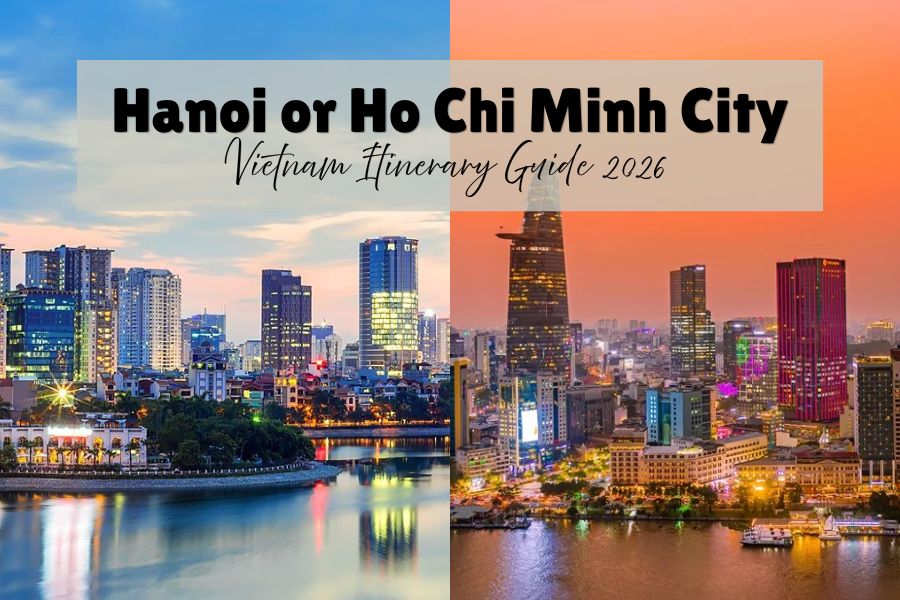

Deciding whether to start a Vietnam itinerary in Hanoi or Ho Chi Minh City (Saigon) is one of the first routing questions every travel agent faces when quoting a Vietnam package. The honest answer is that either city works as a gateway, but the right choice depends on where your client is flying from, the season of travel, and the shape of the itinerary you’re building. This guide breaks the decision down the way a ground operator actually plans it, so agents can quote with confidence instead of guessing.
1. Quick answer: which city should your client start in?
- Start in Hanoi if the itinerary includes Ha Long Bay, Sapa, or Ninh Binh, if travel falls between September and April, or if the client’s route naturally connects through a hub with strong Hanoi service (Seoul, Tokyo, Taipei, Hong Kong, Doha, Dubai, Istanbul).
- Start in Saigon (Ho Chi Minh City) if the trip includes the Mekong Delta or Phu Quoc, if travel falls in the dry season from December to April in the south, or if the client is flying from North America, since Ho Chi Minh City is currently Vietnam’s only nonstop gateway to the US.
- For a two-way (open-jaw) itinerary covering the whole country, the direction matters less than making sure the return flight is booked out of the other city, avoiding backtracking.
2. Hanoi vs Saigon as a starting point: side-by-side comparison
| Factor | Hanoi (Noi Bai Airport, HAN) | Saigon / Ho Chi Minh City (Tan Son Nhat Airport, SGN) |
| Best travel season to start here | September to April (cooler, drier) | December to April (dry season) |
| Immediate add-on destinations | Ha Long Bay, Ninh Binh, Sapa | Mekong Delta, Phu Quoc, Con Dao |
| City character | Old Quarter, French colonial core, lake-centered, slower pace | Modern skyline, District 1 business hub, faster pace |
| Airport size/traffic | About 29 million passengers a year, generally less crowded with easier connections | About 41 million passengers a year, the busiest airport in Vietnam and prone to peak-hour congestion |
| Typical use case | Culture-first itineraries, Ha Long Bay honeymoons, MICE with northern site visits | Beach-and-city combos, Mekong Delta day trips, business/MICE in the economic hub |
| Ground handling advantage for DMCs | Easier northern-loop logistics (Hanoi-Ninh Binh-Ha Long) | Easier southern-loop logistics (HCMC-Mekong-Phu Quoc) |
3. Global flight connectivity in 2026
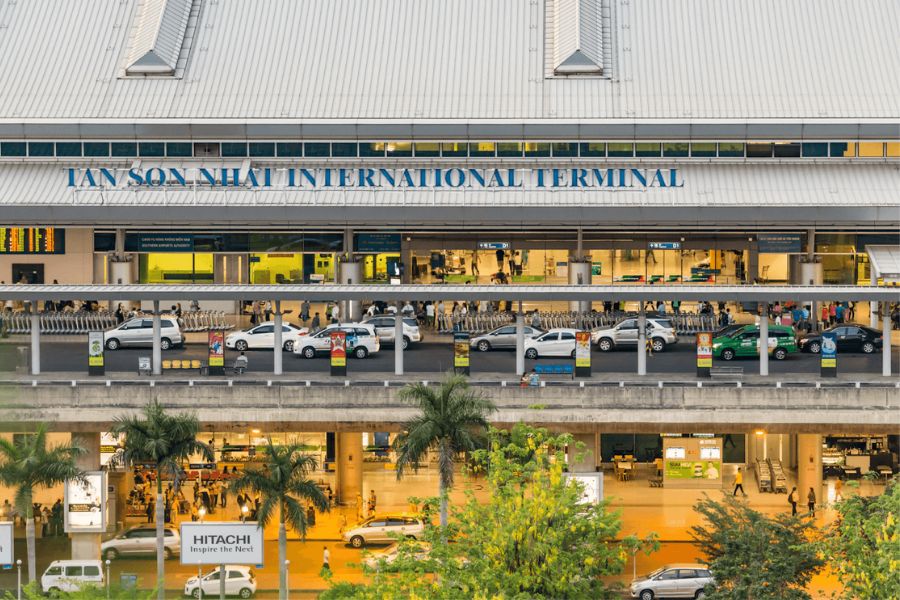
Flight access from the client’s home region is often the real deciding factor, and the two gateways are not equally connected to every part of the world:
- North America: Ho Chi Minh City is currently the only nonstop option. Vietnam Airlines operates the sole scheduled nonstop US route, flying Tan Son Nhat to San Francisco. Every other Vietnamese airport, including Noi Bai in Hanoi, reaches the US only by connecting through an East Asian hub such as Seoul, Tokyo, Taipei, or Hong Kong. For clients from New York or the West Coast, Korean Air, Cathay Pacific, and American Airlines run daily connecting service to both Hanoi and Ho Chi Minh City via Seoul or Hong Kong, and Air Canada and Cathay Pacific offer similar connections from Toronto and Vancouver, usually with a 2 to 5 hour layover in Hong Kong.
- Europe and the Middle East: Both gateways are well served by long-haul connecting carriers. Qatar Airways, Emirates, and Turkish Airlines all serve Vietnam’s primary gateways, making a one-stop connection through Doha, Dubai, or Istanbul equally convenient into either Hanoi or Saigon.
- Asia-Pacific: Korean Air, Japan Airlines, and Singapore Airlines connect Vietnam’s main gateways to the wider Asian network, giving both cities strong regional feeder access from Seoul, Tokyo, and Singapore.
- A third gateway to keep in mind: For itineraries centered on Hoi An, Hue, or central-coast beaches, Da Nang International Airport is the third major international gateway, with direct flights from Asia, the Middle East, Europe, and Australia — sometimes a better entry point than either Hanoi or Saigon if the trip doesn’t need the far north or far south.
- Infrastructure note for agents: Tan Son Nhat suffers from serious overcrowding during peak hours and the Tet holiday period, while Noi Bai’s newer international terminal runs more smoothly worth factoring in for tightly connected itineraries. A new airport, Long Thanh International, is scheduled to open near Ho Chi Minh City in late 2026 and will gradually take over international traffic from Tan Son Nhat through 2030, which may shift routing advantages over the next few seasons.
4. Reference pricing (starting from, subject to change, always verify current fares before quoting clients):
| Route type | Approx. one-way fare (USD) |
| Long-haul to Ho Chi Minh City (1-stop via Asian/Gulf hub) | from $550-750 |
| Long-haul to Hanoi (1-stop via Asian/Gulf hub) | from $580-780 |
| Regional Asia-Pacific to either gateway (direct) | from $150-300 |
Please note these are indicative reference ranges only, compiled from public fare data as of July 2026. Confirm live pricing with the airline or your DMC partner before quoting clients.
5. Itinerary flow logic: does direction matter?
For a linear north-to-south or south-to-north trip covering the whole country, most operators agree the direction is a matter of preference rather than necessity, as long as the return leg exits from the opposite city to avoid doubling back. A few practical notes for agents:
- Starting in Hanoi and heading south works well for clients who want a gradual shift from cooler, cultural terrain into warmer, beach-oriented terrain by the end of the trip. This is a natural climatic wind-down.
- Starting in Saigon and heading north suits clients prioritizing beach and Mekong time early, with the cultural and scenic highlights (Hoi An, Hue, Ha Long Bay) as the closing chapter.
- For shorter trips (7-10 days) that won’t cover the full country, the smarter approach is to pick the single gateway city closest to the client’s must-see list, rather than forcing a full north-south transit.
6. Recommendation by traveler type
- First-time visitors and FIT travelers: Ho Chi Minh City is often recommended as the easier first landing point, with more extensive English signage and the broadest range of international flight options.
- Couples and honeymooners: Start in Hanoi if Ha Long Bay is a priority; start in Saigon if the plan leans toward Phu Quoc beach time.
- Family groups: Consider Da Nang as a third option with shorter airport transfers and easier beach-and-city logistics for multi-generation travel, if the itinerary doesn’t require the far north or far south.
- MICE and incentive groups: Ho Chi Minh City has the deeper inventory of large-format conference hotels as Vietnam’s economic hub, making it the default for pure business/MICE groups; Hanoi works well for programs pairing business sessions with a cultural or Ha Long Bay incentive component.
- Adventure and trekking-focused itineraries: Hanoi is the natural gateway, giving direct access to Sapa’s rice terraces, Ha Long Bay kayaking, and northern mountain trekking routes.
7. Operational notes for agents and DMC partners
- Book open-jaw tickets (in one city, out the other) rather than round-trip through a single gateway. This alone can save a full day of backtracking on a 10+ day itinerary.
- Visa requirements are the same regardless of entry city, so remember to confirm current e-visa or visa-exemption rules for the client’s specific passport before booking, as these vary by nationality rather than by gateway.
- Peak season hotel blocks (Tet, year-end holidays, and regional festival periods) fill faster in Ho Chi Minh City and Hoi An than in Hanoi. Therefore, confirm allotments with your ground operator at least 60-90 days out during these windows.
- Loop your ground operator in early: a Vietnam B2B DMC can confirm real-time flight loads, hotel availability, and routing efficiency before you finalize the quote, which avoids costly itinerary rewrites later.

8. FAQ
Should I start my Vietnam trip in Hanoi or Saigon?
Start in Hanoi if Ha Long Bay, Sapa, or Ninh Binh are on the itinerary and travel falls between September and April. Start in Saigon if the Mekong Delta or Phu Quoc are priorities, or if the client is flying in from North America, since Saigon is currently Vietnam’s only nonstop US gateway.
Which city is better connected internationally, Hanoi or Saigon?
Ho Chi Minh City has the edge for travelers from North America, as it’s the only Vietnamese airport with a nonstop US route. For travelers from Europe, the Middle East, and the rest of Asia-Pacific, both gateways are comparably well connected through major hub carriers.
Is Hanoi or Saigon airport less crowded?
Noi Bai International Airport in Hanoi generally runs smoother, while Tan Son Nhat in Ho Chi Minh City is Vietnam’s busiest airport and can see significant congestion during peak hours and the Tet holiday period.
Does the visa process differ depending on which city I enter from?
No. Visa requirements depend on the traveler’s passport nationality, not on the port of entry. The process is the same whether entering through Hanoi, Saigon, or Da Nang.
What’s the better starting city for a group or MICE trip?
Ho Chi Minh City generally offers more large-format conference hotel inventory as Vietnam’s economic hub, making it the default for pure business/MICE groups, while Hanoi works well for MICE programs that pair business sessions with a cultural or Ha Long Bay incentive component.
Planning a Vietnam itinerary and unsure which gateway city fits your client best? Viet Dan Travel DMC can confirm live routing, hotel availability, and ground logistics before you quote, reach out to our partner desk to build the itinerary together.

0 Comment