


Vietnam packs three distinct regions, four UNESCO World Heritage Sites, and experiences ranging from limestone bay cruises to Michelin-recognized street food into a single, easy-to-combine itinerary. For travel agents and tour operators building packages for Indian, Middle Eastern, or European clients, the challenge isn’t finding attractions; it’s knowing which ones fit which traveler type, how much lead time and budget to quote, and how they string together logically by region.
In this guide, Viet Dan Travel DMC breaks down Vietnam’s top experiences by region and by client profile, with reference pricing in USD and INR, so you can move from “what’s in Vietnam” straight to “what should I sell this client.”
1. Vietnam at a Glance for Trade Partners
| Region | Signature Experiences | Best Season | Ideal Client Type |
| North Vietnam | Hanoi Old Quarter, Ha Long Bay, Sapa, Ninh Binh | October to April | FIT, honeymoon, MICE (Hanoi) |
| Central Vietnam | Hoi An Ancient Town, Da Nang Golden Bridge, Hue Imperial City, Phong Nha caves | February to August | Honeymoon, wedding, leisure groups |
| South Vietnam | Ho Chi Minh City, Cu Chi Tunnels, Mekong Delta, Phu Quoc Island | November to April (dry season) | Group tours, beach-and-city combos, incentive trips |
2. North Vietnam: Culture, Bay Cruising, and Highlands
2.1. Hanoi Old Quarter
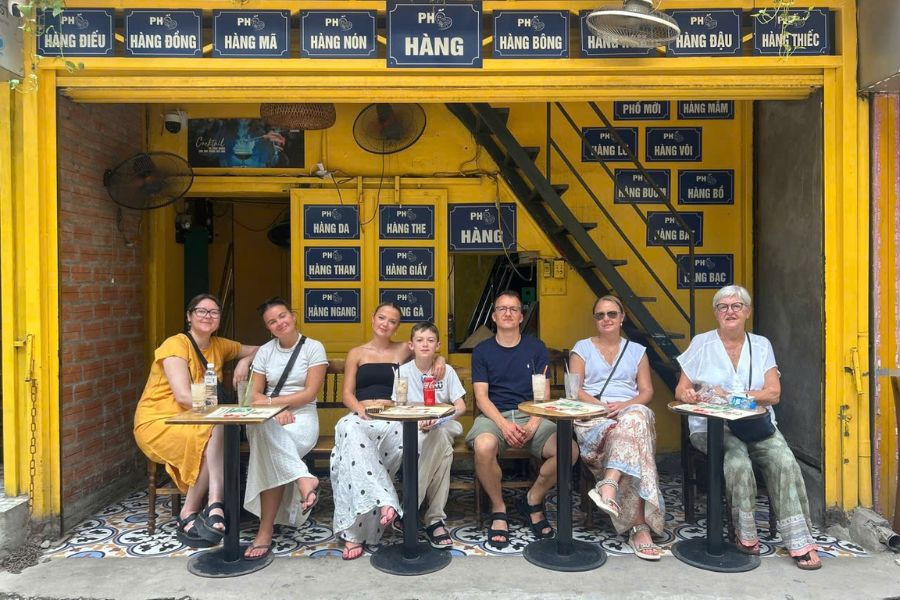
Hanoi’s Old Quarter occupies the historic heart of the capital, a maze of 36 streets where each one traditionally specialized in a single trade, from silk to silversmithing to paper goods. The area blends French colonial architecture with narrow tube houses, street food stalls, and some of the city’s most-loved coffee shops tucked into alleyways. In the evenings, Hoan Kiem Lake and the surrounding streets come alive with vendors and pedestrian traffic, and the nearby Thang Long Water Puppet Theatre offers a centuries-old art form found only in Vietnam’s Red River Delta region. As the natural gateway to the North, it works well as either a standalone city stay or the starting point for Ha Long Bay and Sapa itineraries.
- Best for: FIT and first-time visitors
- Starting from: USD 15 / ₹1,440 per person for a half-day walking and food tour (verify current rate with the DMC before quoting)
- Time needed: half day to full day
2.2. Ha Long Bay
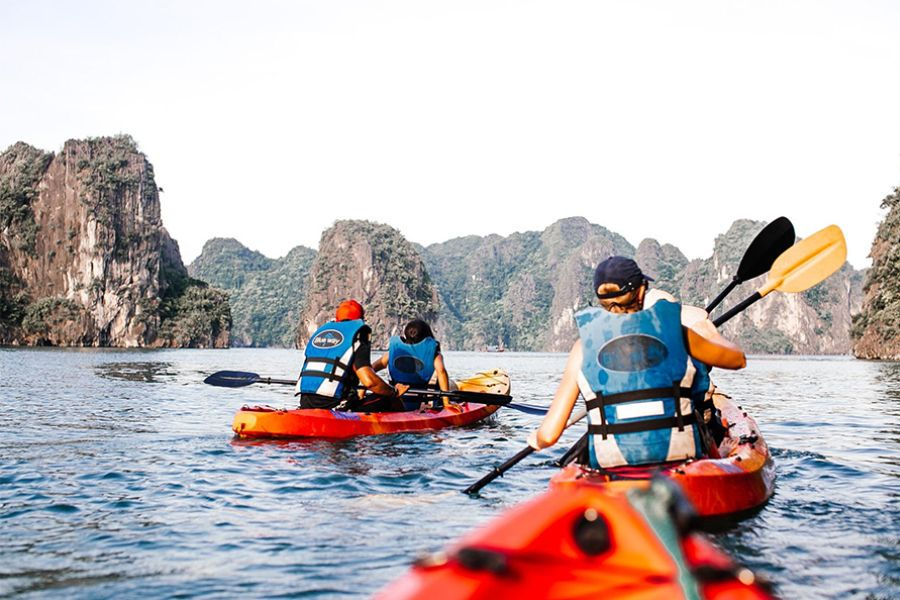
Ha Long Bay, in Quang Ninh Province roughly 3.5 hours from Hanoi by road, is Vietnam’s most recognized natural landmark and a UNESCO World Heritage Site. Over 1,600 limestone karsts and islets rise out of the emerald waters of the Gulf of Tonkin, many shaped by 500 million years of erosion into forms with their own local names and legends. The bay is best experienced aboard traditional wooden junk boats, with overnight cruises allowing time for kayaking, cave visits, and sunrise or sunset viewing from open decks. Its consistent visual impact and the wide range of cruise categories, from budget to five-star, make it one of the easiest sells on any Vietnam itinerary.
- Best for: honeymoon and leisure FIT, overnight cruise upsell potential
- Starting from: USD 120 / ₹11,520 per person for a one-night cruise cabin
- Time needed: 1–2 days including transfer
2.3. Sapa
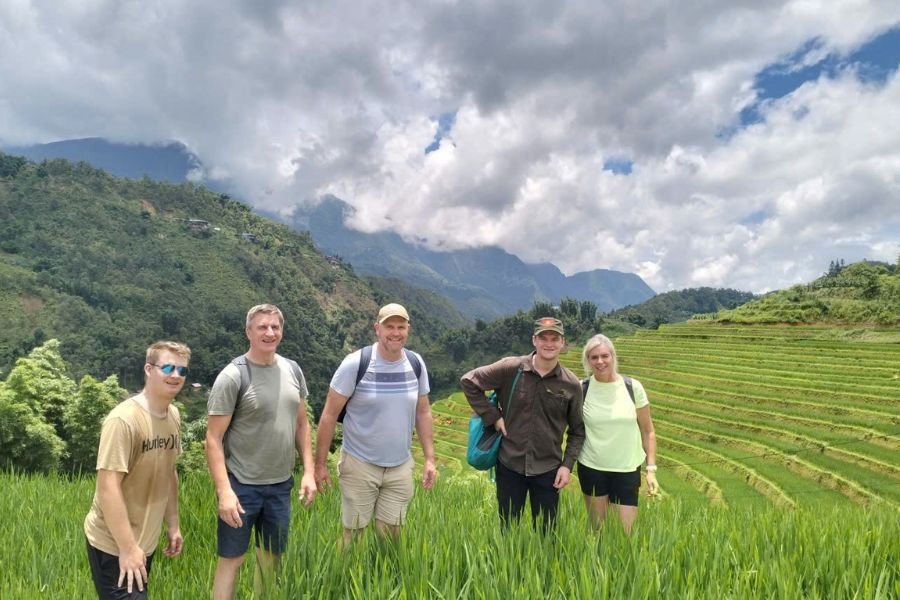
Sapa is a mountain town in Lao Cai Province near the Chinese border, known for terraced rice fields carved into steep hillsides by ethnic minority communities over generations. The town serves as a base for trekking through villages such as Cat Cat and Ta Van, where visitors can stay in homestays run by Hmong, Dao, and Tay families. Cooler temperatures year-round make it a refreshing contrast to Vietnam’s lowland heat, and the terraces are especially striking during the rice-planting season in May and June or the golden harvest in September. Reaching Sapa typically involves an overnight train or a scenic 5 to 6-hour road transfer from Hanoi.
- Best for: adventure-oriented FIT and small groups
- Starting from: USD 60 / ₹5,760 per person per day for guided trekking with homestay
- Time needed: 2–3 days including overnight train or road transfer from Hanoi
2.4. Ninh Binh
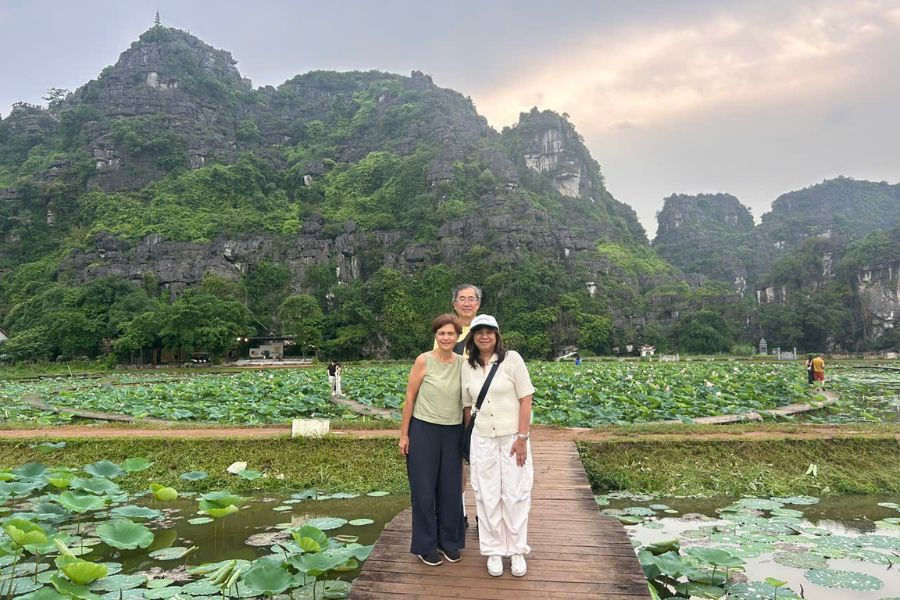
Ninh Binh lies about 2 hours south of Hanoi and is often marketed as “Ha Long Bay on land” for its similar limestone karst scenery set among rice paddies and rivers rather than the sea. The main draw is a boat ride through Tam Coc or Trang An, where small sampan boats pass through natural caves carved into the limestone cliffs. The area also holds cultural weight as the site of Hoa Lu, Vietnam’s ancient 10th-century capital, adding a historical layer beyond the scenery. Its short distance from Hanoi makes it a practical full-day excursion, including as a post-conference activity for MICE groups based in the capital.
- Best for: day-trip add-on for Hanoi-based itineraries, good for MICE post-conference excursions
- Starting from: USD 35 / ₹3,360 per person for a day trip with boat ride
- Time needed: full day trip from Hanoi
3. Central Vietnam: Heritage Towns and Engineering Icons
3.1. Hoi An Ancient Town
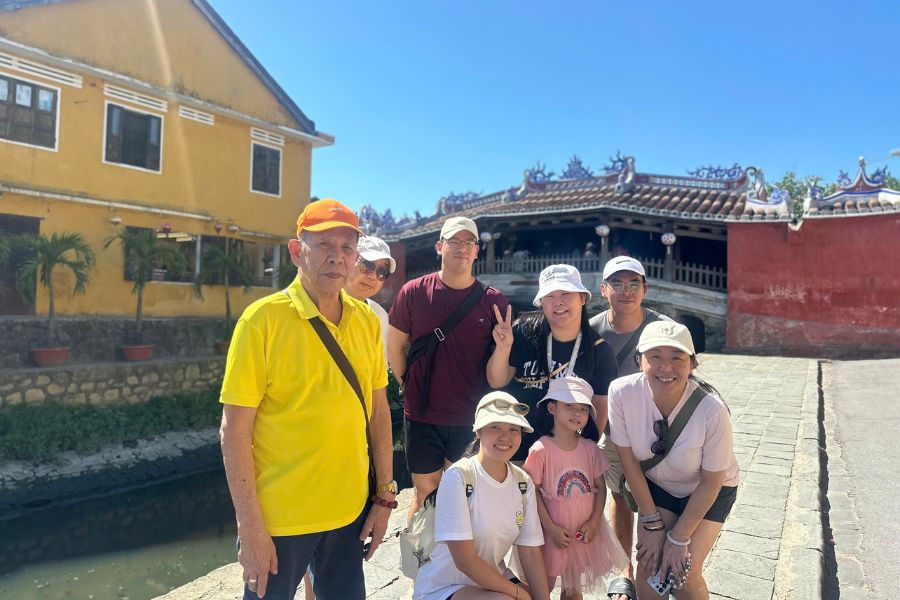
Hoi An sits on the banks of the Thu Bon River in Quang Nam Province, about 45 minutes south of Da Nang, and preserves over 1,000 heritage buildings blending Vietnamese, Chinese, Japanese, and French colonial architecture, earning it UNESCO World Heritage status in 1999. Its signature moment comes at dusk, when the Old Town lights up with colorful silk lanterns and locals set candle-lit paper lanterns adrift on the river. The town is also known for same-day custom tailoring and regional dishes like cao lau noodles, found almost nowhere else in Vietnam. With a largely pedestrian, low-traffic Old Town and established event infrastructure, it’s one of the most requested settings for destination weddings among international clients.
- Best for: destination weddings and honeymoon itineraries, with mandap and riverside ceremony setups available through local event partners
- Starting from: USD 20 / ₹1,920 per person for a lantern boat ride and old town walking tour
- Time needed: 2 days minimum
3.2. Da Nang’s Golden Bridge
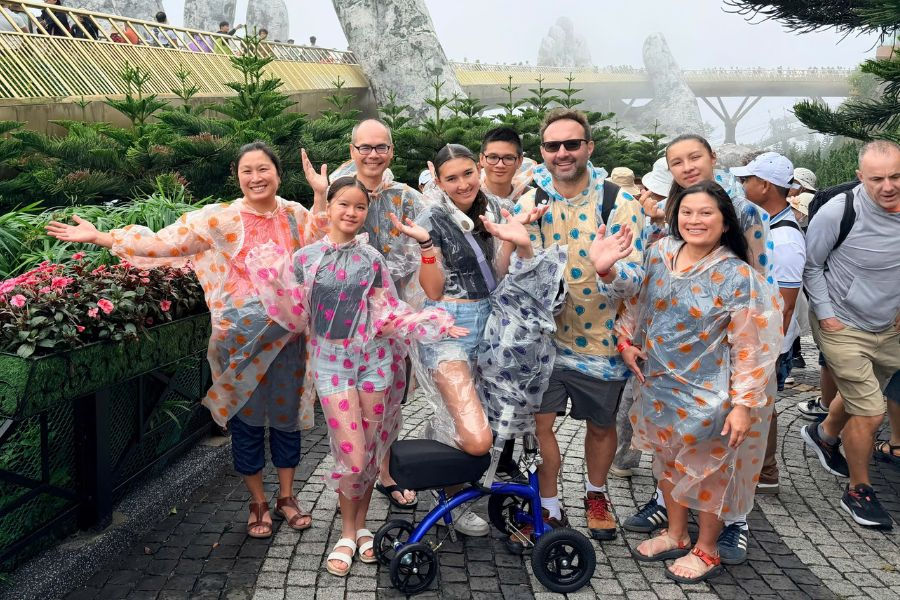
Da Nang is Vietnam’s third-largest city and the central coast’s main transport hub, with direct flights connecting to Delhi and Mumbai as well as Hanoi and Ho Chi Minh City. It pairs a modern beachfront along My Khe Beach with quick access to major landmarks, most notably the Golden Bridge at Ba Na Hills, where a 150-meter walkway appears cradled by two giant stone hands. Ba Na Hills itself is a French-village-themed hill station reached by cable car, combining the bridge with gardens and an amusement park, which drives heavy family and group traffic. Da Nang also serves as the practical base for day trips to the Marble Mountains, Hue, and Hoi An.
- Best for: group tours, family travel, quick add-on from Hoi An or Da Nang city stays
- Starting from: USD 30 / ₹2,880 per person for Ba Na Hills cable car and entrance
- Time needed: half day to full day
3.3. Hue Imperial City
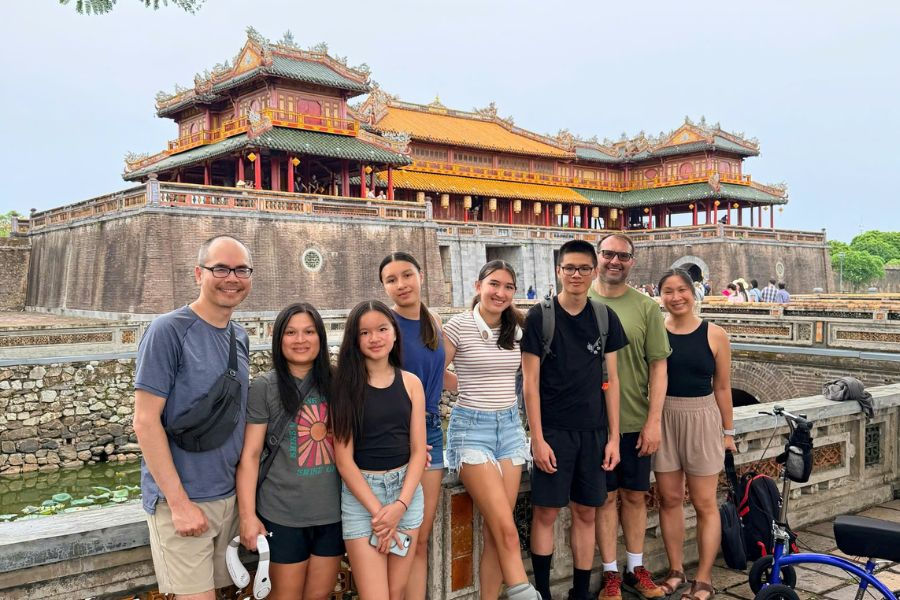
Hue served as the seat of the Nguyen Dynasty, Vietnam’s last royal dynasty, from 1802 to 1945, and its walled Citadel remains one of the country’s most significant historical complexes. Within the Citadel, the Imperial City houses palaces, temples, and gates modeled in part on Beijing’s Forbidden City, though many structures were damaged during the Vietnam War and have since been restored. Beyond the Citadel, the surrounding countryside holds the elaborate tombs of several Nguyen emperors, each built in a distinct architectural style reflecting the ruler’s personality. A boat ride on the Perfume River, which runs through the city, is a common way to connect the royal tombs with a slower-paced view of local river life.
- Best for: history-focused FIT and cultural group tours
- Starting from: USD 12 / ₹1,152 per person for Citadel entrance and guided tour
- Time needed: full day
3.4. Phong Nha-Ke Bang National Park
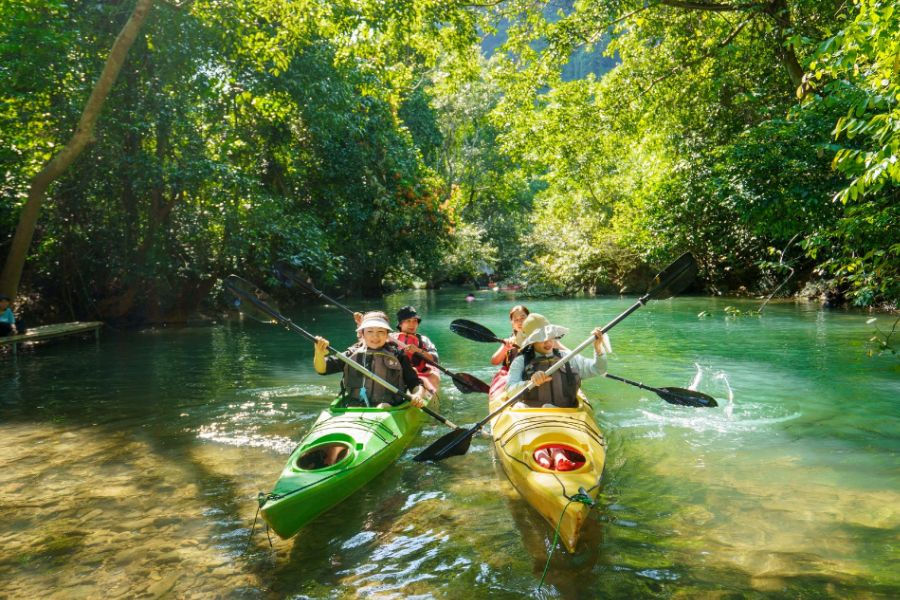
Phong Nha-Ke Bang, a UNESCO World Heritage Site in Quang Binh Province, is best known for containing Son Doong, the largest cave in the world, alongside hundreds of other cave systems formed over roughly 400 million years. Paradise Cave and Phong Nha Cave offer more accessible ways to experience this landscape, with boardwalks and boat rides through cathedral-like limestone chambers. The wider park protects one of Southeast Asia’s largest remaining limestone forests, home to rare wildlife including several primate species found nowhere else. Because Son Doong access is capped and expedition-based, most standard itineraries build around Paradise Cave and Phong Nha Cave instead.
- Best for: adventure travelers and small specialty groups
- Starting from: USD 45 / ₹4,320 per person for Paradise Cave day tour (Son Doong pricing is quoted separately due to expedition-only access)
- Time needed: full day for accessible caves, multi-day for Son Doong expeditions
4. South Vietnam: History, Delta Life, and Islands
4.1. Ho Chi Minh City
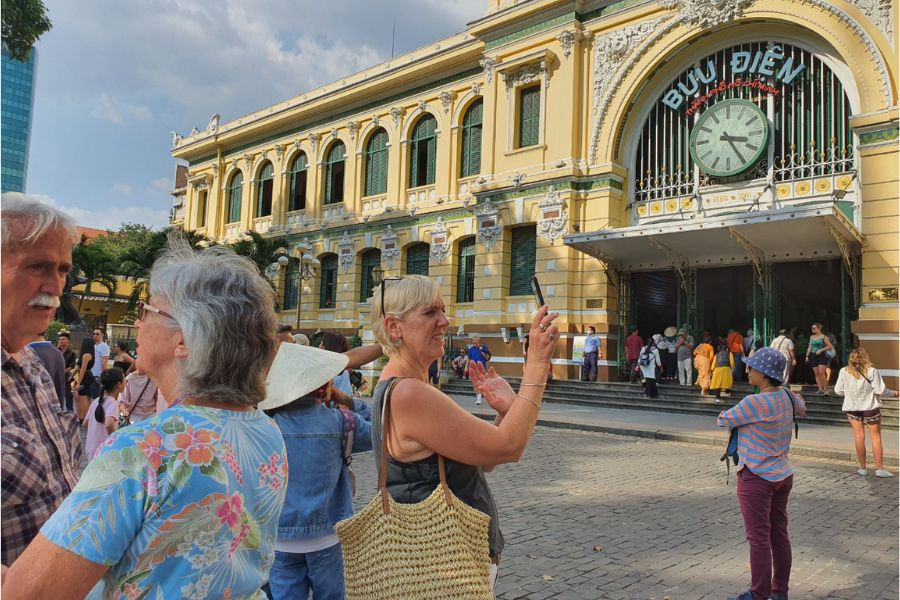
Ho Chi Minh City, formerly Saigon, is Vietnam’s largest city and commercial center, where French colonial landmarks like the Notre-Dame Cathedral Basilica and Central Post Office sit alongside a fast-growing skyline of high-rise towers. The War Remnants Museum offers a direct, often sobering look at the Vietnam War from the Vietnamese perspective, while Ben Thanh Market remains the city’s best-known spot for local goods and street food. The city has also developed strong MICE and incentive travel infrastructure, with international-standard convention facilities and hotels concentrated in District 1. Its position as a major international gateway makes it a natural start or end point for southern Vietnam itineraries.
- Best for: MICE, incentive groups, business travelers extending into leisure
- Starting from: USD 18 / ₹1,728 per person for a half-day city and museum tour
- Time needed: 1–2 days
4.2. Cu Chi Tunnels
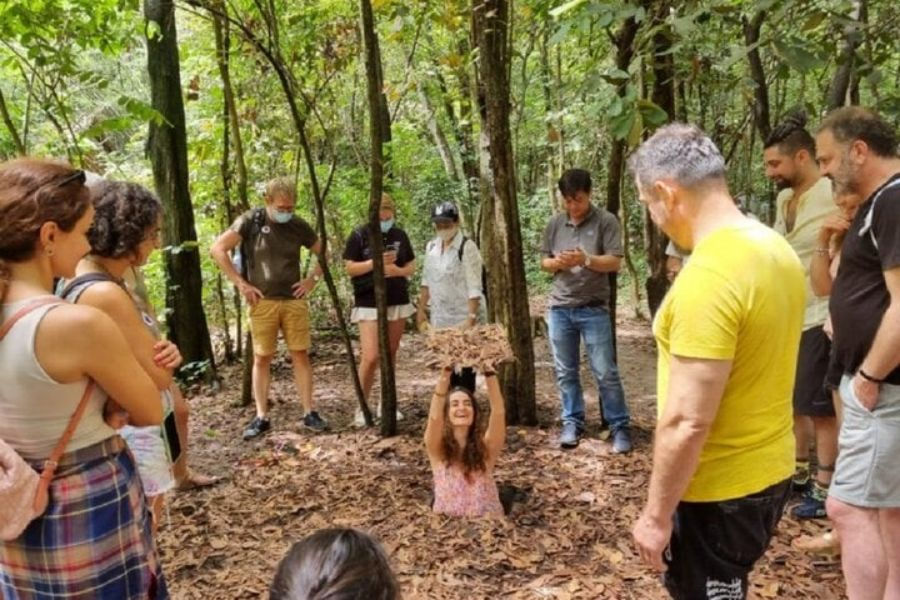
The Cu Chi Tunnels, about 1.5 hours northwest of Ho Chi Minh City, are a preserved section of the vast underground tunnel network used by Vietnamese guerrilla forces during the Vietnam War. Visitors can crawl through widened sections of the original tunnels, see camouflaged trap entrances, and view displays explaining how entire underground villages functioned with kitchens, hospitals, and meeting rooms. The site provides hands-on historical context that pairs naturally with a Ho Chi Minh City stay. Its half-day format makes it one of the most commonly added excursions for both FIT travelers and group tours.
- Best for: history-focused FIT and group tours, popular half-day add-on
- Starting from: USD 25 / ₹2,400 per person for a half-day guided tour with transfer
- Time needed: half day
4.3. Mekong Delta
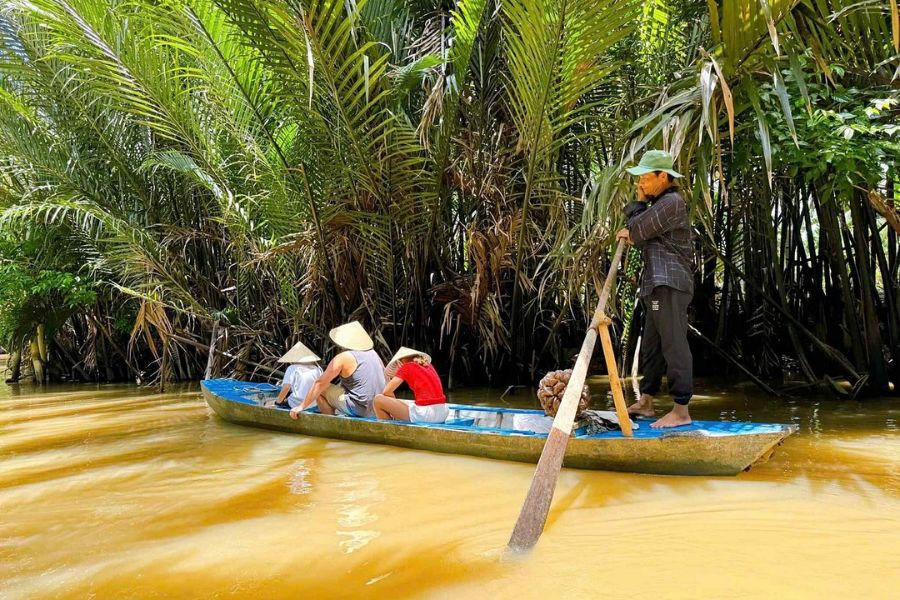
The Mekong Delta, particularly around Can Tho, showcases a very different side of Vietnam built entirely around river life, where the Mekong River fans out into a network of canals and floating markets. Cai Rang, the region’s best-known floating market, sees boats loaded with fruit and produce trading directly on the water each morning. Beyond the markets, the delta offers glimpses into rural village life, coconut candy workshops, and traditional fruit orchards accessible only by small boat. An overnight homestay option allows for a slower, more immersive experience of the delta compared to a standard day trip from Ho Chi Minh City.
- Best for: cultural FIT, photography-focused travelers
- Starting from: USD 40 / ₹3,840 per person for a one-day tour including boat transport
- Time needed: 1–2 days for overnight homestay options
4.4. Phu Quoc Island
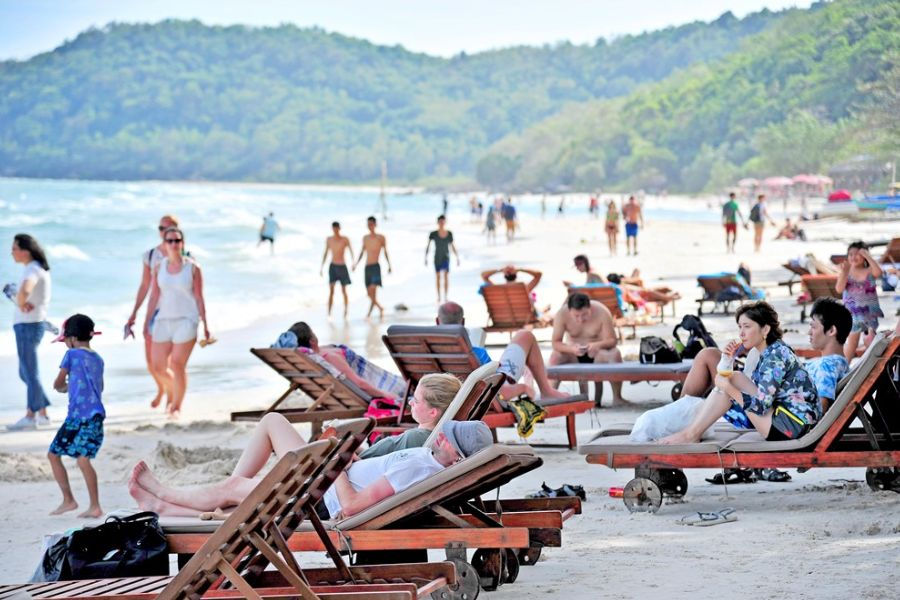
Phu Quoc, Vietnam’s largest island, sits in the Gulf of Thailand and has developed rapidly in recent years into a resort destination anchored by white-sand beaches and clear water. Beyond the beaches, VinWonders Phu Quoc offers a large-scale theme park with water slides and entertainment shows, while Vinpearl Safari houses free-roaming wildlife across recreated habitat zones. The island’s fishing village heritage remains visible in spots like Duong Dong town and the night market, offering a contrast to its newer resort development. Its combination of beach relaxation and family-friendly attractions makes it a strong closing destination for longer North-to-South itineraries.
- Best for: family travel, honeymoon, group tours needing a beach finale
- Starting from: USD 50 / ₹4,800 per person per day for resort stay excluding flights
- Time needed: 3–4 days recommended
5. Matching Experiences to Client Type
| Client Profile | Recommended Combination |
| FIT, first-time visitor | Hanoi, Ha Long Bay, Hoi An, Ho Chi Minh City (classic North-to-South route) |
| Honeymoon or destination wedding | Hoi An, Da Nang, Phu Quoc, with Hoi An riverside or Da Nang beachfront ceremony venues |
| Group tour (15+ pax) | Da Nang Golden Bridge, Ho Chi Minh City, Cu Chi Tunnels, Mekong Delta |
| MICE and incentive travel | Ho Chi Minh City or Hanoi as conference base, with Ninh Binh or Ha Long Bay as post-event incentive excursion |
| Adventure and trekking | Sapa, Phong Nha-Ke Bang National Park |
6. Practical Notes for Agents Selling to Indian Clients
Indian passport holders can apply for Vietnam’s e-visa online, and it’s worth building processing time of at least 5–7 business days into any itinerary timeline. Direct and one-stop flight connections from Delhi, Mumbai, and Bengaluru to Hanoi or Ho Chi Minh City have expanded in recent years, making both the North and South accessible without long layovers. For dietary needs, Hanoi, Ho Chi Minh City, and Da Nang all have a growing number of Indian, vegetarian, and halal-certified restaurants, which is worth flagging for clients traveling in family or group configurations. When timing group departures, aligning travel windows around major Indian holiday periods such as Diwali or school vacation months tends to align well with Vietnam’s dry season in the North and South (November to April).
All pricing above is starting-from reference pricing in USD and INR as of July 2026 and should be reconfirmed with the DMC before being quoted to clients, since rates vary by season, group size, and current exchange rate.
7. Frequently Asked Questions
What is the best region of Vietnam to start with for a first-time client?
For most first-time FIT or group clients, a North-to-South route starting in Hanoi and ending in Ho Chi Minh City or Phu Quoc covers the widest range of experiences without excessive backtracking.
How many days does a client need to see the highlights of Vietnam?
A 7 to 10-day itinerary typically allows for one region in depth plus a shorter add-on in a second region; 12 to 14 days allows comfortable coverage of all three regions.
Is Son Doong Cave bookable for group tours?
Son Doong access is limited to expedition-style bookings with strict annual visitor caps, so it should be quoted and confirmed separately from standard Phong Nha day tours, ideally 6–12 months in advance.
Can Vietnam itineraries be built around Indian festival travel windows?
Yes. Vietnam’s dry season in the North and South (November to April) overlaps well with common Indian travel windows such as Diwali and winter school holidays, making it a workable base for seasonal group departures.

0 Comment