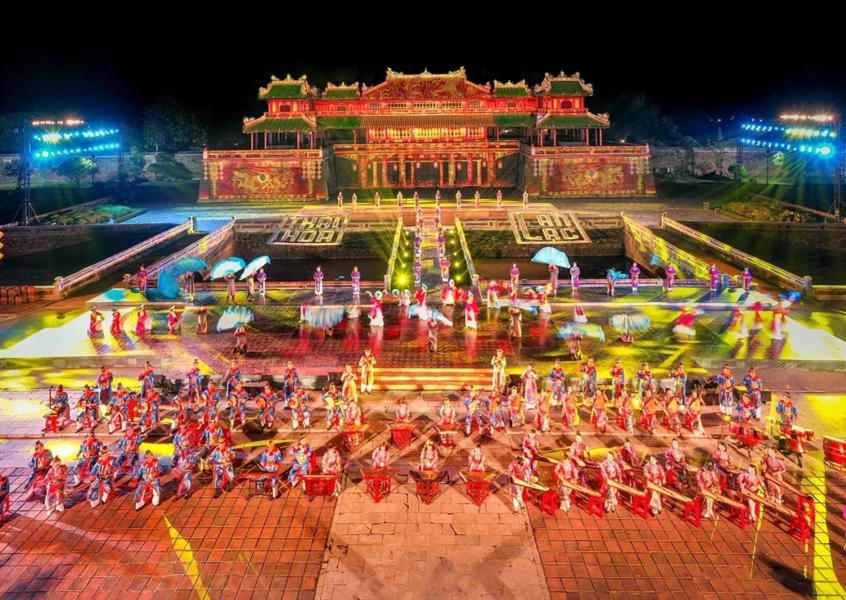

Imagine stepping off the plane in Hanoi and immediately hearing the sound of motorbikes weaving through streets lined with ancient banyan trees, grandmothers doing tai chi in the park, a child offering a slight bow to an elder, and the aroma of phở drifting from a sidewalk stall that has been open since 4 AM. Within five minutes of arrival, you already feel it: Vietnam has a culture unlike anywhere else on Earth.
Vietnam is not just a destination. It is a living, breathing civilization that has survived 4,000 years of history, foreign invasions, and rapid modernization. For travelers from India, the parallels are striking (deep family values, reverence for ancestors, and spirituality woven into daily life), but the differences are just as fascinating.
At Viet Dan Travel DMC, after nearly 20 years of bringing international travelers, particularly Indian families and groups, into the heart of Vietnamese life, we have compiled this insider’s guide to Vietnam culture and traditions. This is not a textbook summary. This is what you will actually feel, taste, and witness when you travel here.
1. The roots of Vietnamese culture: a civilization at the crossroads
Vietnam’s cultural identity is the result of thousands of years of layered influences, and none of them have fully erased the ones before them.
The foundation layer goes back to the Hung Kings era, over 4,000 years ago, when an agrarian civilization first took root in the Red River Delta. Rice cultivation, communal living, and a deep connection to the land became defining characteristics that still shape Vietnamese values today.
Chinese influence came with over a thousand years of Chinese rule (111 BCE – 938 CE), leaving an indelible mark on language (around 60–70% of Vietnamese vocabulary has Chinese-origin roots), governance, Confucian ethics, and architecture. However, Vietnam absorbed Chinese culture without losing itself. The Vietnamese fought relentlessly to retain their identity, and this tension between adaptation and resistance is central to understanding the Vietnamese spirit.
French colonialism (1887–1954) introduced Catholicism, baguette bread (now transformed into the iconic bánh mì), coffee culture, and European-style architecture, especially visible in Hanoi and Ho Chi Minh City.
Today, Vietnam is home to 54 recognized ethnic groups. While the Kinh people make up around 86% of the population, groups like the Hmong, Tay, Dao, Cham, and Ede each carry distinct languages, clothing, farming traditions, and spiritual practices, particularly in the northern mountains, central highlands, and southern coastal regions.
2. Family and social values: The heart of Vietnamese life
If you want to understand Vietnam, understand the Vietnamese family first.
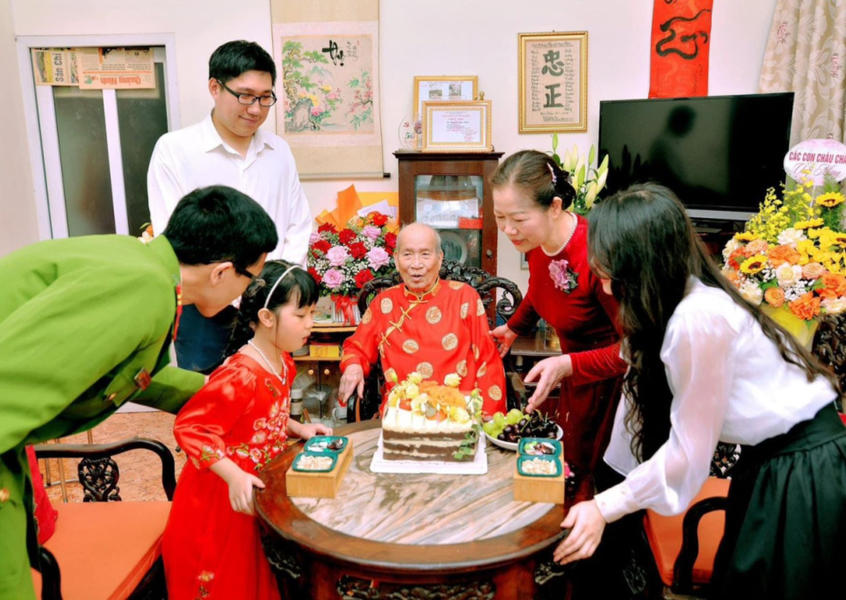
The family is the fundamental unit of Vietnamese society. Multiple generations often live under one roof — grandparents, parents, and children sharing space, meals, and responsibilities. This is not merely tradition; it is a deeply felt moral obligation rooted in Confucian ethics of filial piety (hiếu thảo).
Key social values you will observe:
- Respect for elders is absolute: Younger people use specific pronouns to address elders, serve food to seniors first, and rarely contradict or question older family members in public.
- Communal harmony over individual expression: “Saving face” (giữ thể diện) is crucial. Direct confrontation is avoided; disagreements are handled diplomatically and quietly.
- Hospitality is a point of pride. The Vietnamese concept of welcoming guests warmly means that being invited into a Vietnamese home is a genuine honor. Expect generous food, repeated offers to eat more, and conversation that begins with inquiries about your family.
- Education is deeply valued: Vietnam has one of the highest literacy rates in Southeast Asia (over 95%). Families make significant sacrifices to ensure children receive the best possible education. This is also a trait that resonates deeply with Indian families.
Conversations typically begin not with “How are you?” but with “Have you eaten yet?” (Ăn cơm chưa?), a culturally loaded question that signals both care and community.
3. Vietnamese festivals and celebrations
No aspect of Vietnamese culture and traditions is more vibrant than its festivals. Vietnam observes both the lunar and Gregorian calendars, meaning celebrations occur throughout the year.
3.1. Lunar New Year (Tết Nguyên Đán) – Vietnam’s biggest celebration
Tết is the single most important cultural event in Vietnam, typically falling in late January or February. It is simultaneously a family reunion, a spiritual ritual, a new beginning, and a nationwide party.
In the weeks before Tết, markets overflow with peach blossoms (in the North) and yellow apricot blossoms (hoa mai, in the South), kumquat trees, and decorative lanterns. Families clean their homes to sweep away bad luck, prepare bánh chưng (sticky rice cakes), and visit temples to pray for prosperity.
On the first morning of Tết, the xông đất tradition, where the first visitor to cross a home’s threshold determines the family’s luck for the year, is taken very seriously. Families carefully choose who they want as their first guest.
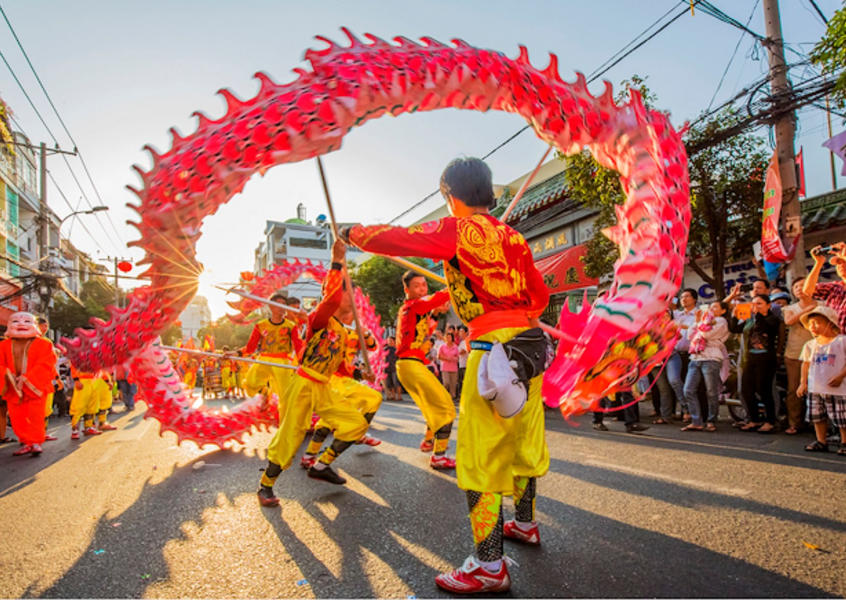
What travelers can experience during Tết: Dragon dances in the streets, fireworks at midnight, temple fairs, and the extraordinary sight of Hanoi’s Hoàn Kiếm Lake lit with lanterns. It’s worth noting that most shops close for several days, so you need to plan logistics accordingly.
3.2. Mid-Autumn Festival (Tết Trung Thu)
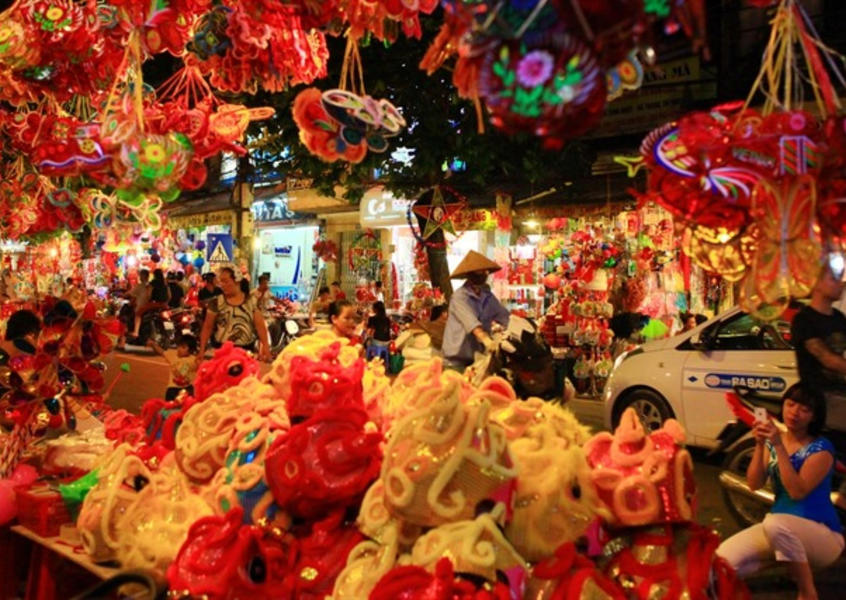
Celebrated on the 15th day of the 8th lunar month (usually September–October), the Mid-Autumn Festival is especially magical for families with children. Streets fill with colorful lanterns in the shapes of fish, stars, and lotus flowers. Children parade through neighborhoods with glowing lanterns while adults enjoy bánh nướng and bánh dẻo mooncakes.
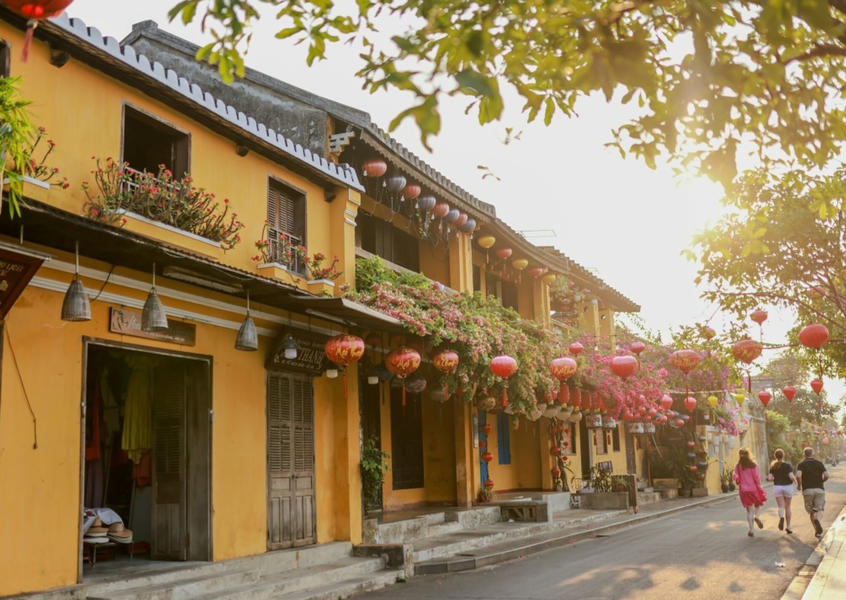
In Hội An, this festival reaches its peak beauty: the town turns off its electric lights, and the ancient streets glow exclusively with hundreds of silk lanterns reflected in the Thu Bồn River. It is, by many accounts, one of the most beautiful sights in Southeast Asia.
3.3. Hung Kings’ Temple Festival
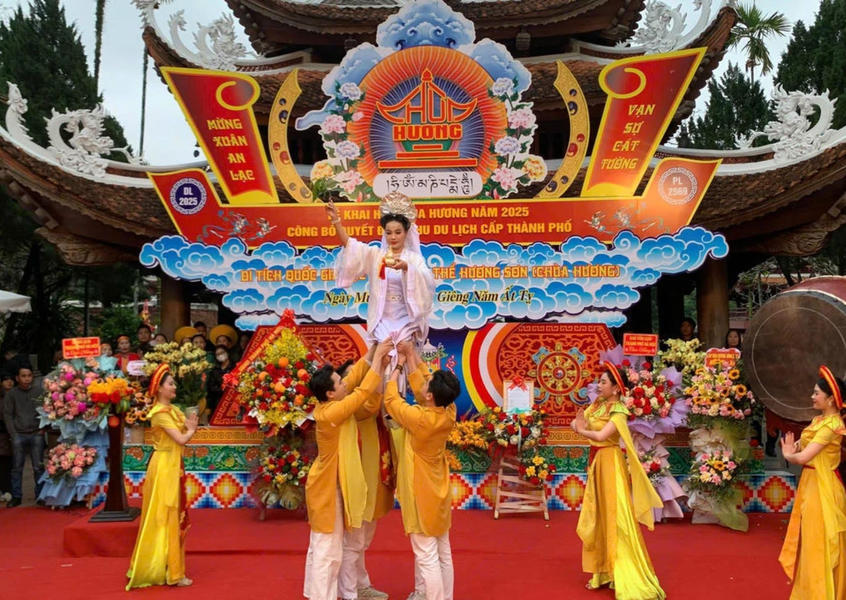
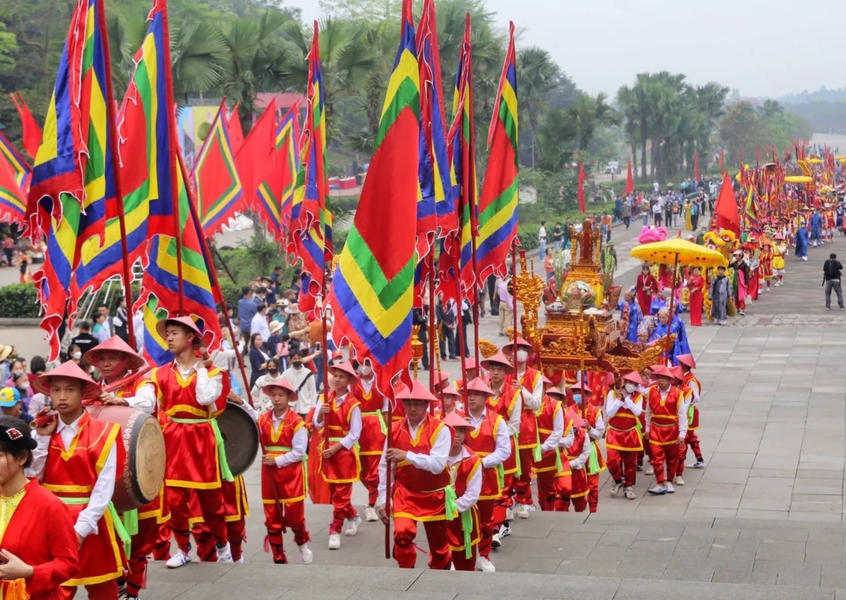
Held on the 10th day of the 3rd lunar month in Phú Thọ Province, this is a national holiday honoring the mythical founders of the Vietnamese nation. The ceremony blends solemn religious ritual with folk performances, traditional music, and processions. It is a profound expression of Vietnamese national identity.
3.4. Regional and Ethnic Festivals
Beyond the national festivals, each ethnic group and region celebrates its own calendar. The Khmer Ok Om Bok festival in the Mekong Delta, the Kate Festival of the Cham people in Ninh Thuận, and the Gầu Tào Festival of the Hmong in the northern mountains each offer windows into Vietnam’s extraordinary ethnic diversity.
4. Vietnamese food culture
Vietnamese cuisine is not merely food. It is philosophy, medicine, history, and community, all on a single plate.
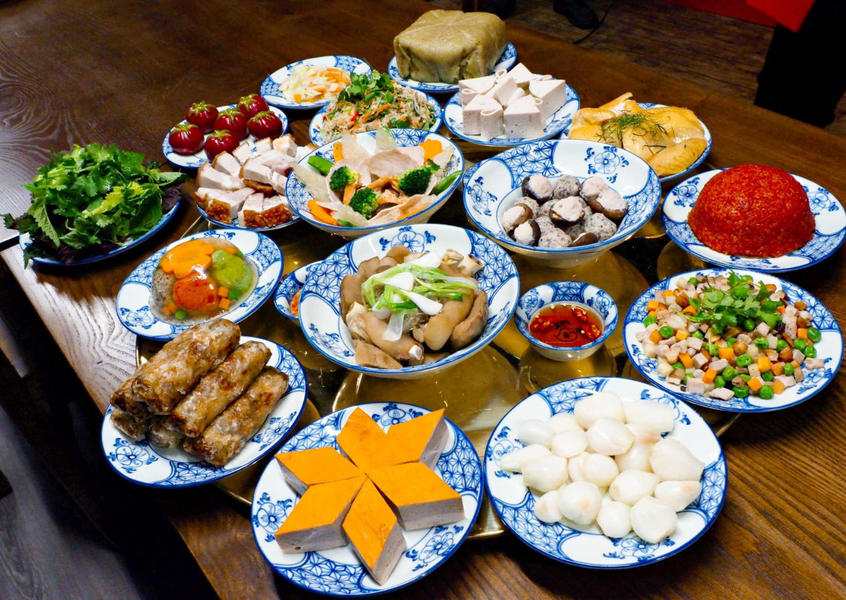
The foundational principle of Vietnamese cooking is balance: balance between hot and cold ingredients (as defined by traditional medicine), between textures (crunchy and soft), between tastes (sour, sweet, spicy, salty, and umami), and between fresh herbs and cooked components. This approach is rooted in Taoist and Buddhist concepts of harmony.
Key elements of Vietnamese food culture:
- Street food is sacred. Some of Hanoi’s most legendary phở shops have been operating from the same plastic-stool sidewalk spot for three or four generations. The street food culture is democratic; businesspeople, students, and tourists all eat side by side at the same stall.
- Fresh herbs are non-negotiable. Almost every Vietnamese dish arrives with a plate of fresh herbs such as mint, Vietnamese coriander (rau răm), perilla, and bean sprouts that diners add themselves. This interactive eating style reflects the Vietnamese belief that food should be customized to individual balance.
- Regional differences are dramatic:
- Northern cuisine (Hanoi): Subtle, less sweet, clear broths. The original phở is from here.
- Central cuisine (Huế, Đà Nẵng): Bold, spicy, and complex, the imperial court cuisine of Huế is particularly elaborate.
- Southern cuisine (Ho Chi Minh City): Sweeter, richer, more influenced by Khmer and Chinese flavors.
For Indian vegetarian and Jain travelers: Buddhist-influenced Vietnamese cuisine has a strong vegetarian tradition (đồ chay). Many pagodas serve entirely plant-based meals, and vegetarian restaurants are common in most cities. Viet Dan Travel DMC can specifically curate itineraries and dining options aligned with your dietary requirements.
5. Religious beliefs and spiritual practices
Vietnam is officially a secular state, but spirituality permeates every aspect of daily life. The country’s religious landscape is a fascinating blend:
- The “Three Teachings” (Tam Giáo): Historically, Buddhism, Taoism, and Confucianism have coexisted and merged into a unified spiritual framework. Most Vietnamese people do not strictly identify with one religion but draw from all three depending on the occasion.
- Ancestor Worship (Thờ Cúng Tổ Tiên): This is perhaps the most universally practiced spiritual tradition in Vietnam. Every Vietnamese home, regardless of religious affiliation, has an ancestral altar (bàn thờ). Offerings of fruit, flowers, incense, and food are placed on the altar daily, especially on death anniversaries and the 1st and 15th of each lunar month. The belief is that ancestors remain present and actively influence the lives of their descendants.
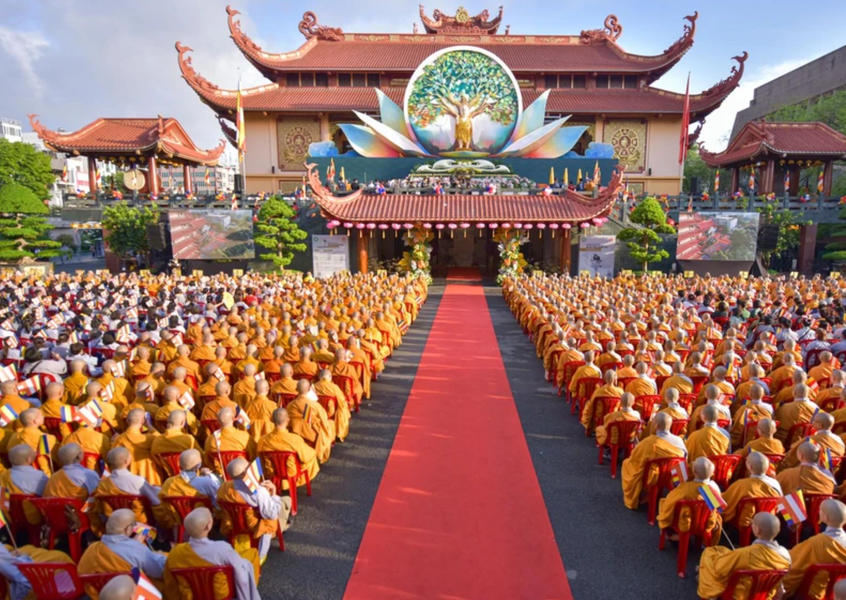
- Buddhism is practiced by an estimated 70–80% of the population in some form. Vietnamese Buddhism (primarily Mahayana in the North and Theravada among Khmer communities in the South) is expressed through temple visits, vegetarian days, and the honoring of bodhisattvas. Pagodas (chùa) are social and spiritual hubs, not just places of worship.
- Catholicism has approximately 7 million adherents, leaving a legacy of stunning French-colonial cathedrals, the Notre-Dame Cathedral Basilica of Saigon and St. Joseph’s Cathedral in Hanoi being the most famous.
- Cao Đài is a uniquely Vietnamese syncretic religion founded in 1926 that combines elements of Buddhism, Taoism, Confucianism, Catholicism, and Islam. The Cao Đài Great Temple in Tây Ninh, with its psychedelic architecture and rituals performed four times daily, is one of the most visually extraordinary religious experiences in Asia.
Traveler tip: When visiting temples and pagodas, dress modestly (shoulders and knees covered), remove shoes before entering, and avoid pointing your feet toward altars. Speak quietly and observe before participating.
6. Traditional Vietnamese arts and crafts
Vietnam’s artistic heritage reflects its cultural complexity and regional diversity.
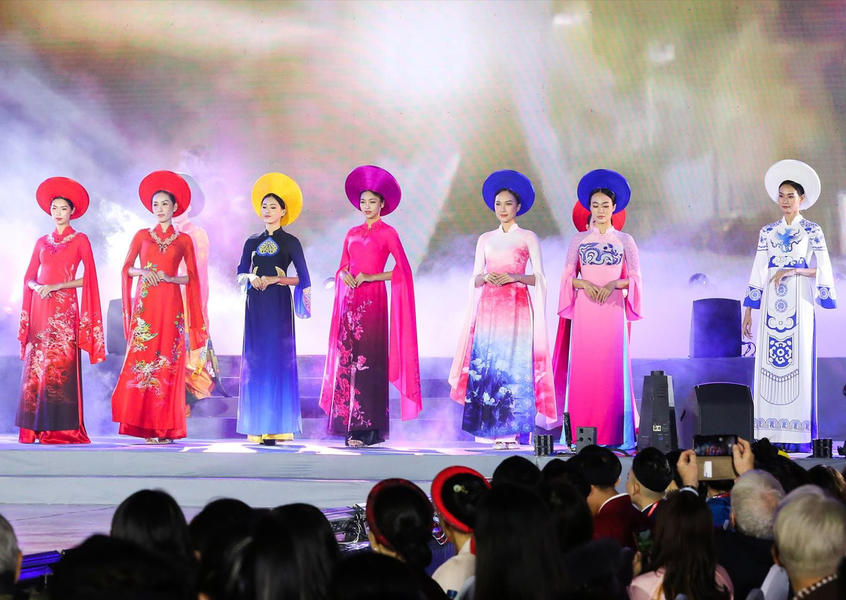
- Áo Dài (Traditional Dress): The áo dài, a form-fitting tunic worn over wide-leg trousers, is Vietnam’s national garment and one of the most elegant traditional costumes in Asia. Originally a northern court garment, it has been adapted through centuries into its modern form. Today, it is worn at weddings, Tết celebrations, school ceremonies, and formal events. Seeing a row of áo dài-clad students cycling through Hội An’s ancient streets is a sight that epitomizes Vietnamese aesthetic beauty.
- Water Puppetry (Múa Rối Nước): Dating back to the 11th century in the Red River Delta, water puppetry is Vietnam’s most distinctive performing art. Puppeteers stand waist-deep in water behind a bamboo screen, manipulating lacquered wooden puppets on the water’s surface while a traditional orchestra plays live music. Performances depict scenes from rural life, folk legends, and mythical creatures. The Thăng Long Water Puppet Theatre in Hanoi is the best place to experience this.
- Silk Weaving and Lacquerware: Vietnam’s silk weaving tradition, particularly in Hội An and Hà Đông (Hanoi), produces some of the finest fabrics in Southeast Asia. Lacquerware (sơn mài) — objects coated in layers of tree resin and inlaid with eggshell, mother-of-pearl, or gold — is both a fine art and a practical craft that has been practiced for centuries.
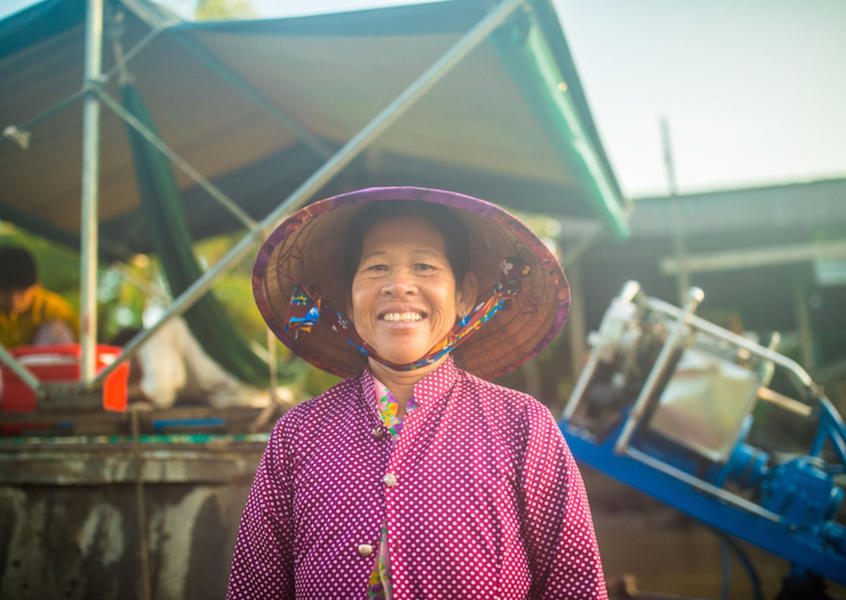
- Conical Hat (Nón Lá): The iconic palm-leaf conical hat has been depicted in Vietnamese art for over 3,000 years. More than just sun protection, it functions as a rain umbrella, a fan, and a basket, and according to folk legend, it’s even a vehicle for secret love letters (thơ tình) written on the inner leaf layers that can only be read when held up to light.
7. Vietnamese customs and etiquette: what travelers need to know
Understanding a few key customs will dramatically enrich your experience and earn you genuine warmth from locals.
- Greetings: The traditional Vietnamese greeting is a slight bow or nod of the head, often accompanied by both hands placed together. Among younger, urban Vietnamese, handshakes are common, but avoid initiating physical contact with elders. Use both hands when giving or receiving items (business cards, gifts, or money) as a sign of respect.
- Addressing people: Vietnamese culture uses an elaborate system of pronouns based on relative age and social standing. For travelers, the simplest approach is to address all men as Anh (older brother) and all women as Chị (older sister) until you’re told otherwise. This signals respect and cultural awareness.
- Shoes: Remove your shoes before entering any Vietnamese home, and at many temples and traditional restaurants. Watch what locals do and follow their lead.
- Dining etiquette: Wait to be seated by your host. The eldest person at the table typically eats first or signals the start of the meal. It is polite to try everything offered, refusing food can be seen as impolite, though explaining dietary restrictions is readily understood. Never stick chopsticks upright in a bowl of rice (this resembles incense at a funeral altar).
- Bargaining: At traditional markets (Ben Thanh Market, Hội An’s night market, Hanoi’s Old Quarter), bargaining is expected and part of the cultural experience. Start at roughly 40–50% of the asking price and negotiate with smiles. At fixed-price shops and supermarkets, prices are non-negotiable.
- Photographing people: Always ask permission before photographing individuals, especially ethnic minority communities. A smile and gesture of the camera goes a long way; accept refusals graciously.
8. Regional cultural diversity
One of the most common misconceptions about Vietnam is treating it as a culturally homogeneous country. In reality, traveling from North to South is like traveling through distinctly different cultural worlds.
- Northern Vietnam (Hà Nội, Sapa, Hà Giang): The cultural heartland, strongly influenced by Chinese traditions and Confucian values. People here tend to be more reserved, formal, and traditionally minded. The cuisine is subtler, conversation is more measured, and historical consciousness is deep. The highlands are home to dozens of ethnic minority communities such as the Hmong, Dao, Tay, and Nung, whose textile traditions, market cultures, and festivals are extraordinarily vivid.
- Central Vietnam (Huế, Đà Nẵng, Hội An): The former imperial heartland, where Vietnam’s royal history is most tangible. Huế’s cuisine is the most complex and sophisticated in the country, which is a legacy of feeding the imperial court. Hội An is a UNESCO World Heritage Site where Chinese, Japanese, and Vietnamese merchant cultures fused into a unique architectural and culinary identity that has been remarkably preserved. Central Vietnamese people are known for their tenacity, shaped by centuries of living between natural disasters and historical conflict.
- Southern Vietnam (Ho Chi Minh City, Mekong Delta): The most cosmopolitan, entrepreneurial, and diverse region. Southern culture is more relaxed, open, and dynamic, shaped by Khmer, Chinese, and French influences alongside Vietnam’s own traditions. The Mekong Delta is a world unto itself: a civilization built on waterways, where floating markets, river life, and rich agricultural abundance define daily existence.
DMC Insider Perspective: Many tour groups visit only Hanoi and Ho Chi Minh City. At Viet Dan Travel DMC, we always recommend including at least one experience in Central Vietnam (Hội An or Huế) and one in the North’s mountains (Sapa or Hà Giang) to genuinely understand the breadth of Vietnamese culture and traditions.
To sum up, Vietnam’s culture and traditions are shaped by over 4,000 years of history, blending indigenous Kinh values with Confucian ethics, Buddhist spirituality, and influences from China, France, and 54 distinct ethnic groups. At the heart of Vietnamese life are deep family bonds, ancestor worship, vibrant festivals like Tết and the Mid-Autumn Festival, and a cuisine philosophy rooted in balance and harmony. From the imperial heritage of Huế to the floating markets of the Mekong Delta, every region of Vietnam tells a different chapter of the same extraordinary cultural story.
Viet Dan Travel DMC has been designing authentic, immersive Vietnam experiences for international travelers with a specialized focus on Indian families, groups, and travel agencies for nearly two decades. We don’t just show you Vietnam. We introduce you to it. Whether you are a travel agency looking for a reliable B2B ground partner or a group seeking a deeply personal Vietnam experience, Viet Dan Travel DMC is your trusted destination management company on the ground. Ready to go beyond the surface and experience the real Vietnam? Contact Viet Dan Travel DMC to begin planning your journey.
0 Comment