


A bamboo boat slips through a limestone wetland two hours from Hanoi, and for an hour the only other sound is a paddle. That kind of quiet is getting harder to find in a country that welcomed 19.5 million international visitors in the first 10 months of 2026. The 10 hidden gems in Vietnam below, from Bai Tu Long Bay in the north to Con Dao Island in the south, still offer space, local life and scenery without the Ha Long Bay and Hoi An crowds. Each entry includes the details travel agents need: access, season, estimated costs and where it fits in a group or FIT itinerary.
What counts as a hidden gem in Vietnam?
In this guide, a hidden gem in Vietnam meets four tests. It receives noticeably fewer international group arrivals than the Hanoi, Ha Long, Hoi An and Ho Chi Minh City circuit. It can be reached within one travel day of a major airport or city. It has a real product to sell, such as a boat ride, a trek, a heritage site or a quiet beach stay. And it has a clear season, so planners can quote it with confidence.
“Hidden” is relative, and it changes fast. Ha Giang Loop, Phong Nha-Ke Bang National Park, the core of Ninh Binh (Trang An and Tam Coc), Sapa town and Phu Quoc now appear on most Vietnam itineraries, so they are left out. Some guides already treat the first four as established routes, and Angsana’s own guide describes Sapa, Ha Long and Phu Quoc as busier destinations. Several entries below are still honest about their limits. Quy Nhon has just earned international attention, Mu Cang Chai fills up in harvest weeks, and the Cham Islands are crowded at noon.
Two practical notes apply to the whole list. First, Vietnam merged its 63 provinces and cities into 34 units from 1 July 2025, so each entry shows the current province and, where it changed, the former one. Second, every price is an estimate. Prices below are starting figures converted at roughly VND 26,000 per USD, so confirm current rates and availability with a destination management company before quoting clients.
Hidden gems in Vietnam at a glance
| No | Hidden gem | Region | Best window | Access |
| 1 | Bai Tu Long Bay and Quan Lan Island | North | Apr to Jun, Oct to Dec | About 220 to 250 km from Hanoi, then ferry |
| 2 | Cao Bang (Ban Gioc Waterfall) | North | Sep to Oct; dry season Oct to Apr | About 280 km from Hanoi to Cao Bang city, plus 85 km |
| 3 | Mu Cang Chai | North | May to Jun, mid-Sep to mid-Oct | About 300 km from Hanoi |
| 4 | Pu Luong Nature Reserve | North | May to Jun, Sep to Oct | About 160 to 190 km from Hanoi |
| 5 | Van Long Nature Reserve | North | Year-round | About 80 to 110 km from Hanoi |
| 6 | Lang Co Bay and Lap An Lagoon | Central | Warmer months; Dec to Mar cooler and windy | About 25 km from Da Nang |
| 7 | Cham Islands | Central | Mar to Aug | 20 to 30 minutes by speedboat from Cua Dai, Hoi An |
| 8 | Quy Nhon | Central | Dec to Apr | 30 to 35 km from Phu Cat Airport |
| 9 | Con Dao | South | Mar to Sep | About 45 minutes by air from Ho Chi Minh City |
| 10 | Chau Doc and Tra Su Cajuput Forest | South | Sep to Nov for Tra Su | About 244 km, 5 hours from Ho Chi Minh City |
1. Bai Tu Long Bay and Quan Lan Island, Quang Ninh
- Address: Van Don area, Quang Ninh Province. Quan Lan Island lies about 40 km from the Van Don mainland, and the island is roughly 220 km to 250 km from Hanoi depending on the source.
- Best for: Beach stays, slow boat days, and travelers who want limestone-bay scenery without a crowded cruise.
- Best time: April to June and October to December. July and August bring rain.
- Price (estimate): A high-speed ferry from Cai Rong has been quoted at VND 100,000 per person (about $4). Hotel and group rates vary by season, so request a quotation.
- Highlights: Minh Chau white-sand beach, Quan Lan Temple, half-day cycling and local seafood.
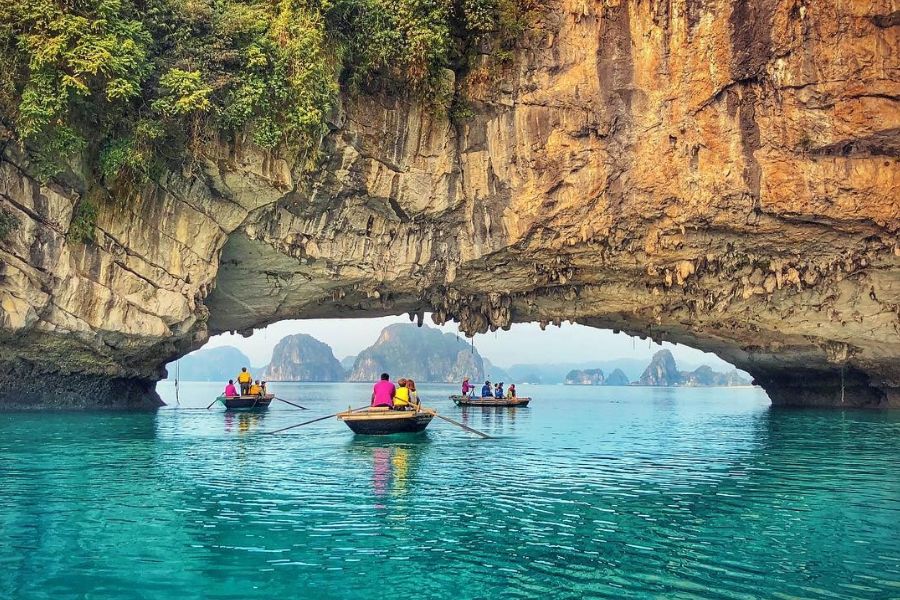
Bai Tu Long Bay sits beside Ha Long Bay in Quang Ninh Province, which was not changed in the 2025 merger. Quan Lan Island is the easiest way to experience it on land. It is a quiet, low-key beach island known for long sandy beaches, calm water and an easygoing pace. At the northern end, Minh Chau island has the finest white sand in the area. Quan Lan also carries more history than most beach destinations in northern Vietnam, and much of it can be visited in half a day by motorbike.
For travel planners: the ferry timetable is the bottleneck. From Ao Tien, speedboats cross to Quan Lan in roughly 45 to 60 minutes, and because the route stays inside Bai Tu Long Bay the water is usually calm. Around three to four ferries depart daily from Hon Gai Port in Ha Long City, and a seasonal service runs from Vung Duc in Cam Pha. The Hon Gai route allows a seamless combination of Ha Long Bay and Quan Lan without needing to return to Van Don. Van Don International Airport is in the same district, but confirm current routes before building a fly-in program. Fix group transfers only after checking sea conditions and the live ferry schedule.
2. Cao Bang and Ban Gioc Waterfall, Cao Bang Province
- Address: Ban Gioc Waterfall area, Cao Bang Province, on the Vietnam and China border. Cao Bang city is around 280 km from Hanoi, about eight hours by road, and the waterfall is 85 km further.
- Best for: Dramatic scenery, caves, border-country road trips and slow northern itineraries.
- Best time: September to October for golden rice fields around the falls. August and September bring high water. The dry season runs October to April. November to February offers misty, calm views.
- Price (estimate): Ban Gioc entry is VND 45,000 (about $1.70), a bamboo craft costs VDT 50,000 to 100,000 ($2 to $4), and Nguom Ngao Cave entry is VND 45,000. Bring cash.
- Highlights: Ban Gioc Waterfall, Nguom Ngao Cave, Phat Tich Truc Lam Pagoda viewpoint and the Pac Bo historic site.
Ban Gioc Waterfall is the headline, and it is part of the Non Nuoc Cao Bang Geopark. Most visitors stop at the falls, but the province rewards a second day. Nguom Ngao Cave is well lit with walkways and takes about 1.5 hours to explore. Truc Lam Phat Tich Pagoda gives the best elevated view of the waterfall, and Pac Bo marks where Ho Chi Minh lived after returning to Vietnam in 1941.
For travel planners: distance is the product here. The honest minimum is three days and two nights, and three to four days allows the Cao Bang Loop at a comfortable pace. Brief guests before departure: drones are not allowed in this military border zone, and cell service is weak to nonexistent. For Indian groups, the Sep to Oct and Nov to Feb windows overlap with the autumn festive and winter holiday periods. Long drives suit private vans with rest stops, and vegetarian or Jain meal requests should be confirmed before departure.

3. Mu Cang Chai, Lao Cai Province (formerly Yen Bai)
- Address: Mu Cang Chai, Lao Cai Province, about 300 km from Hanoi, around 6 to 7 hours by road. Yen Bai was merged with Lao Cai in 2025.
- Best for: Rice-terrace photography, trekking and paragliding season.
- Best time: The watering season (May to June) and the harvest season (September to October). The golden peak is mid-September to mid-October.
- Price (estimate): Costs are driven by the 6 to 7 hour transfer and small-scale lodging. Ask for per-person quotations by group size.
- Highlights: La Pan Tan, Che Cu Nha and Mam Xoi Hill viewpoints, and the paragliding festival held each September.
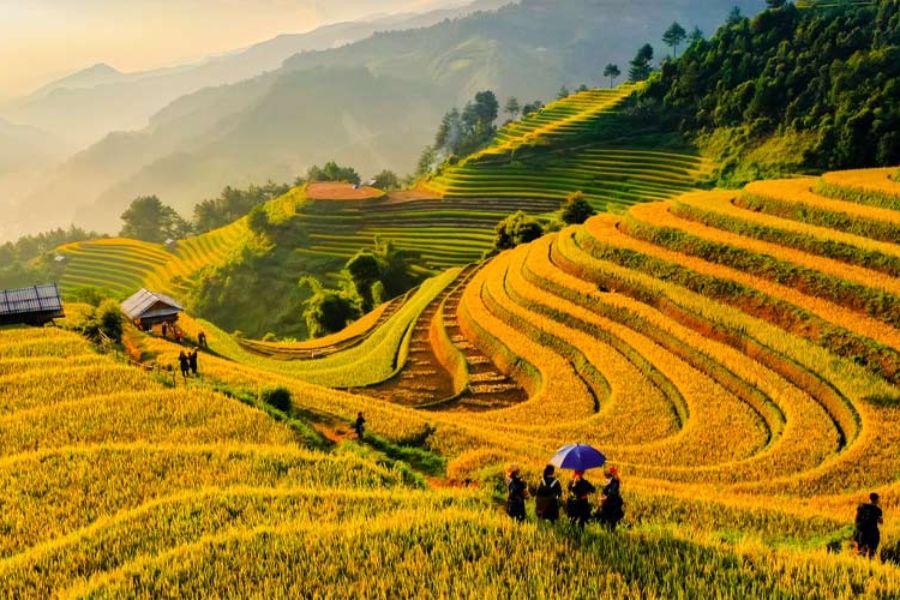
Mu Cang Chai is built around its terraces rather than a long list of attractions. The terraces cover over 2,000 hectares, and the Ministry of Culture, Sports and Tourism has designated a large portion as a National Heritage Site. Some of the best-known fields are Che Cu Nha, La Pan Tan and Mam Xoi Hill. Because rice can only grow one crop per year at this altitude, timing matters more than anywhere else on this list.
For travel planners: this is the least hidden gem on the list in harvest weeks, so book lodging early for late September. Roads are limited and mobile signal is weak. Tu Le is about 15 km away and Sapa is about 140 km away, which makes Mu Cang Chai a natural extension of a northwest program.
4. Pu Luong Nature Reserve, Thanh Hoa Province
- Address: Western Thanh Hoa Province, about 160 km southwest of Hanoi, with other sources giving up to 180 km. The drive takes 4 to 5 hours.
- Best for: Rice terraces, light trekking, stilt-house stays and slow wellness-style breaks.
- Best time: May to June and September to October.
- Price (estimate): A basic homestay bed with dinner can cost as little as VND 100,000 (about $4). Eco-lodges with pools cost more, so request group quotations.
- Highlights: Thai and Muong villages and eco-lodges with infinity pools overlooking the terraces, plus bamboo rafting with a local family.
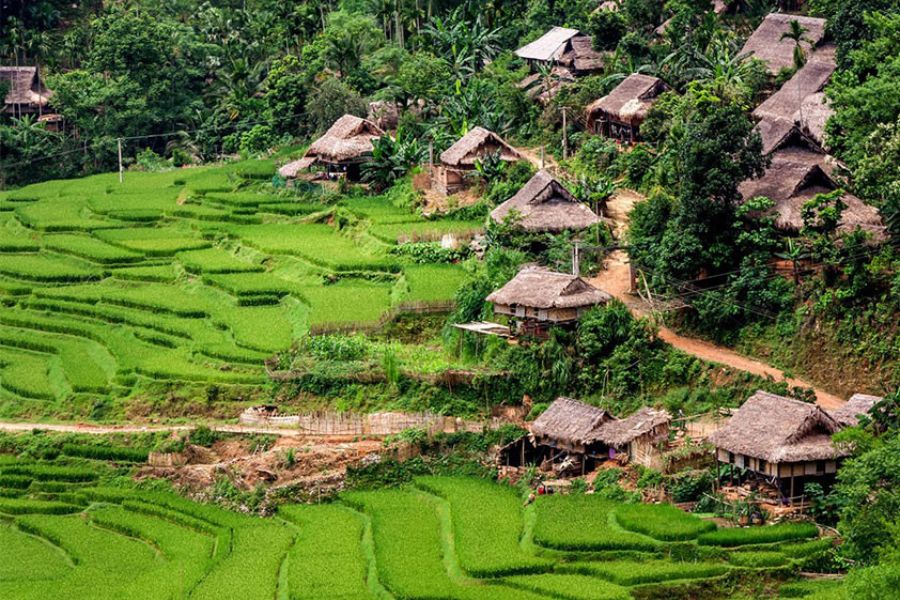
Pu Luong Nature Reserve sits in the mountains of western Thanh Hoa, where terraced fields, limestone peaks and ethnic Thai and Muong communities share the same valleys. Thanh Hoa Province was not changed in the merger. Visitors can trek, cycle, raft and join village visits. The tone is quieter than Sapa or Ha Giang, and many guests simply stay at their lodge for two nights.
For travel planners: two to three days is ideal, and Pu Luong combines well with nearby Mai Chau. It is also paired with Ninh Binh in some 3-day escapes. Roads leading to eco-lodges are narrow, so a private car with a driver is the safest option. Plan vans rather than large coaches, and expect small room blocks at each lodge.
5. Van Long Nature Reserve, Ninh Binh Province
- Address: Gia Vien area, Ninh Binh Province, about 80 km south of Hanoi by distance, and about two hours by car. Ninh Binh Province now includes the former Ha Nam and Nam Dinh provinces.
- Best for: Quiet boat rides, first-time groups and a half-day add-on to Ninh Binh.
- Best time: Year-round. Water birds breed from November to April.
- Price (estimate): A landscape ticket of VND 20,000 plus VND 120,000 per two-person boat (about $0.80 and $4.60). Some sources quote higher per-person prices, so confirm on site.
- Highlights: A 1 to 1.5 hour bamboo-boat ride through limestone and caves, and the chance to see Delacour’s langur.
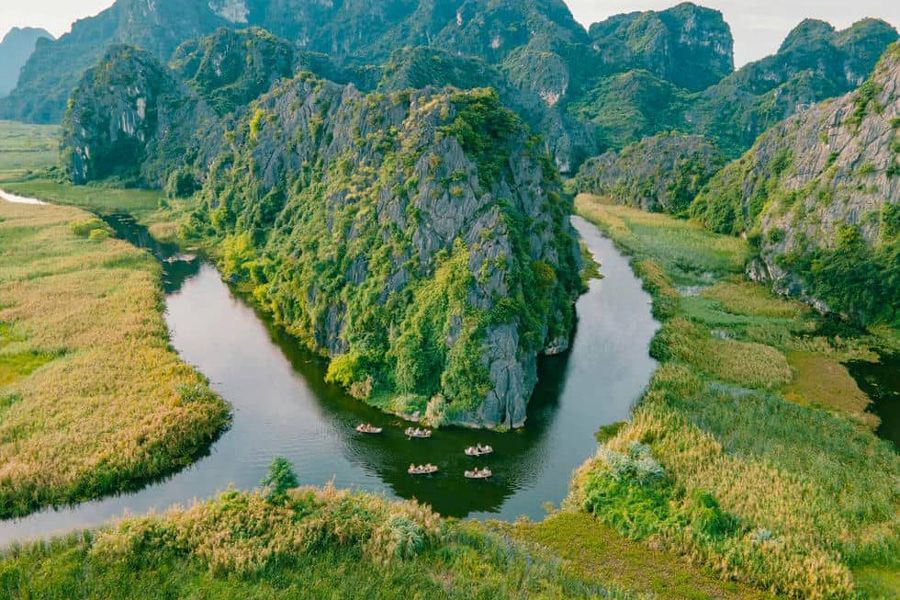
Van Long is the largest wetland in northern Vietnam, covering about 3,500 hectares. It is cheaper and quieter than Trang An or Tam Coc. Delacour’s langur, a species found only in the north, lives here, but sightings are a bonus rather than a promise.
For travel planners: Van Long is the lowest-risk gem on the list, two hours from Hanoi and easy to pair with Hoa Lu or Cuc Phuong National Park in one day. It is honest to say it sits inside the famous Ninh Binh area, so “hidden” here means a quiet corner of a known region.
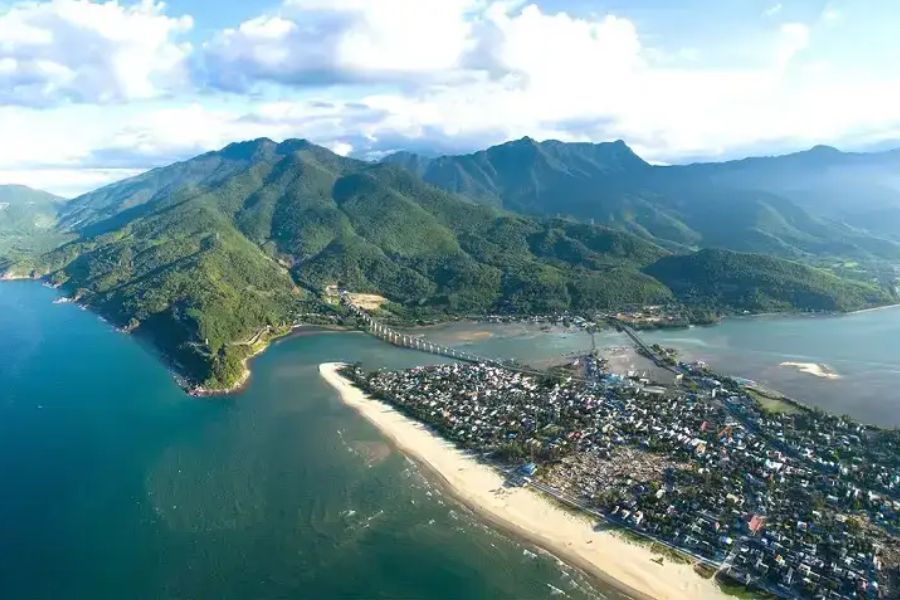
6. Lang Co Bay and Lap An Lagoon, Hue City
- Address: Lang Co town, Hue City, at the foot of Hai Van Pass. Lang Co is more than 60 km from Hue city center and about 25 km from Da Nang.
- Best for: Resort stays between Hue and Da Nang, scenic drives, oyster tasting and hikers.
- Best time: December to March is cooler and often windy, better for scenery than swimming.
- Price (estimate): Lap An Lagoon is free to visit. Shared half-day tours from Da Nang start from about $35 per person.
- Highlights: Lap An Lagoon oyster farms, Hai Van Pass viewpoints and Bach Ma National Park.
Lang Co is a place many travelers pass through, since it is often skipped by travelers crossing Hai Van Pass. Lap An is an 800 hectare brackish lagoon lined with oyster farms. The Hai Van tunnel, opened in 2005 and 6.2 km long, cuts the crossing to 10 to 15 minutes, while the pass itself climbs to about 496 m for sea views. Bach Ma National Park is about 30 km inland, with cool temperatures all year, between 10 and 22°C.
For travel planners: this is the easiest hidden gem for groups. Resort brands including Banyan Tree operate here, and Laguna Golf Lang Co adds a golf option. A night at Lang Co turns the Hue to Da Nang transfer day into a resort stay.
7. Cham Islands, Da Nang City
- Address: Cu Lao Cham, about 18 km from Cua Dai Beach near Hoi An. Hoi An is now part of Da Nang City, after Quang Nam merged into Da Nang.
- Best for: Snorkeling, village life and a quiet overnight away from Hoi An.
- Best time: March to August. From September to February the northeast monsoon brings rough seas and boats are usually cancelled.
- Price (estimate): A speedboat ticket has been quoted around VND 450,000 per person (about $17). Day tours often bundle lunch, snorkeling gear and the marine park fee.
- Highlights: Coral reefs, fishing villages and a UNESCO biosphere reserve.
The Cham Islands are eight islands, and Hon Lao is the only inhabited one. They were recognized as a UNESCO biosphere reserve in 2009. The honest version of this entry is that Cu Lao Cham is a place of contrasts: crowded day boats and set menus at noon, quiet beaches and village life once the last speedboat leaves. The hidden gem is the overnight stay.
For travel planners: the speedboat crossing from Cua Dai typically takes 20 to 30 minutes, and guests register with the border police at Cua Dai harbor before boarding. The sea makes the decision, so keep a buffer day and a Hoi An fallback. For Indian groups, May and June line up with the summer holiday period.
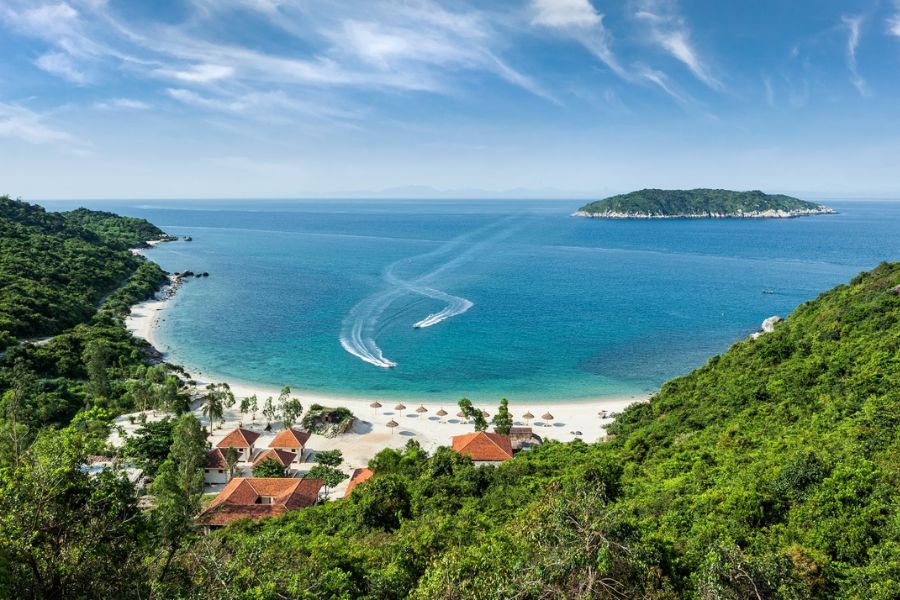
8. Quy Nhon, Gia Lai Province (formerly Binh Dinh)
- Address: Quy Nhon, now a ward in Gia Lai Province. Phu Cat Airport is about 35 km from the city center, 40 minutes to 1 hour by road.
- Best for: Coastal cove days, seafood, Cham heritage and beach breaks with fewer crowds.
- Best time: December to April, according to Lonely Planet. June to August reaches 34°C and is the busiest season for domestic tourists.
- Price (estimate): Flights from Ho Chi Minh City start from about VND 666,000 ($26) and from Hanoi start from about VND 1,269,000 ($49). Eo Gio entry is VND 30,000 (about $1.15).
- Highlights: Eo Gio, Ky Co and Hon Kho, Phuong Mai sand dunes and the towers of the Champa kingdom.
Quy Nhon needs a candid note. Lonely Planet named it one of its 25 destinations for 2026, and it is the only Vietnamese entry. That recognition is also why the early-mover window is closing. Lonely Planet still highlights the city’s laid-back atmosphere and lack of tourist crowds. For local flavor, try bánh xèo mực, the crispy squid pancakes sold for breakfast.
For travel planners: Quy Nhon is not on the Hue, Da Nang and Hoi An road corridor, so plan to fly. Vietnam Airlines lists about four daily flights from Ho Chi Minh City (around 1 hour 20 minutes) and one to three from Hanoi (around 1 hour 50 minutes). Phu Cat handles domestic flights only. Quy Nhon works well as a post-Da Nang beach add-on for clients who want a quieter coast.
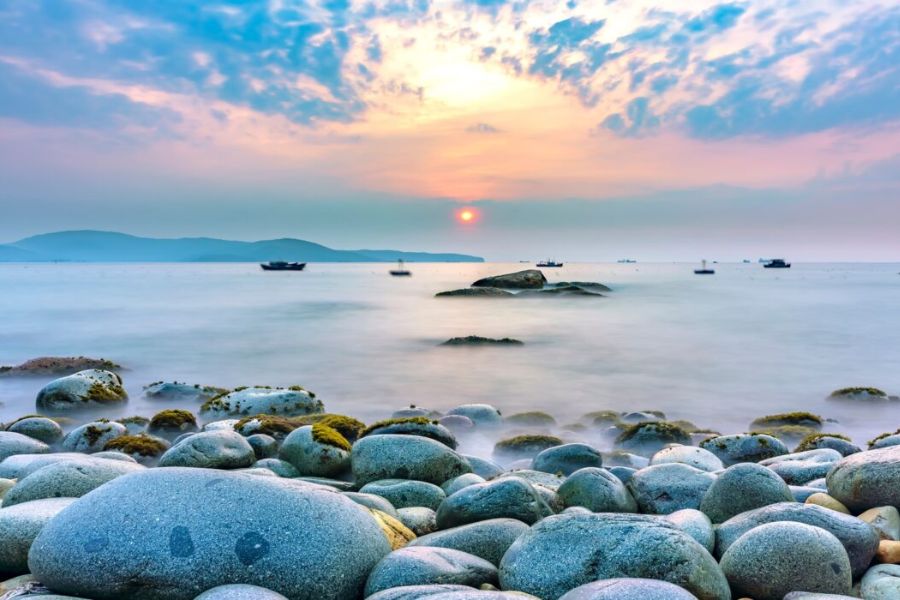
9. Con Dao, Ho Chi Minh City Special Zone
- Address: Con Dao Special Zone, about 230 km offshore from Ho Chi Minh City. From 1 July 2025, Con Dao became the only special administrative zone of Ho Chi Minh City.
- Best for: Quiet island stays, beaches, history, couples and small luxury groups.
- Best time: March to September.
- Price (estimate): One-way flights from Ho Chi Minh City are quoted at roughly VND 1,000,000 to 2,500,000 (about $38 to $96). Vietnam Airlines lists fares from VND 1,562,000 (about $60).
- Highlights: Hang Duong Cemetery (free, open 7:00 to 22:00), Con Dao Prison, Dam Trau Beach and high-end island retreats.
Con Dao is a remote, eco-conscious archipelago with protected beaches and historical sites. Hang Duong is the resting place of more than 2,000 martyrs and patriots, including heroine Vo Thi Sau. Guests should treat the cemetery and the former prison as solemn memorial sites, not just photo stops.
For travel planners: Flights from Ho Chi Minh City take about 45 minutes with Vietnam Airlines/VASCO, and Vietjet also lists routes. Ferries run from Soc Trang in about 2.5 hours and from Vung Tau in 3 to 4 hours. Confirm sailing schedules before relying on them. The airport is small, so lock group seats early.
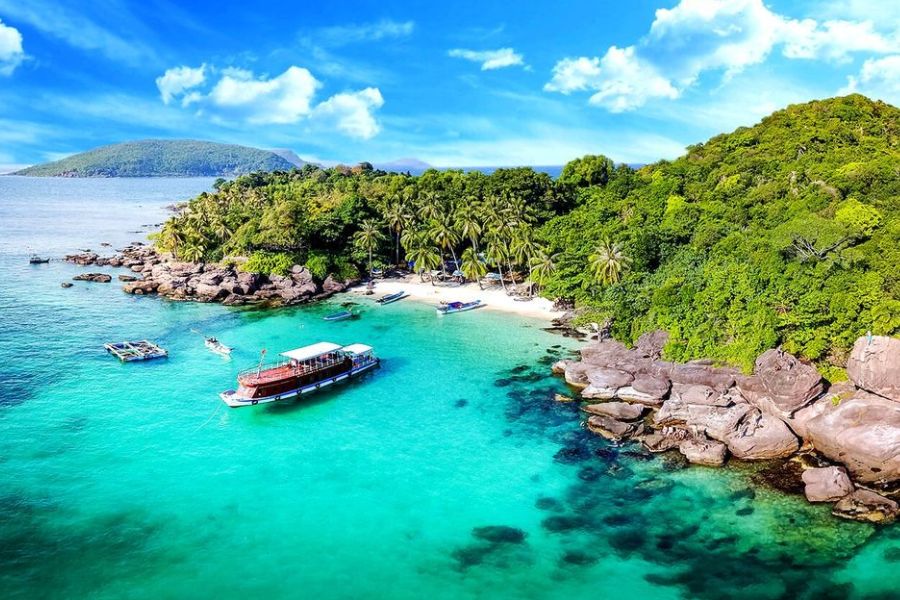
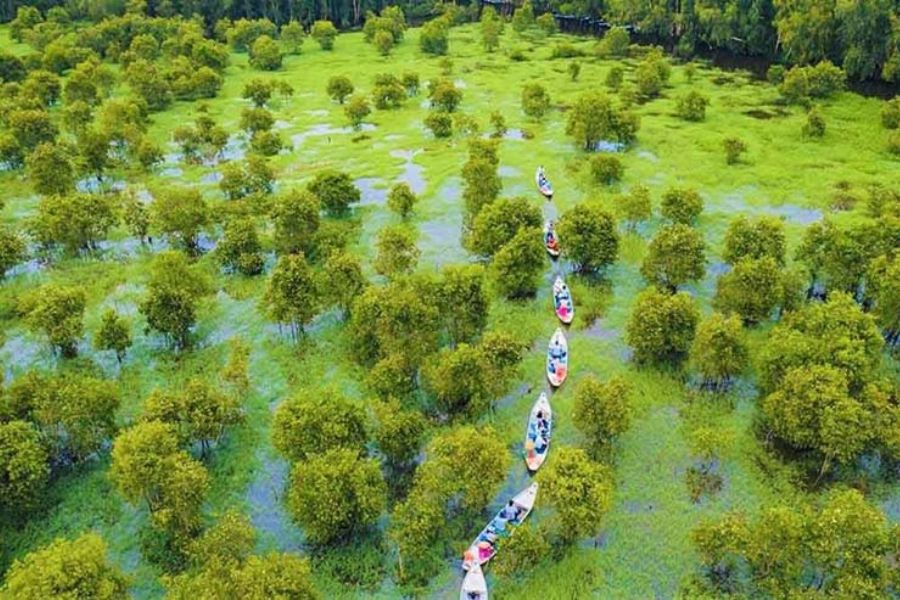
10. Chau Doc and Tra Su Cajuput Forest, An Giang Province
- Address: Chau Doc and Tra Su, An Giang Province, which merged with Kien Giang in 2025. Chau Doc is about 244 km and 5 hours from Ho Chi Minh City, and Tra Su is about 25 km from Chau Doc.
- Best for: Mekong boat days, temples, a Cham village, birdwatching and Vietnam and Cambodia combinations.
- Best time: September to November, when the flood season fills Tra Su forest with water.
- Price (estimate): A bus from Ho Chi Minh City costs VND 150,000 to 300,000 each way (about $6 to $12). Groups usually need private vehicles, so request a quotation.
- Highlights: A sampan ride and Vietnam’s longest bamboo bridge, over 140 bird species, and Mount Sam with nearly 200 temples and shrines, including Ba Chua Xu Temple.
Chau Doc offers mysterious wetlands, ethnic Cham villages and atmospheric temples. For local taste, bún cá (fish noodle soup) and lẩu mắm (fermented fish hotpot) are the dishes to try.
For travel planners: Chau Doc is reachable by road or by river boat along the Mekong from Cambodia, which makes it a natural handover point between Cambodia and Vietnam programs. Lonely Planet’s Best in Travel 2026 also lists a Mekong river cruise through Vietnam and Cambodia among its 25 experiences. Do not plan Tra Su as a same-day trip from Ho Chi Minh City: it is about six hours each way, so an overnight in Chau Doc is the sensible version.
When is the best time to visit Vietnam’s hidden gems?
The right month depends on the gem. May and June suit the water season at Pu Luong and Mu Cang Chai, and suit the Cham Islands and Con Dao sea windows. September and October suit the golden harvest in the northwest, the Cao Bang waterfall, and the start of the Tra Su flood season. December to April suits Quy Nhon. October to December and April to June suit Bai Tu Long Bay and Quan Lan. Van Long works year-round.
For Indian groups, the summer school break (roughly May to June) lines up with several water-season and island windows, and the autumn festive months (October to November) line up with the northern harvest and Tra Su. This is planning logic, not a demand statistic, and India was among Vietnam’s top 10 source markets in the first five months of 2026.
How can agents combine these hidden gems into one itinerary?
Four combinations follow the real geography:
- Northern nature break from Hanoi: Van Long, then Pu Luong, with Mai Chau as an optional extension.
- Northern coast: Bai Tu Long and Quan Lan, with a Ha Long Bay night via the Hon Gai ferry.
- Central coast: Hue, Lang Co, Da Nang and Hoi An, then the Cham Islands, with Quy Nhon by air as an extension.
- South: Ho Chi Minh City with Con Dao by air, or Ho Chi Minh City to Chau Doc and a Mekong boat to Cambodia.
Cao Bang and Mu Cang Chai sit on opposite sides of the north, so treat each as a stand-alone program from Hanoi.
Hidden gems in Vietnam: frequently asked questions
What are the best hidden gems in Vietnam for first-time visitors?
Van Long, Lang Co and the Cham Islands are the easiest to reach and to add to a standard circuit. Cao Bang, Mu Cang Chai and Con Dao suit travelers who accept longer transfers.
Which hidden gems in Vietnam are closest to Hanoi?
Van Long is about two hours by car, Pu Luong is 4 to 5 hours, and Bai Tu Long and Quan Lan are roughly 220 to 250 km away plus a ferry. Cao Bang is the farthest of the northern options.
How long should travelers stay at each hidden gem?
Van Long fits a half day. Pu Luong works best with two to three days. Cao Bang needs at least three days and two nights. Con Dao suits three to four nights.
Are Vietnam’s hidden gems suitable for group tours?
Many are, with limits. Pu Luong lodges are small, Quan Lan depends on ferries, Con Dao on a small airport, and Cham Islands trips on sea conditions. Lang Co and Van Long are the easiest for larger groups.
Did Vietnam’s province names change in 2025?
Yes. The merger took effect on 1 July 2025. In this guide, Quy Nhon is now in Gia Lai (formerly Binh Dinh), Mu Cang Chai is in Lao Cai (formerly Yen Bai), the Cham Islands are in Da Nang (formerly Quang Nam), and Chau Doc is in An Giang, which merged with Kien Giang.
Plan hidden gem itineraries with Viet Dan Travel DMC
Viet Dan Travel DMC is a trusted DMC in Vietnam that works with travel agents, tour operators and MICE planners, with offices in Hanoi and Ho Chi Minh City and a representative office in Mysore, India. Send your group size, travel month and preferred region, and the team can propose a costed itinerary that fits the transfer times, ferry and flight limits and seasons covered above.

0 Comment