
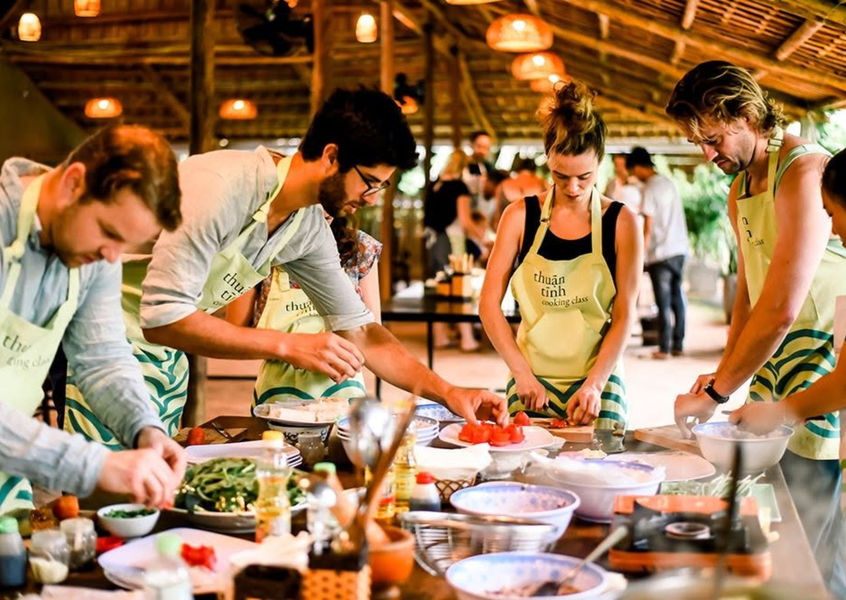

Few travel memories last longer than the smell of lemongrass hitting a hot pan in a Hanoi kitchen, or hands sticky with rice paper on a farm outside Hoi An. A Vietnam cooking class experience turns a meal into a story you can retell for years, and it has become one of the most-booked cultural activities for visitors to the country. This guide breaks down what these classes actually involve, which cities do it best, what they cost in 2026, and how travelers, agents, and event planners alike can build one into a trip.
1. What Is a Vietnam Cooking Class Experience?
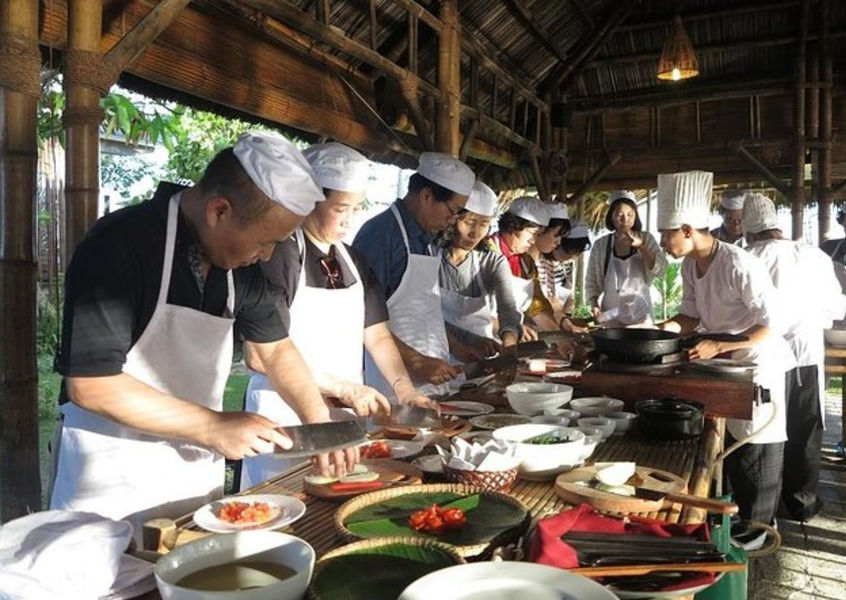
A Vietnam cooking class experience is a hands-on culinary session, typically lasting 3 to 5 hours, that combines a guided local market visit with instruction from a Vietnamese chef and a shared meal of the dishes prepared. Most classes cover 3 to 5 regional dishes, are taught in English, and take place in home kitchens, cooking schools, or farm settings depending on the city. The format has stayed consistent nationwide for over a decade because it works: shop, cook, eat, repeat the recipe at home.
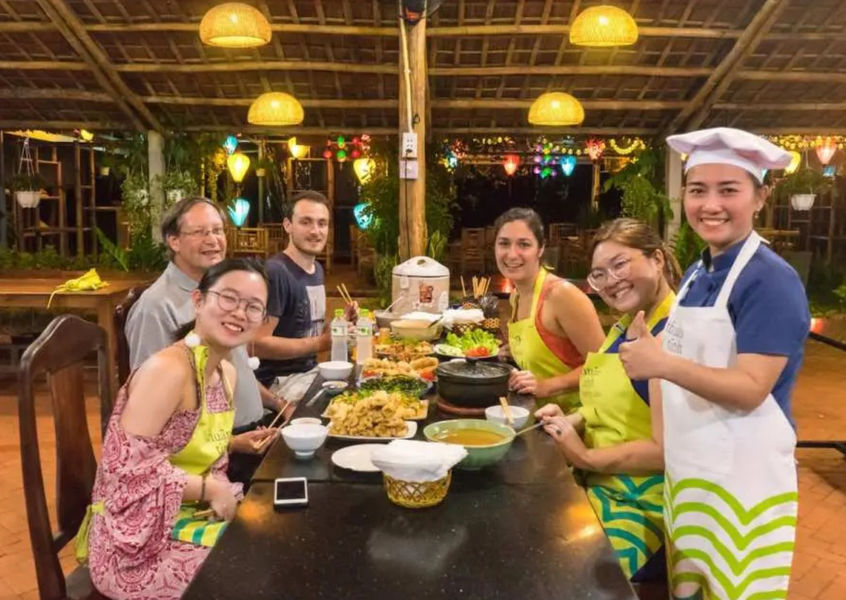
2. Best Cities for a Vietnam Cooking Class
Vietnam’s cuisine changes character from north to south, so the city chosen shapes which dishes and experience style are on offer.
Hanoi classes lean into northern staples and often begin at a wet market like Ngoc Ha or Long Bien. Hoi An is the most farm-integrated, with several schools running lessons on organic plots outside town. Hue specializes in refined dishes once served at the royal court. Ho Chi Minh City blends southern, French, and Chinese influences and tends to move at a faster, more urban pace. The Mekong Delta adds a rarer river-and-farm angle for travelers with more time.
| City | Signature dishes taught | Typical setting | Average duration |
| Hanoi | Bun cha, spring rolls (nem), pho, banana flower salad | Home kitchen or villa garden | 3.5–4.5 hours |
| Hoi An | Cao lau, rice paper rolls, banh xeo | Organic farm or riverside cooking school | 3–5 hours |
| Hue | Royal-style dishes, banh khoai, clay-pot dishes | Cooking studio or heritage house | 3–4 hours |
| Ho Chi Minh City | Banh mi, pho, southern-style spring rolls | Cooking studio, restaurant kitchen | 3–4 hours |
| Mekong Delta | River fish dishes, coconut-based recipes | Farmstay or floating market tour | 4–6 hours |
There is no single “best” city; the right pick depends on where the rest of the itinerary already sits. Travelers doing a north-to-south loop often take one class in Hanoi or Hoi An rather than repeating the format in every stop.
3. What to Expect, Step by Step
Most Vietnam cooking class experiences follow a similar arc, whichever city they’re booked in.
- Pickup and market tour: A guide or chef walks the group through a local wet market, pointing out herbs, spices, and produce that don’t exist outside Southeast Asia.
- Ingredient prep: Back at the kitchen, ingredients are portioned and prepped, often with a short explainer on regional flavor balance (the classic sweet-sour-salty-spicy combination central to Vietnamese cooking).
- Hands-on cooking: Each guest cooks their own portion of 3 to 5 dishes under direct chef guidance, rather than watching a demonstration.
- Shared meal: The group sits down to eat everything they made, usually with tea, fresh fruit, or a local drink included.
- Recipe takeaway: Better-run classes send guests home with a printed or digital recipe card so the dishes can be repeated later.
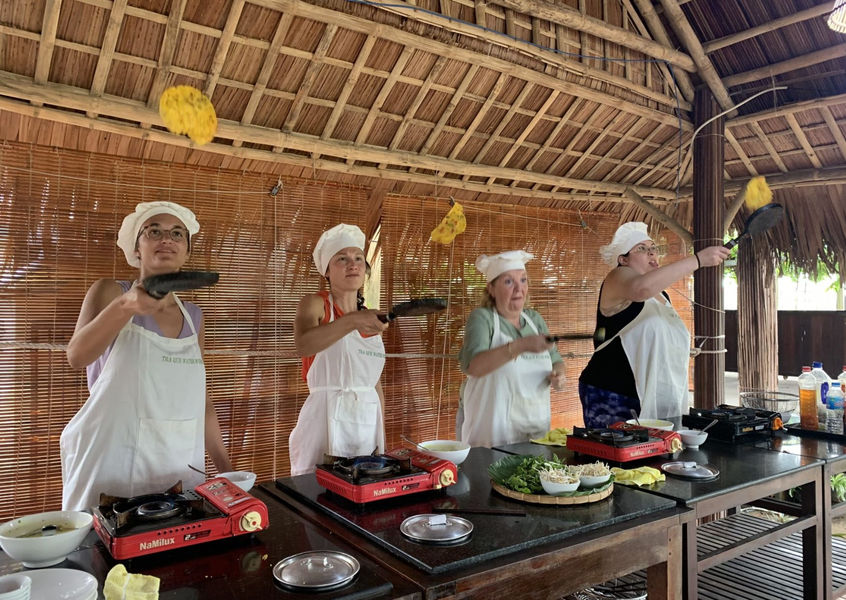
4. Popular Dishes You’ll Learn to Cook
Across the country, a handful of dishes appear on nearly every class menu because they’re approachable for beginners and distinctly Vietnamese: pho (rice noodle soup), bun cha (grilled pork with noodles), fresh and fried spring rolls, banh xeo (crispy turmeric pancake), and green mango or banana flower salad. Regional classes swap in local specialties, so a Hue class might add banh khoai while a Hoi An class teaches cao lau, a noodle dish unique to that town’s well water.
5. How Much Does a Vietnam Cooking Class Cost in 2026
Prices vary by group size, whether a market tour is included, and whether the class is private or shared.
| Class type | Typical price (USD, per person) |
| Shared group class with market tour | $25–45 |
| Private class, 2 people | $40–70 |
| Half-day class with farm or boat add-on | $45–80 |
| Premium/celebrity-chef or villa setting | $70–120 |
These figures are starting-from estimates for 2026 and vary by operator, season, and group size; travelers and agents should confirm current pricing directly with the tour provider before booking.
6. Best Time of Year for a Cooking Class in Vietnam
Cooking classes run year-round since kitchens are indoors or covered, but market produce shifts with the seasons. Spring (February–April) brings the best selection of fresh greens and herbs in the north, while the dry season in central and southern Vietnam (roughly February–August) makes market tours more comfortable and farm-based classes near Hoi An easier to schedule outdoors. Classes during the rainy season (September–December in central Vietnam) still run, though outdoor farm components may move indoors.
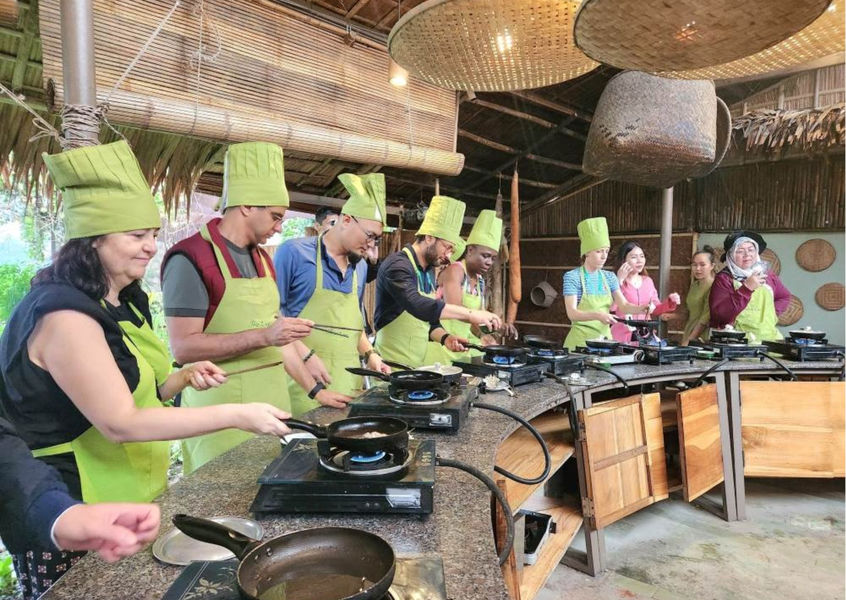
7. Vegetarian, Vegan and Dietary-Friendly Options
Vietnamese cuisine’s reliance on fresh herbs, rice, and vegetables makes it naturally adaptable. Many schools in Hanoi and Hoi An now run dedicated vegetarian or vegan menus swapping fish sauce for soy-based alternatives, and some offer fully plant-based tofu and mushroom versions of classic dishes like banh xeo and spring rolls. Travelers with dietary restrictions, including halal or Jain requirements, should confirm ingredient substitutions directly with the class operator in advance, since fish sauce and shrimp paste appear in several base recipes even when the final dish looks vegetarian.
8. Planning Cooking Experiences for Groups, FIT Clients, or Corporate MICE Programs
Most guides to Vietnam cooking classes are written for a single independent traveler booking one seat. In practice, a large share of demand comes from a different source: travel agents building multi-city FIT itineraries, and companies looking for a hands-on team-building activity during a MICE trip to Vietnam.
For travel agents and tour operators, cooking classes work best as a scheduled component within a larger itinerary rather than a standalone booking, since timing has to sync with market hours, transfer logistics, and the rest of the day’s activities. A licensed inbound DMC can lock in private kitchen access, confirm dietary customization in bulk for mixed groups, and coordinate transport so the class doesn’t eat into sightseeing time elsewhere in the itinerary.
For corporate and MICE planners, a cooking class doubles as a structured team-building session: small teams compete to plate a dish, a chef judges the results, and the debrief happens over the shared meal. This format works for groups from 10 to 150+ when booked through an operator that can secure exclusive venue use and scale kitchen stations accordingly, something individual-seat booking platforms generally can’t accommodate.
Planning to add a cooking class to a Vietnam itinerary for a client, a group, or a corporate trip? Viet Dan Travel DMC handles the logistics that individual booking platforms usually can’t, from private kitchen venues and dietary customization for mixed groups to syncing class timing with the rest of a multi-city trip. As a licensed Vietnam inbound tour operator with teams on the ground in Hanoi and Ho Chi Minh City, we work directly with agents and event planners to build cooking experiences into custom FIT, group, and MICE programs. Reach out to start planning one for your next Vietnam itinerary.
9. FAQs
Is a Vietnam cooking class worth it for a short trip?
Yes. A half-day class fits easily into a 3-4 day city stay and typically delivers more hands-on cultural contact than a single sightseeing stop.
Do I need cooking experience to join?
No. Classes are designed for complete beginners, with a chef guiding each step and portions pre-measured.
Can a cooking class be booked for a large group?
Yes, though group sizes above 15-20 people usually require a private venue booking through a local operator rather than a standard shared class, to keep kitchen stations manageable.
Which city has the best cooking class in Vietnam?
There’s no single best city; Hanoi and Hoi An are the most popular for first-time visitors, while Hue suits travelers interested in royal-era cuisine and the Mekong Delta suits those wanting a farm-and-river setting.

0 Comment