
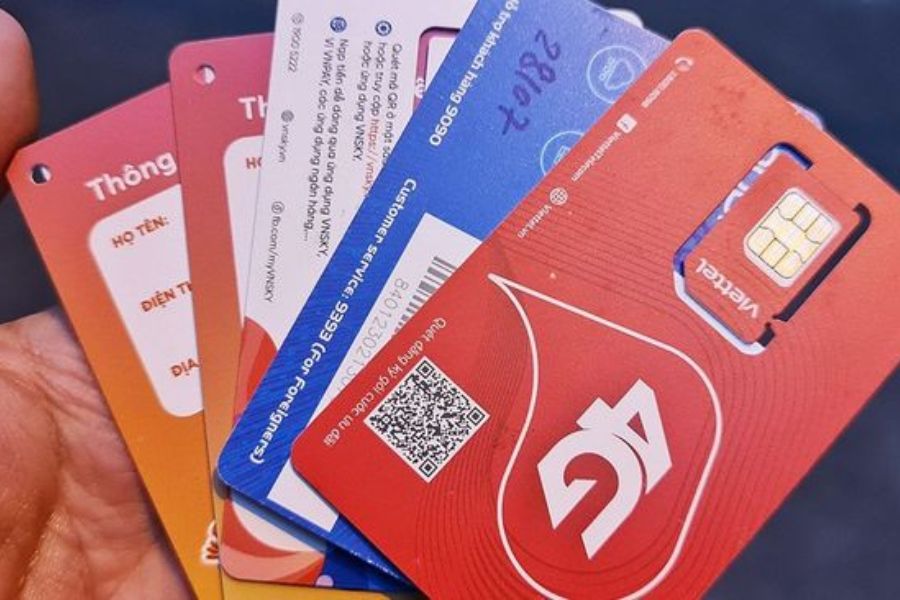

Staying connected the moment a traveler lands in Hanoi or Ho Chi Minh City is no longer optional; it is part of how clients navigate, book rides, and reach their guide. For travel agents building Vietnam itineraries, knowing exactly which SIM card or eSIM to recommend, what it costs, and how registration works saves clients confusion at arrivals and saves agents follow-up questions later. In this guide, Viet Dan Travel DMC breaks down Vietnam’s SIM card and internet options for 2026, with practical notes for agents handling FIT travelers, groups, and MICE delegations.
1. Why Connectivity Planning Matters for Every Vietnam Itinerary
A traveler without working data on arrival cannot open Grab, load Google Maps, or message a driver waiting at the terminal. This is especially relevant in Vietnam, where private drivers, tour guides, and DMC operations coordinators communicate primarily through Zalo (Vietnam’s dominant messaging app) or WhatsApp. For agents, recommending a connectivity option upfront, rather than leaving clients to figure it out at the airport, is a small detail that measurably improves the first-day experience of a trip.
2. Physical SIM vs eSIM: Which Fits Your Clients’ Trip
Both options work reliably on Vietnam’s networks. The right choice depends on the client’s phone, travel style, and how much time they want to spend at the airport.
| Factor | Physical SIM | eSIM |
| Setup | Bought and activated on arrival, 3 to 5 minutes at a counter | Purchased online in advance, activates by QR code |
| Passport required | Yes, mandatory at point of purchase | Usually not required for online purchase |
| Phone compatibility | Any unlocked phone with a SIM tray | eSIM-compatible devices only (most phones from 2020 onward) |
| Local phone number | Yes, useful for Grab, OTP verification, hotel bookings | Data-only in most cases, no local number |
| Best for | Travelers who want the lowest price and a local number | Travelers who want data working the moment they land, no queue |
For clients arriving on tight MICE schedules or late-night flights, an eSIM purchased before departure removes one variable from the arrival process. For leisure travelers who also need a local number to book restaurants or confirm activities, a physical SIM is usually the better recommendation.
3. Comparing Vietnam’s Three Mobile Networks in 2026
Vietnam’s mobile market runs on three state-owned carriers, all of which sell tourist SIM plans at international arrivals halls in Hanoi and Ho Chi Minh City.
| Network | Market position | Strengths | Best for |
| Viettel | Largest carrier, holding roughly half of Vietnam’s mobile market | Widest 5G coverage, strongest performance in remote areas like Sapa, Ha Giang, and outlying islands | Multi-region itineraries, adventure and nature routes |
| Vinaphone | Established state carrier | Tourist SIMs often bundle local call minutes alongside data | Travelers who need to call hotels, guides, or restaurants directly |
| Mobifone | One of Vietnam’s largest telecom groups | Its Hi Vietnam app offers a free 24-hour trial period with several GB of data before requiring payment | Short layovers or travelers wanting to test connectivity before committing to a paid plan |
Agents booking clients on itineraries that include mountainous provinces or island destinations should default to Viettel, since coverage gaps on smaller networks are most noticeable outside major cities.
4. Vietnam SIM Card and eSIM Prices 2026
Prices below are starting-from estimates based on standard tourist packages available in 2026. Actual pricing can vary by provider, data allowance, and point of purchase, so agents should confirm current rates with the SIM provider or with Viet Dan Travel DMC before quoting clients.
| Option | Price range (USD) | Validity |
| Physical tourist SIM (airport counter) | Starting from USD 2.50 to USD 8 | 7 to 30 days |
| Physical tourist SIM (city store, non-airport) | Starting from USD 2 to USD 6.50 | 15 to 30 days |
| eSIM (purchased online before departure) | Starting from USD 10.90 | 7 to 30 days |
| Mobifone Hi Vietnam app (in-app top-up) | Starting from USD 3.20 to USD 9.60 | 3 to 30 days |
Airport counters typically price 20 to 30 percent higher than city stores for the same plan, largely for the convenience of on-arrival setup. Agents advising budget-conscious travelers can flag city stores or apps like Hi Vietnam as lower-cost alternatives, provided the client is comfortable with a short delay in getting online.
5. Where and How to Buy a SIM Card in Vietnam
Travelers have four practical options, and each fits a different type of itinerary:
- Airport kiosks in Hanoi (Noi Bai) or Ho Chi Minh City (Tan Son Nhat): fastest option, staff handle passport registration and activation on the spot, but priced at a premium.
- Authorized carrier stores in the city: lower prices than airport counters, useful for clients who prefer to rely on hotel WiFi for the first hours after landing.
- eSIM purchased online before departure: activates by QR code, ideal for clients who want data live the moment they land, with no passport requirement at the point of sale.
- Convenience stores (Circle K, VinMart): useful mainly for topping up an existing SIM rather than an initial purchase, since plan selection is limited.
For MICE groups or multi-city tours arranged through a DMC, arranging SIMs or eSIMs in advance as part of the itinerary avoids clients queuing individually at arrivals, which matters when a group needs to move quickly from the airport to a scheduled first-day activity.
6. Passport Registration: What Every Traveler Must Know
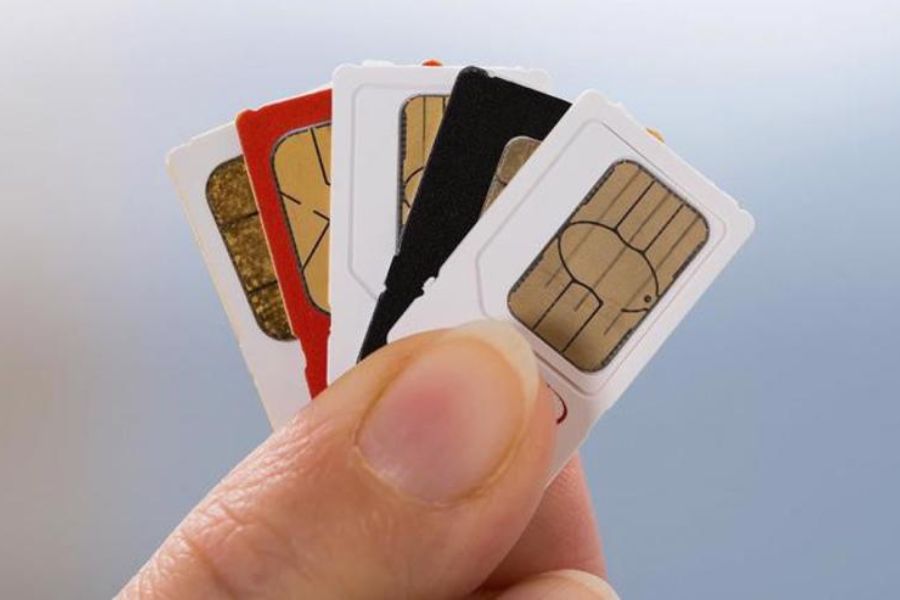
Vietnamese law requires every physical SIM card to be registered against a valid passport at the point of purchase. This is not optional. SIM cards sold without proper registration, commonly found from unlicensed street vendors, are frequently deactivated within days. Agents should advise clients to always buy from official airport counters, authorized carrier stores, or reputable online eSIM providers, and to keep their passport accessible when landing in case registration is required on the spot.
7. How Much Data Do Travelers Actually Need
Daily data needs depend on how a client uses their phone while traveling. As a general guide:
- Light use (maps, occasional messaging): 1 to 2 GB per day is sufficient.
- Standard use (maps, Grab, social media, messaging apps): 3 to 5 GB per day covers most leisure travelers.
- Heavy use (video calls, streaming, remote work, or business travelers joining calls between meetings): unlimited or high-cap plans of 5 GB or more per day are the safer recommendation.
For MICE delegates who need to stay connected for video conferencing or email throughout a multi-day event, agents should recommend the higher-tier data plans from Viettel or Vinaphone rather than the entry-level tourist packages.
8. Connectivity for Group Tours and MICE Delegations: The DMC Advantage
Independent travelers can sort out a SIM card on their own at the airport. Group tours and MICE delegations cannot afford that same flexibility, since a 20 to 40 person group standing at an arrivals hall trying to individually register SIM cards creates delays that ripple through the rest of a tightly scheduled day.
This is where working through a destination management company changes the experience. Viet Dan Travel DMC coordinates connectivity as part of the broader group logistics plan, alongside airport meet-and-greet, transport, and driver-guide communication, so delegates move directly from arrivals to their first scheduled activity without individual SIM stops. For agents booking incentive trips, conferences, or large FIT groups into Vietnam, flagging this as part of the ground-handling scope is a concrete way to differentiate a DMC-arranged itinerary from a self-booked one.
9. FAQs
Do I need a Vietnamese SIM card if my hotel has WiFi?
Hotel and cafe WiFi covers static moments of a trip, but it does not help while moving between destinations, using Grab, or navigating with offline maps unavailable. A local SIM or eSIM is recommended for any itinerary involving movement between cities or regions.
Can foreigners legally buy a prepaid SIM card in Vietnam?
Yes. Foreign travelers can purchase prepaid SIM cards from any authorized airport counter or carrier store, as long as the SIM is registered against a valid passport at the point of sale.
Which network has the best coverage outside major cities?
Viettel generally offers the widest coverage in mountainous and island regions such as Sapa, Ha Giang, and Phu Quoc, making it the safer choice for multi-region or adventure itineraries.
Is an eSIM more expensive than a physical SIM in Vietnam?
Typically yes. Physical SIMs purchased on arrival tend to start lower in price than eSIM plans purchased online in advance, though the eSIM trades a slightly higher cost for the convenience of activating before departure.
How does connectivity work for a group tour or MICE delegation?
Working with a destination management company like Viet Dan Travel DMC allows connectivity to be arranged as part of the group’s overall ground logistics, so delegates avoid individually queuing for SIM registration on arrival.

0 Comment